Best 100 Inch Projector Screens: Fixed, Motorized or Portable (2026)
Disclosure: We may earn a commission when you buy through links on this page, at no extra cost to you. As an Amazon Associate I earn from qualifying purchases. Learn more

Home theater and backyard movie fans: how to choose the best 100 inch projector screen by aspect ratio, surface, mounting style and viewing distance.
A 100 inch projector screen turns a living room wall or a backyard into a home cinema, but the size is only the starting point. The best 100 inch projector screen depends on the aspect ratio your projector uses, whether you want a fixed, pull-down, motorized or portable design, and how bright your room is.
This guide explains each style, how to choose a surface, and what to measure before you buy. The product table lists a mix of fixed, retractable, motorized and portable screens to compare with the points below.



What "100 Inch" Means
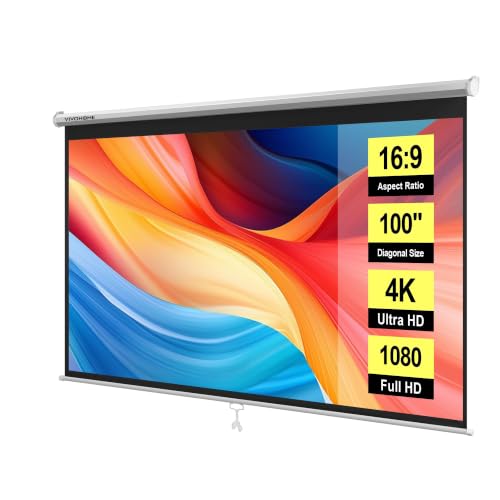
The size is the diagonal measurement of the viewing area, not the frame. At the common 16:9 shape used for video, that works out to a screen that is a little over seven feet wide. At 16:10, which suits some business projectors, the screen is slightly taller and a little narrower for the same diagonal.
Match the aspect ratio to your projector's native shape. A mismatch gives you black bars or wasted image, and it is the most common avoidable mistake.
Screen Styles
Pull-down and Manual Retractable
These mount on a wall or ceiling and roll back into a case. They are affordable and tidy, and the best ones have an auto-lock so you can set the height. Check the case length against your wall space.
Motorized and Electric
A motorized screen lowers and rises with a remote or a switch. It suits a permanent living room or media room installation, and it costs more than a manual screen. Some have a trigger so they lower when you turn on the projector.
Floor-Rising and Stand Mount
A floor-rising screen stands on the ground and pulls up, which helps in rooms where you cannot drill into the wall. Tripod and frame stands are common outdoors. They are easy to move but less rigid, so wind and tripod legs need care.
Foldable and Cloth
Folding screens are the cheapest and most portable. They suit casual outdoor movie nights, but they can wrinkle and may show seams, so read buyer notes on flatness.
Surface and Gain
A matte white surface is the safe default for dark rooms and balanced color. Higher gain surfaces reflect more light back to the viewer, which helps a weaker projector, but they narrow the viewing angle and can show hot spots. Gray or black-backed surfaces improve contrast in rooms with some ambient light. Black backing also stops light from showing through a thin screen.
If your projector is bright and your room is dark, a standard white screen is enough. If you watch in daylight, look for a surface designed for ambient light and expect to pay more.
Measure Before You Buy
- The wall width, with space for the full frame and case, not only the viewing area.
- The distance from the projector to the screen, since the throw ratio sets the image size.
- The ceiling height, for screens with a drop.
- The outdoor spot, if you plan to use a stand, including wind exposure.
Choosing the best 100 inch projector screen also means checking how the projector will mount: ceiling, shelf or table. A short-throw projector may need a different surface than a standard one.
Installation and Setup
Mount a retractable screen on studs or with proper anchors, because a 100 inch roller weighs more than it looks. Use a level to keep the case straight, and leave a little extra drop so you can adjust. For stands, stake or weight the base before a movie night outdoors.
See our guides to best portable projector screen and best motorized projector screen for narrower comparisons.
Indoor and Outdoor Use
Indoors you control the light, so you can pick a surface for contrast and watch in comfort. Outdoors you deal with wind, dew, passing headlights and uneven ground. A frame-style screen with tight fabric handles breezes better than a loose cloth, and a black backing prevents a neighbor's porch light from washing out the picture.
For a mixed-use setup, pick a screen you can move without help. A lighter folding frame with a carry bag is easier to set up for backyard nights, while a wall-mounted roller is better for daily viewing. Some buyers keep one of each and use whichever suits the evening.
Viewing Distance and Seating
A screen this large rewards a sensible viewing distance. Sit too close and you scan the picture instead of watching it, sit too far and you lose the sense of scale. As a rule of thumb, choose seats far enough back that the whole image sits comfortably within your field of view, and check the distance with a piece of tape on the wall before you buy.
Care and Storage
Keep the surface clean with a soft, dry cloth and avoid touching it with bare hands. Roll fabric screens rather than folding them when possible, and store them away from heat. A retractable screen should stay fully rolled when not in use, to keep dust off the fabric.
Warranty and Return Window
A large screen is awkward to return, so unroll or unfold it as soon as it arrives. Look for creases, uneven tension, a bent frame or a motor that hums. Leave a fabric screen hanging for a day, since mild wrinkles often relax. Contact the seller quickly if a flaw remains.
Frequently Asked Questions
Is a 100 inch screen too big for a small room?
It depends on seating distance. In a small room you may sit close enough to see pixels or turn your head to follow the action, so measure the distance before you commit.
Do I need a special screen for 4K?
A screen does not limit resolution, so a decent matte white surface works for high-resolution video. Look for a smooth, flat surface and a good tension design.
Can I use a wall instead?
A smooth, flat, light-colored wall works at first, but a screen gives better color and brightness, and a gray or black-backed screen helps more in rooms with some light.
Is a motorized screen worth it?
If it is a permanent installation you use often, yes. For occasional use, a manual or portable screen saves money.
Final Thoughts on 100 Inch Projector Screen
Choose the format first, the surface second and the extras last. The best 100 inch projector screen is the one that fits your projector's aspect ratio, your room's light and your wall, not simply the lowest price. Prices and availability can change, so check the product page before ordering.