Best 10x50 Binoculars: Bright Large-Lens Binoculars Explained for 2026
Disclosure: We may earn a commission when you buy through links on this page, at no extra cost to you. As an Amazon Associate I earn from qualifying purchases. Learn more

Larger lenses bring in more light but also more weight. Learn who benefits from the best 10x50 binoculars and what to check before you order.
A 10x50 pair brings in more light than a 10x42 and shows a bright, relaxed picture, which is why it is a favorite on boats, at dusk and under the night sky. The price is size and weight. This guide to the best 10x50 binoculars explains who benefits from the big lens, what to look for and how to choose among models.
The table above lists a wide range, from affordable porro designs to premium roof prism glass. Use the sections below to decide whether the extra lens suits you.




What the 50 Means
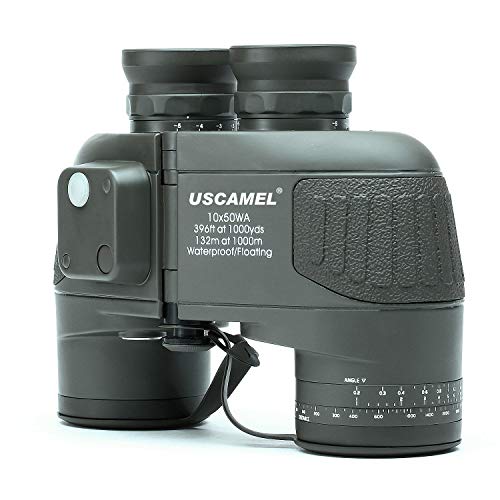
The 50 is the diameter of each front lens in millimeters. Dividing by the magnification of ten gives an exit pupil of five millimeters, a good match for the wide-open pupils of young eyes in the dark. That is why 10x50 models look bright in twilight and show faint stars well.
Bigger lenses also make a bigger and heavier body. Many 10x50 binoculars are noticeably heavier than 10x42, and ten times magnification shows every tremor in your hands. If you carry them for hours or hold them for long periods, plan for a harness or a rest.
Where 10x50 Excels
- Night sky: the Moon, star clusters and the broad band of the Milky Way.
- Dusk and dawn wildlife watching, where every bit of light helps.
- Boating and coastal viewing, where a large lens and a robust body are valued.
- Sports and events in dim stadiums.
- Fixed-position watching, such as hunting blinds and cabins.
How to Choose the Best 10x50 Binoculars
Porro or Roof Prism
Most affordable 10x50 pairs are porro prism designs, which are wide and offer good depth of field and brightness for the price. Roof prism models are slimmer, easier to carry and usually costlier. Both can be excellent, and the choice depends on how you carry and hold the pair.
Weight and Support
Compare the weight and see whether the pair has a tripod socket. A threaded socket lets you mount the binoculars on a tripod, which transforms the experience for astronomy and long watching sessions. For handheld use, a chest harness spreads the load across your shoulders.
Coatings and Glass
Fully multi-coated lenses give brighter pictures and better contrast, which matters for dim subjects. Higher-priced models add low-dispersion glass for cleaner color. If you are on a tight budget, look for multi-coating and good prism glass first.
Eye Relief
Large binoculars often have generous eye relief, but check the number if you wear glasses. Twist-up eyecups help you adapt the pair for your face.
Water Resistance
If you will use the binoculars on the water or in damp weather, look for sealed and fog-proof construction. Marine models usually offer this.
Focus Type
Some large binoculars use a central wheel focus, others use individual eyepiece focus or fixed-focus designs. A center wheel is the easiest for moving subjects, and individual focus is sturdy but slower.
Handheld or Tripod?
At ten times with a heavy body, a handheld pair shakes. You can reduce this by bracing your elbows on a fence or a car roof, sitting down and resting your elbows on your knees, or leaning against a post. A tripod and an adapter or a monopod removes the shake entirely and is useful for long sessions, especially for astronomy.
Matching Size to Your Use
If you mostly watch in daylight and walk a lot, a 10x42 may be a better choice because of its lower weight. If you want to see faint stars and dim wildlife, a 10x50 repays its bulk. If you want a pair for a boat, choose a sealed body with a large focus wheel and a strong strap.
What to Look For in the Listing
Read the product title for the exact magnification and lens size, since some listings mix zoom and fixed models. A 10x50 is a fixed-power pair, not a zoom. Check whether the listing mentions a tripod socket, because not all models have one. Look at the included strap: a thin strap on a heavy pair digs into your neck, so plan to replace it with a harness or a padded strap.
Pay attention to the claims about glass and coatings. Terms such as BAK4 prisms and fully multi-coated describe real, useful features when they appear with detail. When a listing only offers generic phrases, rely on feedback from buyers who describe months of use.
Comfort Habits That Make Large Binoculars Easier
Relax your shoulders and keep your elbows tucked, rather than holding the pair out in front of you. Rest the binoculars against your cheekbones and brow, which gives your head a role in steadying them. Take breaks every few minutes during long sessions, because your eyes and arms fatigue faster at ten times magnification. A folding stool or a reclining chair makes a big difference for sky watching.
Care and Storage
Store the pair in a padded case, keep the lens caps on and use a blower before a cloth. Rinse salt off marine binoculars with a damp cloth. Avoid leaving the pair in a hot car. If you mount it on a tripod, tighten the adapter firmly and carry the pair by its body, not the adapter.
10x50 Binoculars: Your Questions Answered
Are 10x50 binoculars too heavy?
For short sessions they are fine. For long walks or long hold times, they can tire your arms, so a harness, a rest or a tripod makes a big difference.
Are 10x50 binoculars good for birding?
They are bright and detailed, but heavier and bulkier than 10x42. Many birders prefer the smaller size for walking, and keep a 10x50 for dusk or water watching.
Can I see planets with 10x50 binoculars?
You can see the Moon in detail and the brightest planets as small disks or points. Jupiter's largest moons can appear as tiny points if you hold the pair steady, and a tripod helps.
Do I need a tripod adapter?
It is not required but is very useful for astronomy and long watching sessions.
Final Thoughts
The large lens offers brightness and relaxed viewing at the cost of weight. The best 10x50 binoculars suit people who watch at dusk, on the water or under the stars, ideally with a rest or a tripod. Compare the models in the table above and consider how you will carry and steady them.