
Best Fujifilm Cameras: Reviews and Buying Guide
Disclosure: We may earn a commission when you buy through links on this page, at no extra cost to you. As an Amazon Associate I earn from qualifying purchases. Learn more

A buying guide to Fujifilm's X series, X100 and GFX cameras, with three short picks, film simulation tips and lens advice.
Fujifilm cameras have a devoted following thanks to their retro designs, tactile dials and famous film simulations that produce beautiful colors straight out of the camera. The lineup spans compact vlogging bodies, enthusiast mirrorless cameras, the cult favorite X100 series and medium format GFX models for professionals. This guide to the best fujifilm cameras explains what matters when choosing one, then highlights three picks for different budgets.
The short answer: most photographers should choose the Fujifilm X-T50, which combines a 40 megapixel APS C sensor, in body stabilization and a film simulation dial in a compact body, around $1,700 with a kit lens; budget buyers and vloggers can start with the X-M5 around $1,000, and enthusiasts who want weather sealing and more control should step up to the X-T5; professionals who need maximum resolution can consider the GFX100S II medium format camera.

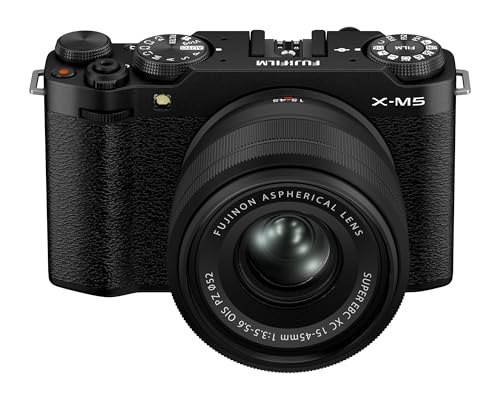


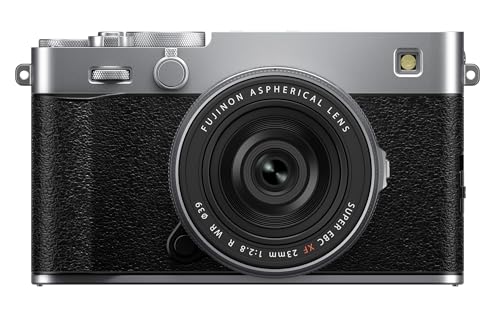


Our Top 3 Picks at a Glance
These three Fujifilm cameras from the product table above cover the best all rounder, a value option and an enthusiast upgrade.


Best Overall
The Fujifilm X-T50 with the XC 15 to 45 mm lens, around $1,700, is our pick for most Fujifilm buyers. Its first strength is a high resolution 40 megapixel X Trans sensor paired with in body image stabilization, delivering detailed, sharp photos in a compact, lightweight body. Its second strength is the dedicated film simulation dial, which lets you switch between looks like Classic Chrome, Provia and Velvia instantly, making it fun and creative to shoot.
The limitation is a smaller battery and less weather sealing than the larger X-T5.
Best Value
The Fujifilm X-M5 with the XC 15 to 45 mm lens, around $1,000, suits beginners, travelers and vloggers who want Fujifilm colors in the smallest package. Its first strength is a lightweight design with a flip out screen and film simulation dial, ideal for social media content and street photography. Its second strength is strong video features and subject detection autofocus for its price.
The limitation is the lack of an electronic viewfinder and in body stabilization.
Best Upgrade Pick
The Fujifilm X-T5 with the XF 16 to 50 mm lens, around $2,200, is for enthusiasts who want a classic dial based camera with professional features. Its first strength is a 40 megapixel sensor, in body stabilization and a weather resistant body built for landscape, travel and street photography. Its second strength is physical dials for shutter speed, ISO and exposure compensation, plus a high resolution viewfinder that makes manual shooting intuitive.
The limitation is price and a design focused on stills rather than video.
How to Choose the Best Fujifilm Cameras: Buying Guide
Here are the specs that matter most when comparing the best fujifilm cameras.
Sensor Size and Image Quality
Most Fujifilm cameras use APS C X Trans sensors, available in 26 and 40 megapixel versions. The 40 megapixel sensor captures more detail for cropping and large prints, while 26 megapixel models handle low light slightly better and create smaller files. The GFX series uses larger medium format sensors for professional resolution and tonal depth.
Film Simulations and Color
Fujifilm's film simulations recreate the look of classic films, from vibrant Velvia to muted Classic Chrome and Acros black and white. Many photographers use them to skip editing entirely. Newer cameras add recipes and custom settings to save your favorite looks.
Low Light Performance
Fujifilm APS C sensors produce clean images up to around ISO 6400, and fast prime lenses like f/1.4 and f/2 primes help in dim conditions. In body stabilization lets you use slower shutter speeds handheld. Medium format GFX cameras deliver the cleanest high ISO results.
Autofocus and Stabilization
Recent Fujifilm cameras include subject detection autofocus that tracks faces, eyes, animals, birds and vehicles. In body image stabilization on the X-T5, X-T50, X-S20 and X100VI steadies photos and video. Entry models like the X-M5 rely on lens or digital stabilization.
Battery Life and Charging
Mirrorless cameras use more power than DSLRs, and compact Fujifilm bodies have small batteries. Expect a few hundred shots per charge on compact models and more on larger bodies like the X-S20, which uses a bigger battery. USB C charging is convenient for travel; carry a spare battery.
Ease of Use and Controls
Fujifilm is known for physical dials that show settings at a glance. Beginners can set dials to auto, while enthusiasts enjoy manual control. Models like the X-S20 use a more conventional mode dial, which some new users find easier.
Size, Weight, and Ergonomics
Fujifilm cameras range from pocketable X100VI and X-M5 bodies to larger X-T5 and GFX models. Smaller cameras suit travel and street photography, while larger grips help with heavy lenses. Consider the lenses you plan to use, since compact primes keep kits light.
Types of Fujifilm Cameras
Mirrorless X Series Cameras
X series interchangeable lens cameras like the X-T5, X-T50, X-S20 and X-E5 cover beginners to enthusiasts with APS C sensors and a large lens system.
Fixed Lens Premium Compacts
The X100VI pairs a 40 megapixel sensor with a fixed 23 mm f/2 lens and a hybrid viewfinder, beloved for street and travel photography.
Vlogging and Creator Cameras
The X-M5 and X-S20 offer flip screens, strong video specs and microphone inputs for creators.
Medium Format GFX Cameras
GFX cameras deliver professional resolution for landscape, commercial and portrait photographers.
Instax Instant Cameras
Instax cameras like the Instax Mini 12 print physical photos instantly, perfect for parties and gifts.
Choosing Fujifilm Cameras for Your Situation
Best Professional Fujifilm Cameras
The best professional fujifilm cameras include the X-T5 for APS C work and the GFX100S II for medium format resolution. Professionals value weather sealing, dual card slots, high resolution sensors and access to premium XF and GF lenses. Wedding, landscape and commercial photographers often choose these bodies.
Best for Travel and Street Photography
The X100VI and X-E5 are compact, stylish and discreet, ideal for street and travel photography with small prime lenses.
Best for Beginners
The X-M5 and X-T50 offer approachable controls, film simulations and compact sizes for learning photography.
X-T50 vs X-T5 vs X-S20: Which Fujifilm Is Right for You?
The X-T50 and X-T5 share the same 40 megapixel sensor and processor, so image quality is very similar. The X-T50 is smaller, lighter and adds a film simulation dial, making it ideal for travel and casual shooting. The X-T5 adds weather sealing, a larger battery, dual card slots and a higher resolution viewfinder, suiting enthusiasts and professionals who shoot in tough conditions.
The X-S20 uses a 26 megapixel sensor with a deeper grip, larger battery and stronger video features, including a fully articulating screen and better heat management. It is the best Fujifilm choice for hybrid photo and video creators. Choose the X-T50 for compact versatility, the X-T5 for rugged stills performance and the X-S20 for video focused work.
Shooting With Fujifilm Film Simulations
Film simulations are a big reason people choose Fujifilm. Provia offers natural, balanced color for everyday shooting, Velvia boosts saturation for landscapes and Astia flatters skin tones for portraits. Classic Chrome delivers a muted documentary look loved by street photographers, while Classic Negative and Reala Ace mimic popular color films. Acros produces rich black and white images with fine grain.
You can customize simulations with highlight and shadow tone, color, sharpness, grain and white balance shifts, creating recipes that define your personal style. Many photographers share recipes online. Shooting RAW plus JPEG lets you keep film simulation JPEGs while preserving RAW files for later editing.
Fujifilm for Video Creators
Fujifilm's video capabilities have grown significantly. Models like the X-S20 and X-M5 record 4K at high frame rates, offer F Log and F Log2 for color grading and include microphone inputs. Vlog modes with face priority and product showcase help creators filming themselves. The X-S20's larger battery and optional cooling fan support longer recordings. Film simulations also apply to video, giving footage a distinctive look without grading.
Common Mistakes When Buying a Fujifilm Camera
- Ignoring lens costs. Quality XF lenses can cost as much as the body.
- Expecting long battery life from compact bodies. Carry spare batteries.
- Buying older models for video. Newer bodies offer better autofocus and video features.
- Skipping firmware updates. Fujifilm often adds features through updates.
How to Make Your Fujifilm Camera Last Longer
Keep the body cap on when changing lenses and use a blower to clear sensor dust. Clean lenses with a microfiber cloth. Store cameras in dry bags with silica gel to prevent moisture and fungus. Update firmware regularly, since Fujifilm often adds new features and fixes through free updates. Use weather resistant lenses with weather sealed bodies like the X-T5, and protect other models from rain.
Building a Fujifilm Lens Kit
Fujifilm's X mount offers excellent lenses. Kit zooms like the XF 16 to 50 mm cover everyday shooting. Compact primes like the XF 23 mm f/2, 35 mm f/2 and 27 mm f/2.8 pancake keep kits light and deliver sharp, fast optics. The XF 56 mm f/1.2 is a portrait favorite, and telephoto zooms like the XF 70 to 300 mm suit wildlife. Third party lenses from Sigma, Tamron, Viltrox and TTArtisan add affordable options.
How Much to Spend on a Fujifilm Camera
Around $80 to $200 buys Instax instant cameras for fun prints. Around $900 to $1,300 covers entry mirrorless bodies like the X-M5 with a kit lens. Around $1,600 to $2,200 brings the X-T50, X-S20, X-E5 and X-T5. Premium fixed lens and medium format cameras cost more. Many buyers find the best fujifilm cameras for their needs between $1,000 and $2,000.
FAQs
What specs matter most for beginners?
Beginners should focus on ease of use, autofocus and size. Fujifilm's film simulations deliver great color without editing, and subject detection autofocus keeps photos sharp. A compact body with a kit lens makes learning easy.
Which Fujifilm camera is better for low light?
Cameras with in body stabilization and fast prime lenses perform best in low light. The X-T5, X-T50 and X-S20 combine IBIS with clean APS C sensors, while the GFX100S II delivers the cleanest high ISO images.
Is a smartphone enough instead of a Fujifilm camera?
A smartphone is enough for casual snaps, but a Fujifilm camera offers larger sensors, real lenses and distinctive color. Optical zoom, shallow depth of field and film simulations produce images phones cannot match.
How much should I spend on my first Fujifilm?
Plan to spend around $1,000 to $1,700 for a first Fujifilm camera with a lens. The X-M5 and X-T50 are excellent starting points. Budget for a spare battery and memory card.
Why are Fujifilm cameras so popular?
Fujifilm cameras are popular for their film simulations, retro dials and compact designs. Many photographers love getting finished looking images straight from the camera, and the tactile controls make shooting enjoyable.
Is the X100VI worth it?
The X100VI is worth it for street, travel and everyday photographers who love a compact fixed lens camera. Its 40 megapixel sensor, stabilization and hybrid viewfinder deliver excellent results, though limited availability and a fixed lens make it less versatile than interchangeable lens models.
Do Fujifilm cameras have good autofocus?
Yes, current Fujifilm cameras have reliable subject detection autofocus for people, animals, birds and vehicles. Recent models improved tracking significantly, making them suitable for family, travel and wildlife photography. Fast sports shooters may still prefer specialized sports cameras.
Can I use vintage lenses on Fujifilm cameras?
Yes, Fujifilm X mount cameras work well with vintage manual lenses through adapters. Focus peaking and magnification make manual focusing easy, and vintage glass pairs beautifully with film simulations for a classic look.
Final Thoughts
Fujifilm cameras make photography fun with beautiful colors, tactile controls and compact designs. Most buyers will love the X-T50, budget minded creators can start with the X-M5 and enthusiasts can step up to the weather sealed X-T5. Professionals and street photographers have strong options in GFX and X100 models, and every Fujifilm benefits from a couple of compact prime lenses.
Compare the best fujifilm cameras in the product table above to find the right camera for your style and budget.


