
Best Mid Range Mirrorless Cameras for 2026: Mounts, Sensors, and Buyer Guide
Disclosure: We may earn a commission when you buy through links on this page, at no extra cost to you. As an Amazon Associate I earn from qualifying purchases. Learn more

Choosing a mirrorless body for $850 to $1,800? See how sensor size, IBIS, autofocus, video specs and lens mounts decide the best mid range mirrorless cameras.
If you want a camera that is lighter than a DSLR but still serious about autofocus, stabilization and video, this guide is for you. In the roughly $850 to $1,800 bracket, the best mid range mirrorless cameras combine deep learning eye tracking, five axis in body stabilization and 10 bit 4K video in bodies small enough for an everyday bag. Removing the mirror box lets the sensor feed autofocus and exposure data constantly, which is why these bodies track subjects so well.
When you buy a mirrorless camera, you are not just buying a body, you are buying into a lens mount ecosystem. Lens choice, sensor format and stabilization matter more over time than a small difference in megapixels, so the sections below focus on those decisions. The picks in the table help you compare specific models side by side.


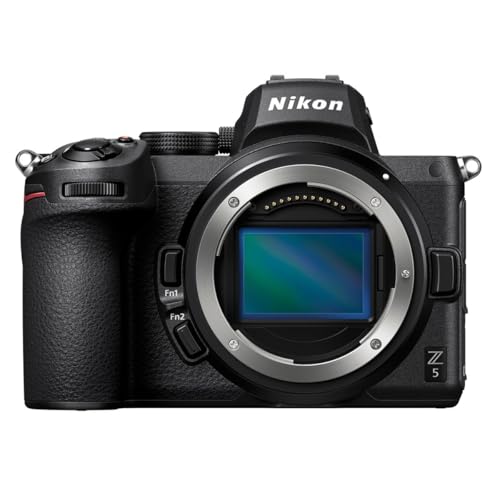
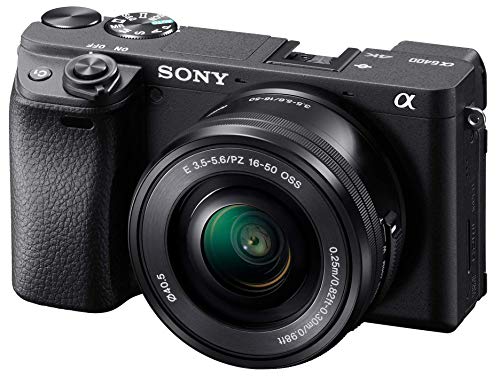




Who Should Buy Which Mid Range Mirrorless Camera?
Family Action, Sports, and Wildlife Photographers
Action shooters need reliable autofocus lock and fast continuous bursts more than anything else. Choose an APS C body with a stacked or backside illuminated sensor, AI subject recognition, a 15 to 30 frame per second burst rate and a deep buffer paired with UHS II cards.
Because an APS C sensor applies a 1.5x or 1.6x crop factor, a compact 70 to 350mm telephoto zoom gives you reach equal to roughly 525mm on a full frame camera. That saves weight and money compared with a true super telephoto lens.
Portrait, Wedding, and Low Light Event Shooters
If you shoot receptions, twilight street scenes or environmental portraits, an entry or mid tier full frame body is the better fit. A 24 to 33 megapixel full frame sensor has more than twice the area of an APS C chip, so it gathers more light per pixel and gives cleaner shadows at ISO 6400.
It also produces shallower depth of field at the same focal length and aperture, which is the creamy background separation portrait shooters want. Dual card slots are a bonus for events where you cannot reshoot.
Hybrid Video Creators, Filmmakers, and Travel Shooters
Creators who split time between stills and video need 5 axis in body image stabilization (IBIS), internal 10 bit 4:2:2 log recording, a fully articulating screen and a full size HDMI port or audio jacks. Micro Four Thirds and stabilized APS C bodies excel here because their smaller sensors are easier for the IBIS mechanism to move, smoothing walking footage nearly as well as a gimbal in many situations.
Key Features to Compare in Mid Range Mirrorless Cameras
Which Lens Mount Ecosystem Is Best Value?
The best value mount is one with open access to third party lenses, because lens cost adds up faster than body cost. Before picking a brand, check whether its mount (Sony E, Fujifilm X, Nikon Z, Canon RF or Micro Four Thirds) is supported by makers like Sigma, Tamron and Viltrox.
On open mounts you can often find a fast f/1.4 portrait prime or a constant f/2.8 standard zoom for around $350 to $650. Closed mounts may leave you choosing between dim variable aperture kit zooms and first party glass at around $1,800.
APS C vs Full Frame vs Micro Four Thirds Sensor Formats
In the $900 to $1,800 window, the real tradeoff is a well equipped APS C or Micro Four Thirds body versus an entry full frame body. APS C usually brings weather sealing, five axis IBIS, faster readout and compact, affordable lenses.
Entry full frame gives better low light dynamic range and wider fields of view, but the body may omit IBIS or dual card slots, and full frame lenses are typically larger, heavier and pricier.
How Good Is On Sensor Autofocus and AI Subject Tracking?
Current mid range autofocus is very good, with phase detection points covering roughly 90 to 100 percent of the frame. Older contrast detection systems hunted in dim light, while today's AI coprocessors recognize human eyes, faces, heads and bodies and keep focus even when a runner turns away.
Many models also detect animals, birds, insects, cars, trains and planes. Check which subject types a body supports, since this varies by brand and generation.
Why Does Five Axis In Body Stabilization Matter?
Five axis IBIS matters because it stabilizes every lens you mount, including fast primes and adapted vintage glass. The sensor floats on electromagnetic coils and compensates for pitch, yaw, roll and horizontal and vertical shake, with makers quoting several stops of correction.
Many entry bodies skip IBIS and rely on optical stabilization built into specific zooms, so a stabilized body is a real step up for handheld night shots and steady video.
What Should You Look for in an EVF and Rear Screen?
Look for an OLED viewfinder of at least 2.36 million dots, with 3.69 million dots as a nicer step up. Because you see a live digital feed rather than an optical reflection, magnification around 0.70x to 0.78x and a smooth refresh rate (up to 120Hz) reduce blur when panning with moving subjects.
Choose the rear screen by your work: a side flip vari angle screen suits self recording and low angles, while a tilt screen stays on the optical axis for quick street and landscape framing.
What Video Specs Matter Beyond "4K 60p"?
Oversampling, bit depth and heat handling matter most, because not all 4K 60p is equal. The sharpest 4K comes from bodies that read 6K or 7K from the sensor and downsample it, giving finer detail and less moire than line skipped video.
Verify internal 10 bit 4:2:2 recording with flat log profiles (such as S Log3, F Log2, N Log or C Log3) for grading flexibility. Also read the maker's stated recording limits, since long clips in hot weather can trigger shutoffs on smaller bodies.
Comparing Mirrorless Sensor Systems Side by Side
Matching sensor format and mount openness to your photography goals keeps your kit portable and affordable as you add lenses.
| Mirrorless System | Sensor Crop Factor | Lens Size & Cost | Low Light & Depth of Field | Best Photography Focus |
|---|---|---|---|---|
| APS C Mirrorless | 1.5x (or 1.6x) | Compact and affordable | Very good (about 1.5 stops behind full frame) | Travel, family action, wildlife, hybrid video |
| Entry / Mid Full Frame | 1.0x (36 x 24 mm) | Larger, heavier, pricier | Highest dynamic range & bokeh | Portraits, weddings, low light, landscapes |
| Micro Four Thirds | 2.0x (17.3 x 13 mm) | Smallest & lightest telephotos | Good daylight; strong IBIS | Backpacking, handheld video, birding reach |
Price Tiers in the Mid Range Mirrorless Market
Entry Enthusiast Mirrorless Kits (Around $800 to $1,100)
At this level you get compact 24 to 26 megapixel APS C bodies, usually bundled with a 16 to 50mm or 18 to 45mm kit lens. You gain strong eye detection autofocus, 10 to 15 fps bursts and 4K video in a very light body, though these models often omit IBIS and weather sealing.
Core Stabilized APS C and Entry Full Frame (Around $1,100 to $1,500)
This is the sweet spot for most enthusiasts. You can choose a weather sealed, IBIS equipped APS C body (often with 26 to 40MP sensors and 10 bit 4K 60p video) or a compact 24 to 26MP full frame body aimed at low light and portrait depth.
Upper Mid Range Hybrid Powerhouses (Around $1,500 to $1,950)
Near the top of the bracket, bodies add dual UHS II card slots for instant backup, larger batteries rated for roughly 500 to 700 shots per charge, 3.69 million dot viewfinders and uncropped oversampled 4K 60p video.
Common Mistakes to Avoid When Buying a Mirrorless Camera
- Mounting heavy full frame lenses on a small APS C body: Dedicated APS C f/1.4 primes and f/2.8 zooms cost much less and balance far better on crop sensor bodies.
- Leaving the sensor exposed while changing lenses: Most mirrorless cameras expose the bare sensor the moment the lens comes off, so switch power off and point the body downward when swapping glass.
- Using silent electronic shutter under flickering LEDs or for fast action: Non stacked sensors read lines sequentially, which can cause dark banding or skewed golf clubs. Switch to mechanical or electronic first curtain shutter for indoor action and flash work.
- Spending the whole budget on the body: Keep around $250 to $400 for a fast 23mm, 35mm or 50mm f/1.8 prime so you immediately get real low light ability and background blur.
- Buying slow UHS I memory cards: Fast buffers and high bitrate 10 bit 4K video need UHS II V60 or V90 SD cards to avoid slow clearing and dropped frames.
- Ignoring lens weight and size: A compact body loses its advantage if the lens you want is large, so check the lens roadmap and dimensions before committing.
Care, Sensor Dust Prevention, and Battery Tips
Because the sensor sits close to the lens mount, keep a manual rubber air blower in your camera bag. Before an important shoot, take the lens off indoors, hold the mount facing down and give the sensor glass a few firm puffs to dislodge loose dust. Many bodies with IBIS also run an ultrasonic sensor cleaning cycle at power off.
To stretch battery life, enable the eye sensor so the rear screen stays dark until needed, set the sleep timer to about one minute, and carry a spare battery. Many bodies also charge from a USB C Power Delivery bank, which is handy on trips.
If you shoot indoors at home, good light matters as much as the camera, so a window or a simple continuous light often improves results more than a pricier body.
Frequently Asked Questions
Why have mirrorless cameras replaced DSLRs for most photographers?
Mirrorless cameras replaced DSLRs because they show your exact exposure live in the viewfinder and offer better autofocus. They track eyes across the frame in photo and video, shoot silently at up to 20 to 30 frames per second, and use compact short flange lenses.
Should I buy an APS C mirrorless camera with IBIS or an entry full frame without IBIS?
For handheld video, travel and wildlife or sports, the APS C body with 5 axis IBIS is usually the more versatile and affordable choice. Pick the entry full frame body if you mostly shoot portraits, tripod landscapes or dim events with stabilized lenses.
Can I use my old DSLR lenses on a new mid range mirrorless camera?
Yes, in most cases through an official mount adapter such as EF to EOS R or F to Z. Mirrorless bodies have a short distance between mount and sensor, so adapters keep autofocus and aperture control, though performance varies by lens.
How many megapixels do I need in a mid range mirrorless camera?
Between 24 and 33 megapixels suits most photographers. That range gives crisp detail for large prints and moderate cropping while keeping high ISO noise and raw file sizes manageable. Some APS C models offer 40 megapixels for extra cropping room in bright light with sharp primes.
Do mirrorless cameras overheat when recording 4K video?
Most current mid range bodies handle 4K 30p for long clips, but heat limits vary by model. Long 4K 60p takes in hot sun are the most likely to cause trouble, so check the maker's stated recording limits and flip the screen away from the body to help heat escape.
Final Thoughts
Choosing the best mid range mirrorless cameras comes down to matching the lens mount and sensor format to the subjects you shoot. For a weather sealed hybrid that covers travel, family sports, wildlife and 4K video with compact lenses, pick a 5 axis stabilized APS C body. If portrait separation and low light dynamic range come first, step into full frame. Compare the picks in the table to find the right system for you.


