
Best Photography Canon Cameras: A First Time Buyer's Guide
Disclosure: We may earn a commission when you buy through links on this page, at no extra cost to you. As an Amazon Associate I earn from qualifying purchases. Learn more

A plain English guide to Canon's EOS R and Rebel cameras for first time buyers, with specs explained, mistakes to avoid and setup tips.
Canon is one of the most trusted names in photography, and its cameras power everything from family vacations to professional weddings. For first time buyers, though, the lineup can be confusing, with EOS R mirrorless models, Rebel DSLRs, PowerShot compacts and a long list of lenses. This guide to the best photography canon cameras starts with the basics, explains the specs in plain English and walks you through your first shoot so you can buy with confidence.
The short answer: most beginners should choose a Canon EOS R10 or EOS R50 mirrorless kit, which combine APS C sensors, excellent Dual Pixel autofocus and beginner friendly controls for around $1,000 to $1,450; budget buyers can start with the EOS R100 double lens kit around $740, and photographers ready for full frame quality should step up to the EOS R8 or EOS R6 Mark II.

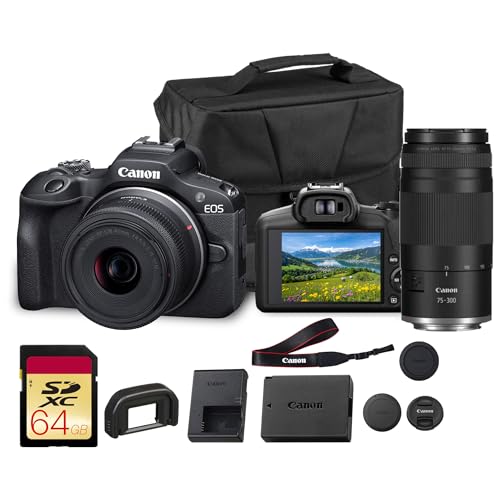

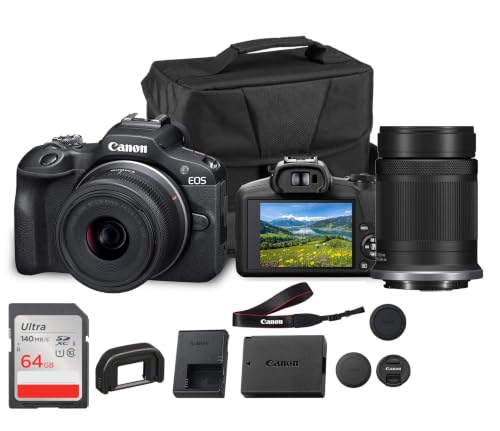

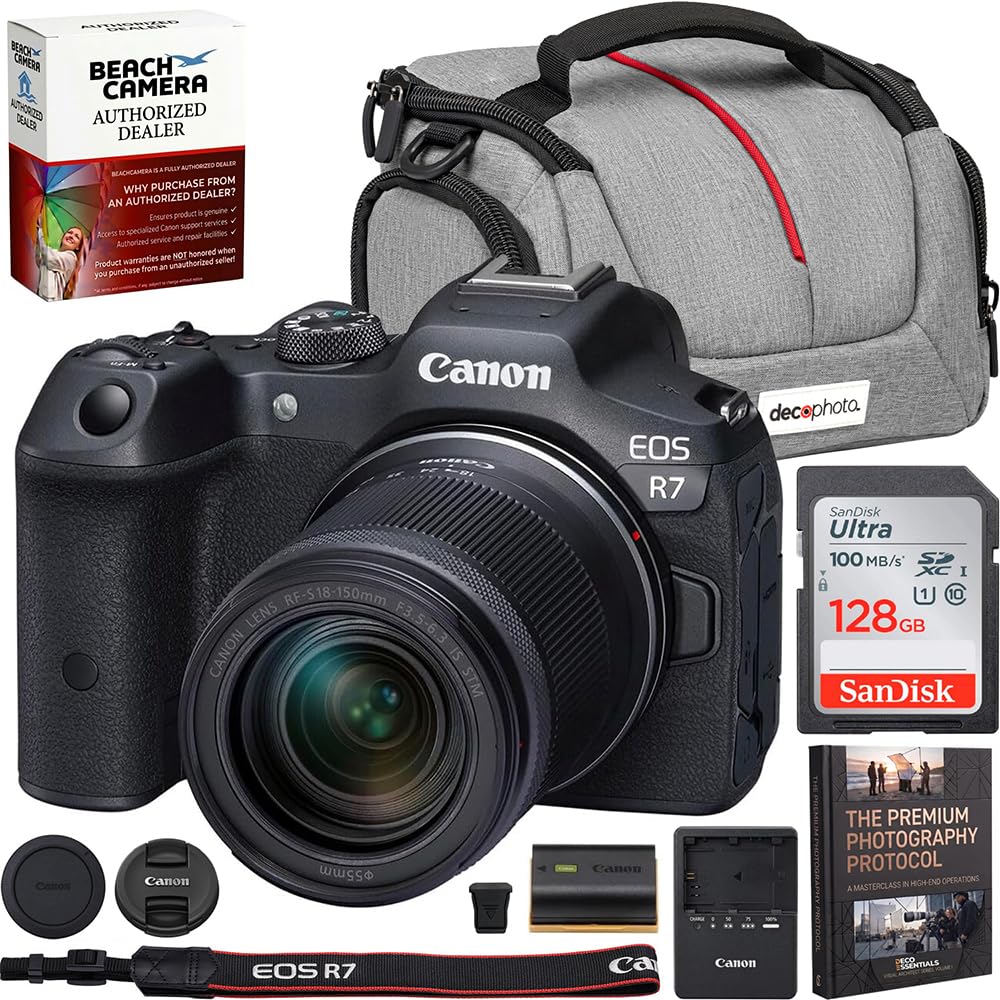


Top 3 Picks at a Glance
These three Canon cameras from the product table above cover the best all rounder, the best value and a full frame upgrade.


Photography Canon Cameras 101: The Basics
Canon's current cameras fall into a few families. EOS R mirrorless cameras are the main line, using the RF lens mount and electronic viewfinders. Models with RF S lenses, like the EOS R100, R50, R10 and R7, use APS C sensors, while the R8, R6 Mark II and R5 series use larger full frame sensors. Canon also still sells EOS Rebel DSLRs like the Rebel T7, which use optical viewfinders and EF lenses.
A few terms help. Sensor size affects image quality, low light performance and background blur. Megapixels describe resolution, with 24 megapixels plenty for most photographers. Autofocus is how the camera locks focus; Canon's Dual Pixel CMOS AF II tracks eyes, faces, animals and vehicles. Stabilization reduces blur from shaky hands, either in the lens or the camera body.
Mirrorless cameras are smaller, have better autofocus and show exactly how photos will look in the viewfinder, which helps beginners learn exposure. Most new Canon development focuses on mirrorless.
Key Specs Explained in Plain English
Sensor Size and Image Quality
APS C sensors in cameras like the R100, R50 and R10 deliver big quality improvements over phones, with more detail, better low light performance and natural background blur. Full frame sensors in the R8 and R6 Mark II capture even more light, producing cleaner high ISO images and shallower depth of field for portraits. Most beginners get excellent results from APS C; full frame suits those who shoot events, portraits and low light often.
Autofocus and Stabilization
Canon's Dual Pixel autofocus is one of the best in the industry, quickly locking onto subjects and tracking them across the frame. Newer models detect eyes, faces, animals and vehicles, keeping moving subjects sharp. In body image stabilization, found on the R7 and R6 Mark II, steadies photos and video with any lens, while entry models rely on stabilized lenses.
Video Capabilities
Most current Canon mirrorless cameras record 4K video, and many offer vertical video modes for social media and flip out screens for vlogging. The R50 and R10 suit casual creators, while the R6 Mark II and R7 add advanced video features. The PowerShot V1 is a compact creator camera with a large sensor and fixed zoom lens.
Durability and Weather Sealing
Entry Canon cameras are not fully weather sealed, so protect them from heavy rain and dust. Enthusiast and professional models like the R7 and R6 Mark II add weather resistance for outdoor photography. A rain cover and lens hood add protection for any camera.
Low Light Performance
Low light performance depends on sensor size and lens aperture. Full frame cameras produce cleaner images in dim conditions, while APS C cameras perform well with fast prime lenses like the RF 50 mm f/1.8. Use a tripod or stabilization for long exposures at night.
Lenses and the RF Mount
The RF mount supports both full frame RF lenses and smaller RF S lenses for APS C bodies. Kit lenses cover everyday shooting, and affordable primes like the RF 50 mm f/1.8 and RF 28 mm f/2.8 add background blur and low light capability. EF lenses from Canon DSLRs work on RF bodies with an adapter.
Choosing a Canon Camera for Your Situation
For Absolute Beginners
The EOS R100 and R50 are compact, affordable and easy to learn, with guided menus and smartphone transfer. Double lens kits add a telephoto zoom for sports and wildlife.
For Hobbyists and Families
The EOS R10 adds faster burst shooting, more physical controls and a deeper grip, ideal for kids' sports, travel and pets.
For Enthusiasts and Professionals
The R7 delivers high resolution APS C with in body stabilization for wildlife, while the R8 and R6 Mark II bring full frame quality for portraits, weddings and low light.
Canon EOS R100 vs R50 vs R10
These three APS C cameras cover most beginners, so comparing them helps. The EOS R100 is the most affordable and simplest, with a 24 megapixel sensor, Dual Pixel autofocus and a fixed screen. It suits budget buyers who mainly shoot photos and want an easy upgrade from a phone. Its burst speed and autofocus tracking are more basic than the other two.
The EOS R50 adds a vari angle touchscreen, improved subject detection and stronger video features in a very compact body, making it popular with families, travelers and content creators. The EOS R10 steps up again with faster continuous shooting, a deeper grip, more physical dials and a joystick for selecting focus points, ideal for kids' sports, pets and wildlife. Choose R100 for value, R50 for portability and creators and R10 for action and control.
Building Your First Canon Lens Kit
The kit lens is a good starting point, but a few additions expand your creative options. The RF 50 mm f/1.8 is inexpensive and creates beautiful portraits with blurred backgrounds, performing well in low light. A telephoto zoom like the RF S 55 to 210 mm or RF 100 to 400 mm brings distant subjects closer for sports and wildlife. A wide angle lens suits landscapes and architecture.
Double lens kits often save money compared with buying lenses separately. As you grow, Canon's RF lineup and adapted EF lenses provide a huge range of options, including affordable used EF lenses that work perfectly with an adapter.
Learning Photography With Your Canon
Canon cameras include guided display modes that explain settings as you change them, helping beginners learn. Start by understanding the exposure triangle: aperture controls depth of field, shutter speed controls motion blur and ISO controls sensitivity. Practice one concept at a time, like using a wide aperture for portraits or a fast shutter speed for kids running.
Take photos every day, review them on a computer and compare settings. Online tutorials, photography clubs and Canon's own learning resources accelerate progress. Editing apps like Lightroom help you get more from RAW files.
Essential Accessories for New Canon Owners
Pick up a spare battery, since mirrorless cameras drain power quickly. A fast SD card rated V30 or higher handles bursts and 4K video. A padded camera bag protects your gear, and a lens cleaning kit keeps glass spotless. A lightweight tripod opens up night photography and self portraits. A UV filter protects the front of your kit lens from scratches.
Rookie Mistakes to Avoid
- Relying on auto mode forever. Learn aperture priority to control background blur.
- Ignoring lenses. A fast prime lens often improves photos more than a new body.
- Buying full frame too early. APS C is cheaper, lighter and great for learning.
- Forgetting spare batteries. Mirrorless cameras use more power than phones.
- Skipping memory card speed. Slow cards cause delays when shooting bursts or video.
Getting Started: Setup and First Use
Charge the battery fully, insert a fast SD card and format it in the camera. Set the date, time and language, then install Canon's Camera Connect app to transfer photos to your phone. Start in scene intelligent auto mode to get comfortable, then switch to aperture priority, labeled Av, to control depth of field.
Set autofocus to servo mode with subject detection for moving subjects. Shoot in RAW plus JPEG for editing flexibility. Practice in good light first, experimenting with portraits, landscapes and close ups. Check the histogram to avoid overexposed highlights.
Canon vs Sony vs Nikon for Beginners
Canon, Sony and Nikon all make excellent beginner cameras. Canon is known for intuitive menus, pleasing color, especially skin tones, and reliable Dual Pixel autofocus. Sony offers a huge E mount lens selection and strong autofocus tracking, while Nikon cameras feature comfortable grips and excellent image quality. All three provide APS C and full frame paths for growth.
For many first time buyers, Canon's straightforward controls and helpful guided modes make learning easier. Try holding cameras from each brand if possible, since grip and button layout often decide what feels right.
How Much to Spend on a Canon Camera
Around $500 to $800 buys entry kits like the Rebel T7 and EOS R100 with one or two lenses. Around $800 to $1,500 covers the R50, R10 and PowerShot V1. Around $1,500 to $2,500 brings the R7 and R8. Around $3,000 and up covers the R6 Mark II and professional bodies with premium lenses. Many beginners find the best photography canon cameras for their needs between $750 and $1,500.
Frequently Asked Questions
What specs matter most for beginners?
Beginners should focus on autofocus, ease of use and lens options. Canon's Dual Pixel autofocus makes sharp photos easy, and guided menus help you learn. An APS C sensor and stabilized kit lens deliver great results.
Is a smartphone enough instead of a Canon camera?
A smartphone is enough for casual snaps, but a Canon camera delivers better quality, zoom and control. Larger sensors, interchangeable lenses and fast autofocus excel at portraits, sports, wildlife and low light.
Mirrorless or DSLR: which Canon should I buy?
Mirrorless is the better choice for most new Canon buyers. EOS R cameras offer better autofocus, video and future lens support. DSLRs like the Rebel T7 remain affordable options with optical viewfinders.
How much should I spend on my first Canon?
Plan to spend around $750 to $1,200 for a first Canon camera with a lens. The EOS R100 and R50 are excellent starting points, with the R10 offering more features.
Which Canon is better for low light?
Full frame Canon cameras like the R8 and R6 Mark II are best for low light. APS C cameras perform well with fast prime lenses.
Can I use old Canon EF lenses on new cameras?
Yes, Canon EF and EF S lenses work on EOS R cameras with the EF to RF adapter. Autofocus and stabilization work normally with official adapters, making used EF lenses a great way to save money.
Is the Canon PowerShot V1 good for photography?
The PowerShot V1 is a compact camera aimed mostly at creators, but it takes good photos thanks to a large sensor and wide zoom lens. It suits travelers and vloggers who want one small camera. Photographers who want interchangeable lenses should choose an EOS R model.
How long do Canon cameras last?
Canon cameras typically last many years, often five to ten or more with good care. Shutters are rated for tens of thousands of shots or more, and lenses can last decades. Firmware updates keep features current.
Wrapping Up
Canon makes some of the best cameras for learning and growing in photography. Most beginners will love the EOS R10 or R50, budget buyers can start with the R100 and those ready for full frame can step up to the R8 or R6 Mark II. Invest in a fast prime lens and practice regularly to build your skills quickly.
Compare the best photography canon cameras in the product table above to find the right camera for your goals and budget.


