YAMAHA
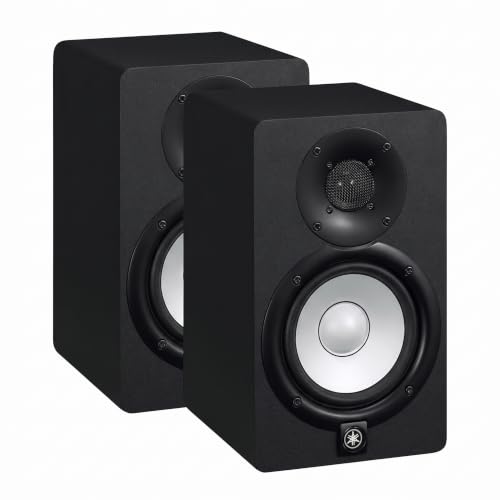
YAMAHA HS5 Powered Studio Monitor (Pack of 2)
Disclosure: We may earn a commission when you buy through links on this page, at no extra cost to you. As an Amazon Associate I earn from qualifying purchases. Learn more
Highlights
- The information below is per-pack only
- 2-Way bass-reflex bi-amplified nearfield studio monitor with 5" cone woofer and 1" dome tweeter
- 54Hz-30kHz frequency response
- 45W LF plus 25W HF bi-amp system for high-performance 70W power amplification
- Room Control and High TRIM response controls
- XLR and TRS phone jack inputs accept balanced or unbalanced signals
Why You'll Love It
- Two monitors provide a pair for building a consistent stereo listening setup
- Separate woofer and tweeter amplification allocates power to low and high frequencies
- A 5 inch woofer and 1 inch tweeter handle different parts of the audio range
- The stated 54Hz to 30kHz frequency response defines the range covered by the monitors
- Room Control and High TRIM adjustments offer ways to tailor the response to your setup
- XLR and TRS inputs accept balanced or unbalanced signals for flexible connection options
Pros
- +Pair of powered studio monitors
- +Separate low and high frequency amplification
- +Room Control and High TRIM adjustments
- +Balanced and unbalanced input support
- +Stated frequency response from 54Hz to 30kHz
Cons
- -5 inch woofer may not suit every monitoring preference
- -Frequency response starts at 54Hz
- -Response adjustments require attention during setup
Detailed Review
The Yamaha HS5 is a powered studio monitor pair for shoppers who want dedicated speakers for listening to and evaluating audio. Its main appeal is the combination of separate low and high frequency amplification, response adjustment controls, and input options that accommodate balanced or unbalanced signals. Rather than being defined by a single specification, this model brings several useful considerations together: the frequency range, the division between its two drivers, and the ability to adjust aspects of its response. It is worth considering if your priority is a monitor focused on audio work and you want control over how it fits your listening setup.
Each monitor uses a 5 inch cone woofer and a 1 inch dome tweeter in a two way bass reflex design. These drivers handle different portions of the audio range, while the bi amplified system supplies separate amplification for the low and high frequency sections. The listed power allocation is 45W for the low frequency section and 25W for the high frequency section, adding up to 70W of amplification. For a buyer comparing specifications, this arrangement makes the design easier to understand than a single overall power figure alone.
The stated frequency response extends from 54Hz to 30kHz. That range gives you a concrete starting point for deciding whether the HS5 matches the audio material you intend to monitor. The lower endpoint deserves particular attention if the way you evaluate low frequency content is important to your work. A frequency response figure describes the stated range, but it should not be treated as a complete description of how a monitor will sound in every room or position.
Room Control and High TRIM response controls provide additional adjustment options. These are useful features to consider if you want some control over the monitor's response as you arrange your listening setup. The XLR and TRS phone jack inputs accept both balanced and unbalanced signals, so the connection decision can be based on the outputs available from your existing equipment. Checking the actual connections before buying is still important, since having the right input type does not by itself confirm that every part of your setup is compatible.
The main trade off is that this design centers on a 5 inch woofer and a stated response beginning at 54Hz, so shoppers should consider their monitoring priorities instead of assuming one speaker configuration covers every need equally well. The adjustment controls also make setup choices part of getting the intended result. Verdict: Choose this powered studio monitor pair if you want separate low and high frequency amplification, response controls, and flexible XLR or TRS inputs. If your priorities require a different driver configuration or a different stated frequency range, compare alternatives against those specific requirements before deciding.
Who Should Buy It
A great fit if you:
- Want a pair of powered monitors for a workspace dedicated to listening to and evaluating audio.
- Prefer a speaker design that separates low and high frequency amplification rather than relying on one shared amplification section.
- Need input options that can accept balanced or unbalanced signals from your existing audio equipment.
- Value having Room Control and High TRIM adjustments available when arranging your listening setup.
Consider something else if you:
- Need a different low frequency range for your work and would prefer monitors whose stated response better matches that requirement.
- Want a different driver configuration or need a speaker system selected around requirements beyond this model's listed features.
The most important question is whether the HS5's stated range, driver arrangement, and connections align with the work you plan to do. Its specifications give you a useful basis for that decision, but your equipment and listening priorities should guide the final choice.
Before You Buy
Confirm on the listing:
- Check the package contents and confirm that the offer includes the pair of monitors described by the product name.
- Measure the space where you intend to position the monitors and verify that the available area suits your planned arrangement.
- Check the output connections on your audio equipment and confirm whether XLR or TRS inputs will work with your intended signal path.
- Review the included documentation and confirm any power, connection, placement, or care requirements relevant to your setup.
How to compare your options: Start with the frequency response and decide whether the stated 54Hz to 30kHz range fits the audio you need to evaluate. Next, compare driver configuration and amplification, paying attention to the 5 inch woofer, 1 inch tweeter, and separate low and high frequency power allocation. Finally, check input compatibility and available response adjustments. These criteria are more useful than choosing from a single specification in isolation, because they connect the monitor's design to the equipment and work you actually have.
Getting the Most From It
Start by planning where the pair will sit in your listening area. Consider the available space, how you intend to listen, and whether both monitors can be arranged in a way that suits your workflow. Check any supplied setup instructions before connecting the equipment, and follow the manufacturer's guidance where it applies.
Review the outputs on the equipment feeding the monitors before selecting your connections. The XLR and TRS phone jack inputs accept balanced or unbalanced signals, so match the connection to your actual equipment rather than choosing a cable based on appearance alone. Confirm that the signal path is appropriate before settling on the final arrangement.
Once connected, become familiar with Room Control and High TRIM. Make adjustments deliberately and pay attention to which setting you change, so you can understand how your choices affect your listening setup. Avoid changing several settings at once if you want to identify the effect of each adjustment.
For ongoing care, follow the supplied instructions if available and keep track of your chosen settings. If you move the monitors or change connected equipment, revisit the placement, connections, and response adjustments rather than assuming the previous arrangement will remain suitable.
FAQ
Does the Yamaha HS5 come as a pair?
Yes, the product name identifies a pack of two. Confirm the package contents on the specific offer before completing your purchase.
What size are the speaker drivers?
The design uses a 5 inch cone woofer and a 1 inch dome tweeter. These drivers serve different parts of the audio range within the two way design.
What frequency range does the HS5 cover?
The stated frequency response is 54Hz to 30kHz. Consider that range alongside the type of audio you intend to monitor, especially if low frequency coverage is a priority.
Can I connect equipment with balanced or unbalanced outputs?
Yes, the XLR and TRS phone jack inputs accept balanced or unbalanced signals. Check your equipment's actual output connections and signal requirements to determine the appropriate connection.
Can I adjust the monitor's response?
Yes, Room Control and High TRIM response controls are included. The listing does not state the exact adjustment ranges, so check the product documentation if you need particular settings or limits before buying.
Specifications
- Product type: Powered studio monitor
- Package: Pack of 2
- Design: Two way, bass reflex, bi amplified
- Woofer: 5 inch cone
- Tweeter: 1 inch dome
- Frequency response: 54Hz to 30kHz
- Low frequency amplification: 45W
- High frequency amplification: 25W
- Total power amplification: 70W
- Response controls: Room Control and High TRIM
- Inputs: XLR and TRS phone jack
- Signal support: Balanced and unbalanced signals
Product Details
| Brand | YAMAHA |
| ASIN | B0DFX4Z9K7 |