
Best Mid Range Bookshelf Speakers for 2026: Matching the Right Model to Your Routine
Disclosure: We may earn a commission when you buy through links on this page, at no extra cost to you. As an Amazon Associate I earn from qualifying purchases. Learn more

Choosing between passive, powered and nearfield pairs? These best mid range bookshelf speakers are matched to desks, TV rooms and music rooms.
Mid range bookshelf speakers (roughly $250 to $800 per pair) are widely seen as the sweet spot of home audio value. Below about $150, small plastic cabinets and cheap tweeters tend to sound boxy and congested, while above $1,500 the gains get smaller unless your room is acoustically treated. Even within this tier, no single pair fits everyone: a rear ported passive speaker that sounds great on stands a few feet from the wall can boom if pushed against a bedroom wall, and it will make no sound at all if plugged straight into a laptop. Choosing the best mid range bookshelf speakers starts with matching the speaker design to your room and your source gear.
Instead of ranking boxes in a vacuum, this guide ties common speaker designs to daily listening routines, from desktop and nearfield setups to turntable corners and living room TV replacements. It explains passive versus active amplification, woofer sizes, port placement and tweeter design so you get the right fit the first time. Use the picks in the table below to compare pairs side by side.
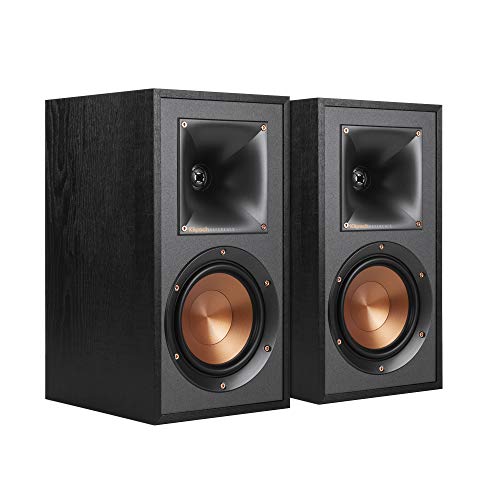
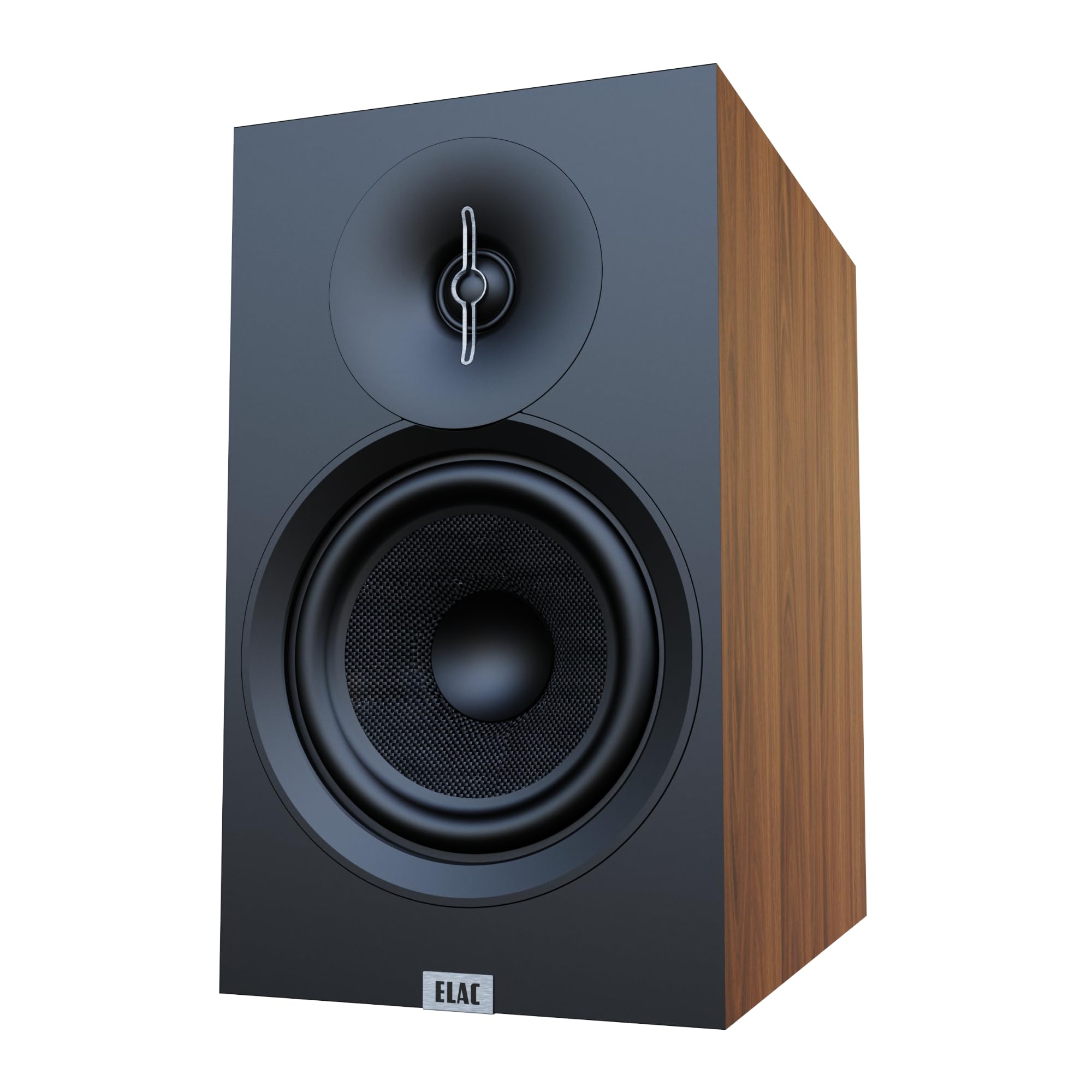


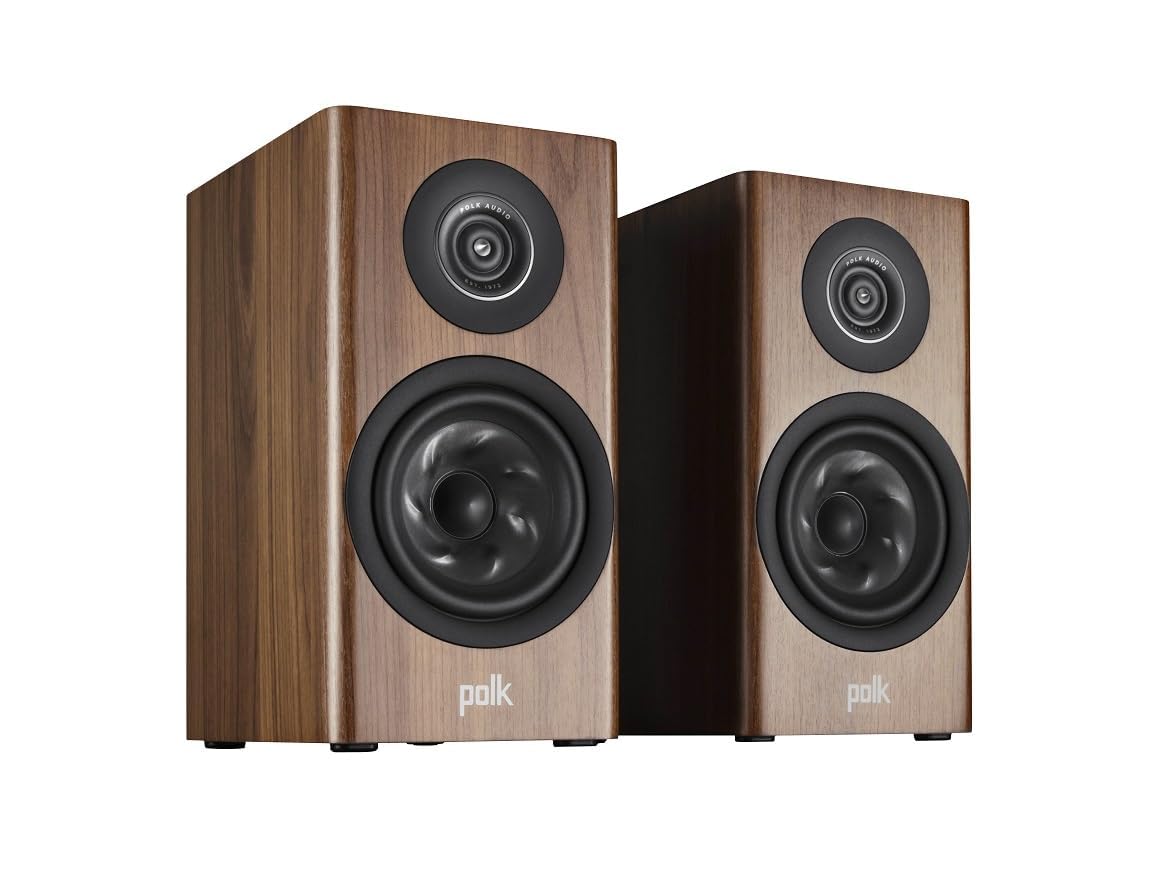
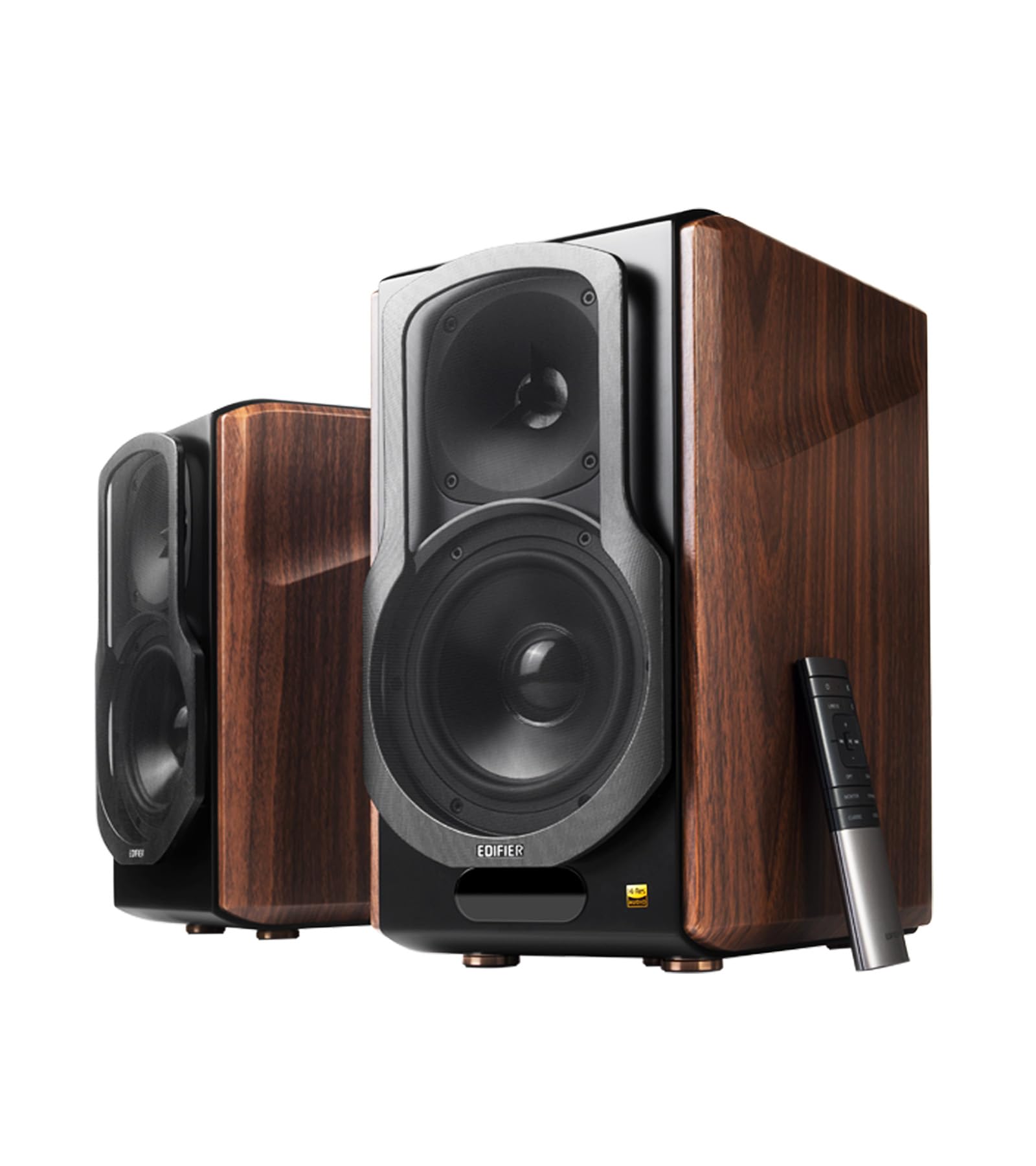
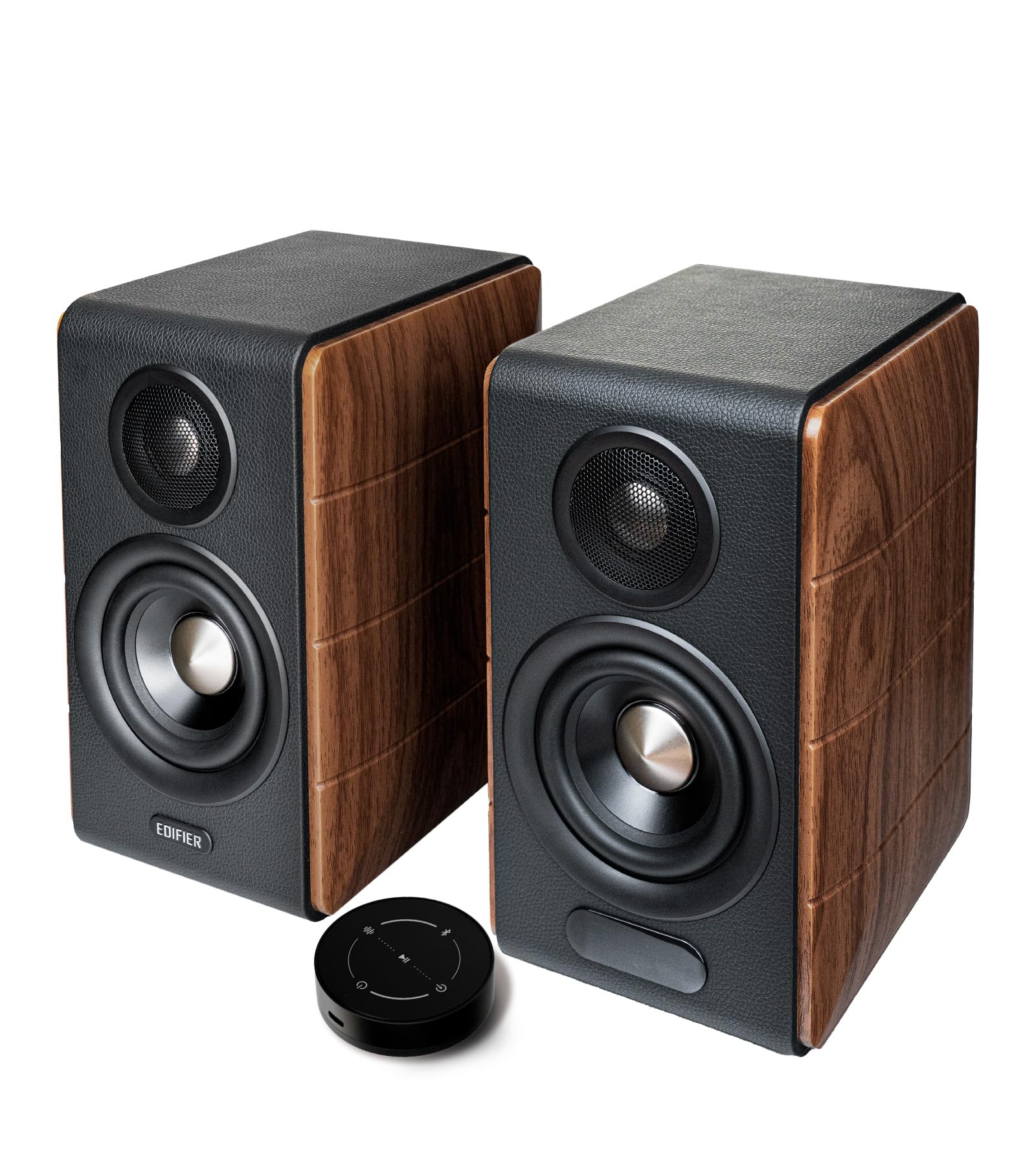


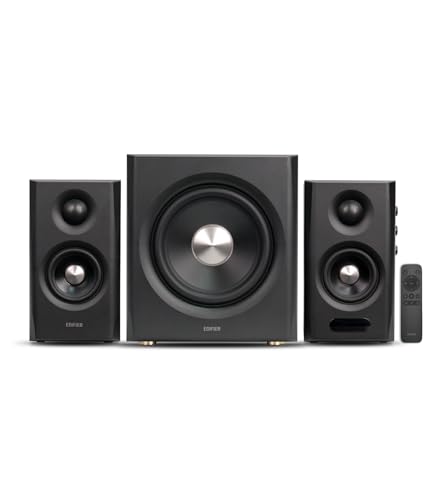
Who Should Buy Which Mid Range Bookshelf Speakers?
The right pair depends on how you listen every day. Find which of the three routines below matches yours before comparing frequency response or cabinet finishes.
For Desktop Nearfield, PC, and Plug and Play Vinyl Listeners
Choose active (powered) speakers if yours will sit 2.5 to 4 feet from your ears on a desk, dresser or narrow credenza. Space is tight, and a separate bulky stereo receiver is usually unwelcome there.
Look for 4.5 inch to 5.25 inch midbass woofers, built in amplification, a USB input for your computer, a switchable phono preamp if you own a turntable, and Bluetooth streaming. Prioritize cabinets under about 11 inches deep, with front firing ports or a boundary EQ switch on the back so placing them a few inches from the wall does not turn male vocals into muddy bass.
Desk speakers also benefit from a small amount of decoupling. Foam wedges or dense isolation pads angle the tweeters toward your ears and keep the cabinets from buzzing against a hollow desktop.
For Living Room TV, Movies, and Family Streaming
For a living room of roughly 200 to 350 square feet, pick speakers that give real left and right separation and enough dynamic headroom to replace a flat soundbar. Two routes work well: powered bookshelf speakers with an HDMI ARC or eARC input and a subwoofer output, or higher sensitivity (88 dB or more) 6.5 inch passive speakers paired with a compact integrated amplifier or AV receiver.
HDMI ARC lets your TV remote control volume and power, which keeps daily use simple for the whole family. A 6.5 inch woofer, or a subwoofer connected to the sub out, supplies the midbass weight that action movie dialogue and gatherings need.
Open plan homes add another variable: background noise. If your living room flows into the kitchen, appliance hum and street noise compete with dialogue, so a quieter room lets you keep the volume at a sensible level.
For Serious Two Channel Audiophiles and Dedicated Music Rooms
Passive two way speakers on rigid 24 to 28 inch stands suit listeners who already own, or plan to build, a separate amplifier, DAC and turntable chain. That setup gives you the most room to upgrade one component at a time.
Because the whole budget goes into drivers, braced MDF cabinets and crossover parts instead of amplifiers, Bluetooth chips and DAC boards, a passive pair at a given price commonly offers better soundstage depth and instrument separation than a powered pair at the same price. The trade-off is that you must budget separately for an amplifier and speaker wire, often another $200 to $500 for a decent integrated amp.
Key Features to Compare
Once you know whether you need passive standmounts or all in one powered monitors, weigh these five details before buying.
Passive vs Active (Powered) Architecture
Passive speakers need an external amplifier, while active speakers have one built in. Knowing the difference prevents ordering a pair that cannot make sound out of the box.
- Passive Bookshelf Speakers: Have metal binding posts on the back and need a stereo amplifier or AV receiver (typically 30 to 120 watts per channel) connected with speaker wire. You can upgrade the amplifier, streamer or DAC independently for many years.
- Active / Powered Bookshelf Speakers: House the amplifier (and usually a DAC, Bluetooth receiver and preamp) in one main cabinet, which plugs into the wall and sends power to the second speaker through an included cable.
A useful rule: if you want fewer boxes and fewer cables, go active. If you enjoy swapping components and want the longest upgrade path, go passive.
Woofer Diameter (5.25 Inch vs 6.5 Inch) and Cone Materials
Woofer size mainly decides bass depth and room fit. In a two way speaker, one driver handles both bass lines and the vocal midrange up to the crossover point, usually around 2,000 to 2,500 Hz.
5.25 inch woofers have lighter moving mass and wider midrange dispersion, so vocals sound coherent in small to medium rooms (up to about 200 square feet) or when paired with a powered subwoofer. 6.5 inch woofers move noticeably more air, often reaching the mid 40 Hz range, and play louder without strain in larger rooms. Look for stiff, well damped cones such as woven Kevlar, aramid fiber, aluminum, ceramic coated or treated wood pulp.
Tweeter Design (Silk Dome, Metal Dome, Concentric, and Ribbon/AMT)
The tweeter shapes a speaker's treble character and how tiring it is over long sessions. Silk or fabric dome tweeters are known for smooth, forgiving treble that suits long workdays and brightly mixed pop recordings.
Aluminum, titanium and ceramic dome tweeters in shaped waveguides tend to give more snap on acoustic guitar and cymbals while matching the woofer's dispersion. Concentric drivers place the tweeter at the center of the woofer so sound comes from one point, which suits nearfield desks. AMT folded ribbon tweeters offer fast, airy treble extension.
Port Placement (Rear Ported vs Front Ported vs Sealed) and Wall Clearance
Port location decides how close to a wall you can place the speaker. Most mid range bookshelf speakers use a tuned port to reinforce bass between roughly 45 Hz and 80 Hz.
A rear port placed within a few inches of a wall can create a midbass hump that makes bass guitar sound boomy, so rear ported models prefer around 10 to 24 inches behind them, or the included foam port plugs on a shallow shelf. For a bookcase cubby or a spot against the wall, choose a front ported, slot ported or sealed cabinet, which sends bass forward without wall bloat.
Sensitivity (dB) and Nominal Impedance (4 Ohm vs 6 Ohm vs 8 Ohm)
For passive speakers, two numbers on the rear label tell you whether your amplifier is a good match. Sensitivity (typically 85 dB to 90 dB at 2.83V / 1 meter) shows how loud a speaker plays per watt: an 85 dB model wants a robust 60 to 100 watt amplifier, while an 89 or 90 dB model plays easily on 25 to 40 watts.
Nominal impedance is the electrical load. Many mid range speakers have a nominal impedance of 4 to 6 Ohms, so verify that your amplifier or receiver is rated stable at 4 Ohms and runs cool at high volume. This is separate from car audio, where door speakers follow different standards.
How to Read a Spec Sheet Without Getting Fooled
Spec sheets are most useful when you know which numbers are comparable and which are marketing. A few minutes spent here can save you from returning a pair that looked great on paper.
Frequency response only means something when it includes a tolerance, such as 48 Hz to 22 kHz (plus or minus 3 dB). A listing that says 20 Hz to 20 kHz with no tolerance is not telling you how loud those extremes actually play. For a bookshelf speaker, a realistic bass limit is somewhere in the 40 to 60 Hz range, and anything lower usually needs a subwoofer.
Power handling is another number that confuses buyers. It describes how much amplifier power a speaker can survive, not how much it needs, so a "150 watt" rating does not mean you must supply 150 watts. Pay more attention to sensitivity and impedance, which tell you how easily the amplifier can drive the speaker.
Cabinet construction is often visible in the weight and listed materials. Medium density fiberboard with internal bracing is the norm at this price, and a pair that weighs 10 to 20 pounds each usually has thicker walls than a featherweight model of the same size. Vinyl wrap finishes are common and hard wearing, while real wood veneer typically costs more and needs gentler cleaning.
Finally, check the connection list against what you own. A pair with only Bluetooth and an RCA input will not help a TV with only HDMI and optical outputs, and a pair with HDMI ARC will not work with a turntable unless a phono stage is built in or added.
Budget Tiers Inside the Mid Range
The mid range is wide, and what you get at the low end differs from the top end. Knowing where your budget sits helps you set realistic expectations.
- Around $250 to $400 per pair: Expect good tweeters and woofers in vinyl wrapped MDF cabinets. Powered models at this level usually include Bluetooth and USB, and passive models give the best sound per dollar if you already own an amp.
- Around $400 to $600 per pair: Cabinets get stiffer, crossovers use better parts, and you start to see waveguides, aramid cones and hardwood veneer. Powered pairs at this level often add HDMI ARC, a subwoofer output and room correction switches.
- Around $600 to $800 per pair: Improvements become subtler: better imaging, lower distortion at volume and finer finishes. This tier makes the most sense if your room, stands and amplifier are already up to the task.
Whatever tier you choose, set aside money for stands or isolation pads. A good pair on solid 24 to 28 inch stands will often beat a pricier pair left on a cluttered shelf.
Common Mistakes to Avoid When Buying Mid Range Bookshelf Speakers
These four mistakes cause most disappointment with new speakers.
- Placing speakers on the same surface as a turntable: Woofer vibrations travel through a shared wooden credenza into the stylus and cause low frequency feedback rumble. Use separate stands or dense isolation pads if they share a console.
- Pushing speakers back from the edge of a deep shelf or desk: Sound bounces off the surface in front of the woofer and hollows out vocals through comb filtering. Pull the front baffle flush with the edge.
- Buying passive speakers without budgeting for an amplifier: Check whether a listing says "Passive" or "Active/Powered" so you are not surprised by bare wire terminals on delivery day.
- Confusing single and pair pricing: Most bookshelf speakers are sold as matched pairs, but some studio monitors and home theater speakers are priced individually. Confirm the box contains two.
Setup and Care Tips
Good placement can improve a pair more than a small upgrade in price. These three rules take about fifteen minutes.
- Position tweeters at seated ear height: High frequencies are directional, so use 24 to 28 inch stands, or angled desktop wedges, so the tweeters point at your ears.
- Form an equilateral triangle and adjust toe in: Space the speakers about as far apart as each is from your chair (for example, 6 to 8 feet in a living room), and angle them inward 10 to 15 degrees for sharper center focus.
- Keep grilles on around pets and kids: Magnetic cloth grilles protect delicate dome tweeters and pop off easily for critical listening. Dust the cabinets with a dry microfiber cloth and avoid sprays near the drivers.
Heat and moisture are the other enemies of speakers. Keep them away from radiators, direct sun and steamy areas, since glue joints and rubber surrounds age faster in extreme conditions. If you do listen while cooking, place the pair across the room from the stove and sink rather than on the counter.
Give new speakers a few dozen hours of ordinary listening before judging them, because suspension parts loosen slightly with use. If the bass sounds heavy, try moving the pair a few inches farther from the wall before changing anything else.
Frequently Asked Questions
What size mid range bookshelf speaker do I need for my room?
For desks, bedrooms and offices under about 150 square feet, a speaker with a 4 inch to 5.25 inch woofer is enough. For living rooms of roughly 180 to 350 square feet without a subwoofer, a 6.5 inch standmount gives deeper bass and fuller coverage. Ceiling height and open doorways also matter, since open rooms swallow bass.
Do mid range bookshelf speakers need a separate subwoofer?
Not for most acoustic music, jazz, indie rock and vocal tracks, since a good 6.5 inch pair reaches the mid 40 Hz range and sounds complete alone. If you watch action movies or listen to hip hop and electronic music with deep sub bass, a powered subwoofer on the sub out jack adds low end scale. Small 5.25 inch pairs benefit the most from one.
Are active or passive bookshelf speakers better in the mid range tier?
Active speakers are better if you want a compact all in one system with Bluetooth, USB and HDMI inputs for a desk or TV console. Passive speakers are better if you already own an amplifier or want the most sound quality for the money and easy future upgrades. Neither is better in every case, so choose by your gear and space.
Do I need special speaker wire or outlets for bookshelf speakers?
No, special outlets are not needed. Active speakers plug into a standard wall outlet, and passive speakers connect to an amplifier with ordinary 14 or 16 AWG copper speaker wire, either bare or with banana plugs. For runs longer than about 25 feet, choose the thicker 14 AWG.
Do bookshelf speakers need stands?
Stands are strongly recommended, because they set the tweeters at ear height and keep the cabinets away from reflective surfaces. A bookshelf or desk works if the speaker's front edge is flush and the tweeter roughly lines up with your ears. Isolation pads or foam wedges are a cheap option for desks.
How long do mid range bookshelf speakers last?
Passive speakers with rubber woofer surrounds commonly last decades of daily use. Active speakers often last a shorter time, perhaps 8 to 15 years, because the internal amplifier and Bluetooth boards age like other consumer electronics. Keeping them dry and away from heat helps either type.
Final Thoughts
Few upgrades improve daily music and movies as much as moving from a smart speaker or flat TV bar to a true stereo pair. Choose compact active monitors with USB and Bluetooth for a desk or turntable nook, HDMI ARC powered models or 6.5 inch passives for the living room, or passive two ways with a dedicated amplifier for critical listening. Use the picks in the table above to find the best mid range bookshelf speakers for your room.


