
Best Frequency for Mid Range Speakers: Reviews and Buying Guide for 2026
Disclosure: We may earn a commission when you buy through links on this page, at no extra cost to you. As an Amazon Associate I earn from qualifying purchases. Learn more

Setting up car or home speakers? Learn the best frequency for mid range speakers, from high pass and low pass points to filter slopes and 3 way tuning.
Anyone who wants clear vocals, natural guitars and lifelike pianos needs to get the midrange right, because that is where most of the music lives. Subwoofers handle low end rumble and tweeters add cymbal sparkle, but lead vocals, acoustic guitars, brass and snare attacks all sit in the middle. Dialing in the best frequency for mid range speakers means understanding crossover filters, the physical limits of the driver cone, and the room or vehicle cabin around it. Set the crossover too low and the cone distorts and the voice coil overheats. Set it too high and vocals sound thin and disconnected.
A poorly tuned midrange driver is forced to play bass notes it was never built for, which muddies vocals and wastes amplifier power as heat. Below, we explain high pass (HPF) and low pass (LPF) crossover points in plain English, show why 12dB and 24dB Linkwitz Riley slopes matter, and cover how to blend midrange drivers with subwoofers and tweeters. The picks in the table are the drivers and crossover components to compare alongside these settings.


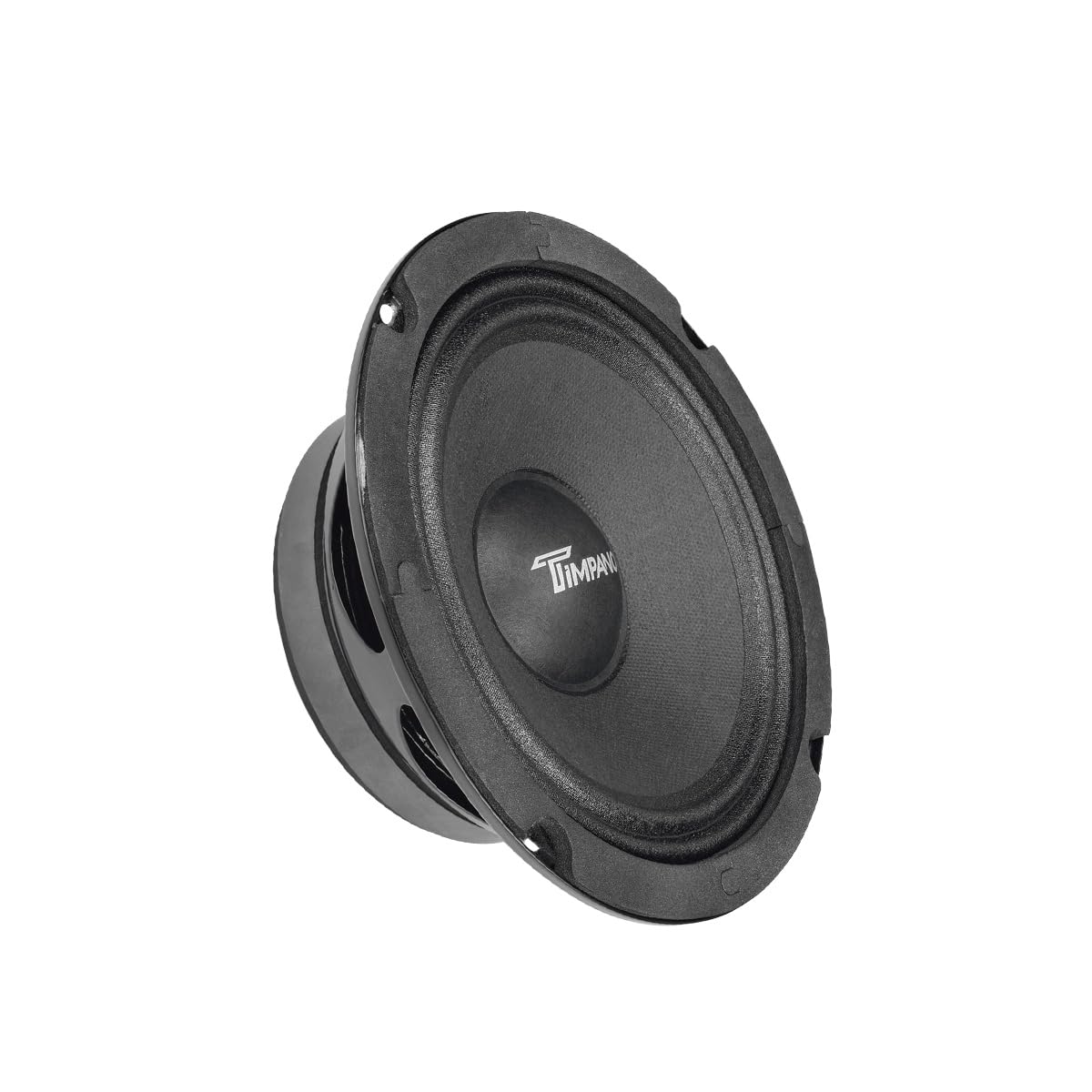


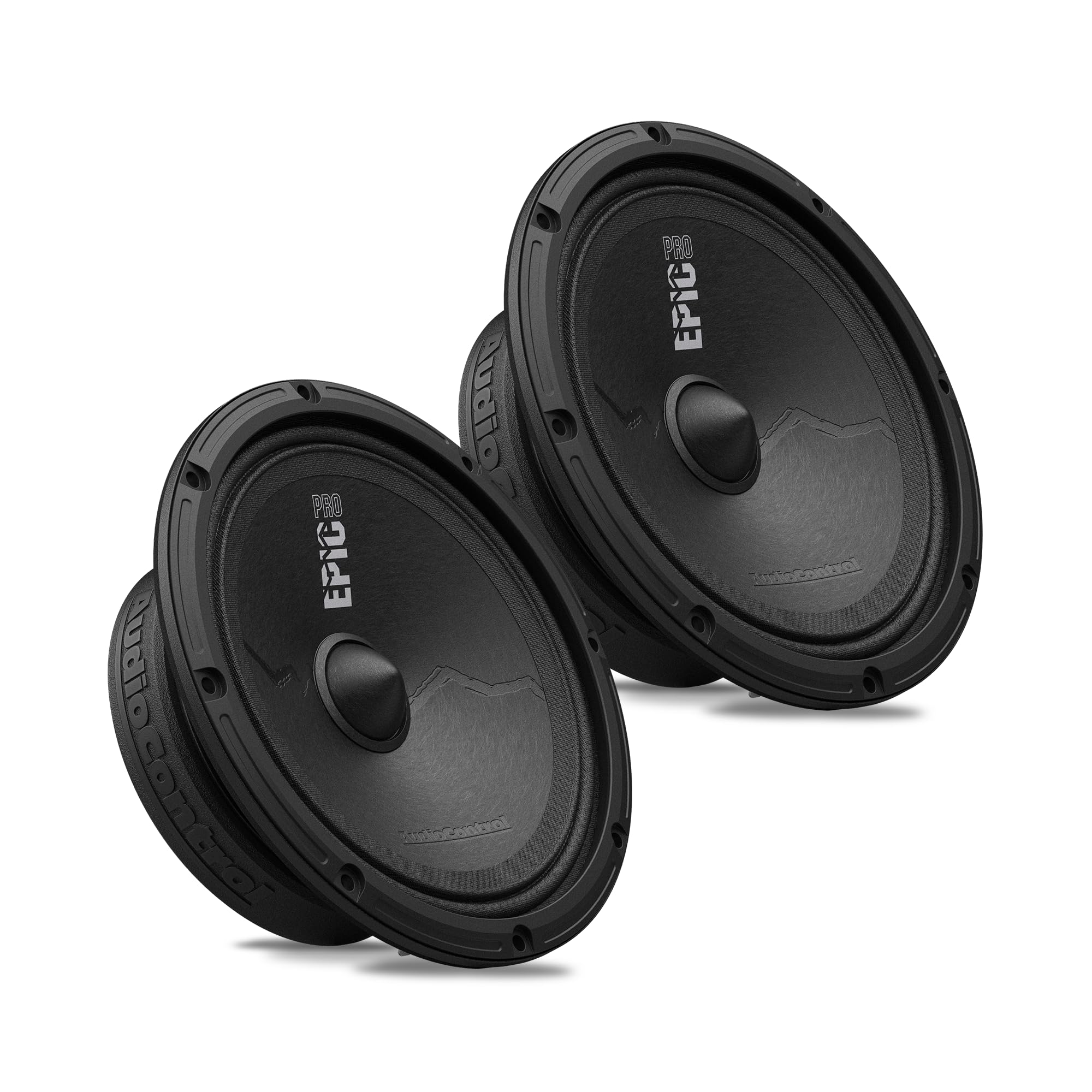
How to Choose the Best Frequency for Mid Range Speakers: Buying Guide
The right midrange settings balance how far the cone can safely move against where the tweeter can safely take over. Focus on these core benchmarks before touching any dial.
The Human Vocal Band: 250 Hz to 4,000 Hz
A midrange speaker's main job is reproducing speech and singing with presence. The fundamental pitch of male and female voices runs from roughly 85 Hz to 250 Hz, while the harmonics that let the ear tell words and emotion apart extend from about 300 Hz to 3,000 Hz.
The best frequency for mid range speakers is usually a window from 250 Hz or 350 Hz at the bottom up to 3,500 Hz or 5,000 Hz at the top. Keeping this whole band on one driver avoids crossover phase problems in the region where human hearing is most sensitive.
High Pass Filter (HPF) Frequency Tuning: Protecting the Driver
The right HPF setting blocks bass the driver cannot handle and depends mostly on cone size and suspension stiffness. A High Pass Filter lets midrange frequencies through and stops low bass. Common starting points:
- 3 Inch to 3.5 Inch Compact Midrange Cones: Set HPF between 350 Hz and 500 Hz. Small cones have limited excursion, and filtering below 350 Hz helps prevent the voice coil bottoming out.
- 4 Inch to 5.25 Inch Midrange Drivers: Set HPF between 200 Hz and 300 Hz. Larger cones move more air safely, so the handoff from the midbass woofer can be lower.
- 6.5 Inch Midbass / Midrange Drivers: Set HPF between 80 Hz and 120 Hz in 2 way component car audio setups.
A correct HPF lets the system play louder before distortion appears, because the driver no longer wastes effort on notes it cannot reproduce cleanly. Start at the higher end of the range for your cone size, then lower it in small steps while listening for strain.
Low Pass Filter (LPF) Frequency Tuning: Handing Off to the Tweeter
Set the LPF between 3,500 Hz and 5,000 Hz for most midrange drivers. A Low Pass Filter rolls off highs before they reach the cone, which matters because midrange cones begin to "beam" (narrow into a tight flashlight pattern) once the wavelength gets close to the cone diameter.
Handing the top end to a silk or aluminum dome tweeter keeps the sound spread widely across the cabin or living room. Smaller cones beam sooner, so a 3 inch driver often wants the lower end of this range, while a 5.25 inch driver may need a slightly lower handoff than that.
Crossover Filter Slopes: 12dB vs 24dB per Octave Linkwitz Riley
The slope sets how quickly sound fades beyond the crossover point, since filters roll off gradually rather than cutting like a wall. It is measured in decibels per octave:
- 12dB per Octave (2nd Order Filter): A gentle slope that sounds smooth and musical, but lets more out of band energy reach the driver, so you need larger safety margins.
- 24dB per Octave (4th Order Linkwitz Riley Filter): A steep slope that isolates the midrange driver well. It protects the driver, copes with higher amplifier power, and reduces phase cancellation at the crossover point.
If your processor or amplifier offers both, try 24dB first for protection, then compare by ear.
Driver Cone Material and Acoustic Damping
Cone material decides how cleanly a driver plays its assigned band. Stiff, light materials such as treated paper pulp, woven Kevlar, carbon fiber and damped aluminum give fast response with little cone flex.
Good internal damping tames breakup resonances at the top of the band, so female vocals and brass sound smooth instead of harsh or metallic. Metal cones can show a sharp peak near their upper limit, which is one more reason to keep the LPF safely below it.
When setting crossovers, play familiar vocal recordings and listen for centered voices. If a singer sounds nasal or muffled, moving the high pass point by about 50 Hz often restores natural chest warmth.
Impedance Matching and Amplifier Power Handling
Match the driver impedance (commonly 4 ohms in car audio and 8 ohms in home theater) to what your amplifier channel is designed to drive. Feed the driver clean, unclipped power that fits its RMS rating, which for many midrange drivers falls somewhere between 50 and 150 watts RMS. Clipped power from an overworked amplifier damages drivers faster than clean power at high volume.
Optimal Frequency Settings for Common Systems
These starting points suit the most common setups, and you can fine tune them by ear.
3 Way Car Audio Component Systems
In a three way car system (subwoofer in the trunk, 6.5 inch woofer in the door, 3.5 inch midrange and tweeter in the A pillar), use these bands:
- Subwoofer: 20 Hz to 80 Hz (LPF 80 Hz)
- Door Midbass Woofer: 80 Hz to 350 Hz (HPF 80 Hz, LPF 350 Hz)
- A Pillar Midrange Driver: 350 Hz to 4,000 Hz (HPF 350 Hz, LPF 4,000 Hz)
- A Pillar Tweeter: 4,000 Hz to 20,000 Hz (HPF 4,000 Hz)
Home Theater Surround Sound Systems
In a 5.1 home cinema, center channel and tower midrange drivers typically work within an 80 Hz to 3,000 Hz band before the tweeter takes over, with everything below 80 Hz sent to the powered subwoofer. A well set center channel keeps dialogue clear even during loud scenes. Placing it at ear height and aimed at the seating area helps as much as the crossover number.
Care and Tuning Tips for Midrange Speakers
These four habits help you get clean, distortion free vocals and protect the drivers.
- Never run midrange drivers without a high pass filter: Full range bass through a small cone can bottom out the voice coil and cause lasting damage.
- Use an RTA microphone and a digital sound processor: A real time analyzer microphone at seated ear level helps you smooth peaks and dips with parametric EQ.
- Check phase alignment at the crossover point: If vocals sound thin or hollow, try reversing the positive and negative wires on the midrange driver, since a 180 degree phase error with the tweeter cancels vocal frequencies.
- Add sound damping to door panels: Butyl deadening sheets stop thin metal doors from vibrating and help preserve midrange clarity.
Frequently Asked Questions
What is the best frequency range for a midrange speaker?
The best range for a dedicated midrange speaker is typically 250 Hz or 350 Hz up to 3,500 Hz or 5,000 Hz. This window covers human speech and instrument overtones while protecting the driver from heavy bass excursion.
Can you run midrange speakers on a full range signal?
No, you should not run dedicated midrange speakers on a full range signal. Bass below about 150 Hz causes large cone movement that creates distortion and can damage the voice coil and suspension.
What happens if you cross a midrange speaker over too low?
Crossing over too low causes mechanical distortion and muddy vocals. On a small 3 inch driver, a point below about 200 Hz also risks overheating the voice coil.
What crossover slope is best for midrange speakers?
A 24dB per octave Linkwitz Riley slope is generally the best choice. It rolls off out of band frequencies sharply, reduces phase cancellation at the crossover point, and gives the driver better protection.
Final Thoughts
Correct crossover settings bring out the clarity and warmth of your system. A high pass filter between 250 Hz and 350 Hz protects the voice coil, and rolling off around 4,000 Hz into a dedicated tweeter keeps vocals natural and dynamic. Compare the drivers and crossover components in the table, then fine tune by ear with familiar recordings.


