
The Best Short Range Projectors for 2026: Big Screen Small Space Guide
Disclosure: We may earn a commission when you buy through links on this page, at no extra cost to you. As an Amazon Associate I earn from qualifying purchases. Learn more

Short on wall distance? Learn how throw ratio, brightness, screens and input lag decide which of the best short range projectors suits your room.
Apartments, bedrooms and rooms with low ceilings are hard on traditional projectors, which need to sit far from the wall and cast shadows whenever someone walks across the room. Choosing the best short range projectors solves that, because wide angle optics and curved mirrors can produce a 100 inch picture from just inches or a few feet away from the wall.
Whether you want an ultra short throw (UST) laser console that sits on your media credenza, a short throw projector for fast console gaming, or a compact portable unit for backyard movie nights, the right choice depends on your room and habits. This guide explains throw ratios, light engines, brightness, screens and input lag so you can read the picks in the table with confidence.

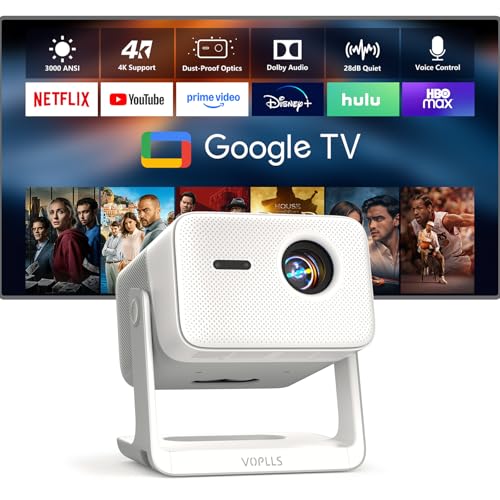
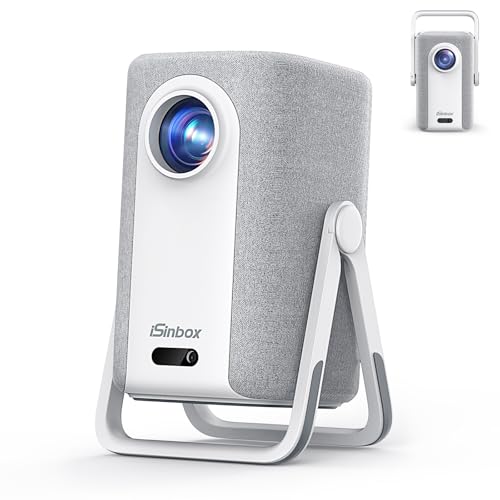

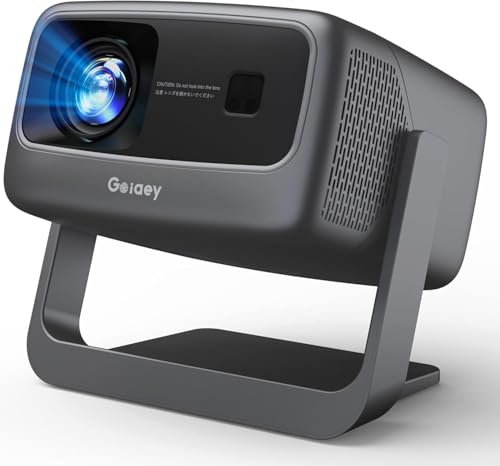

How to Choose the Best Short Range Projectors
The right short range projector matches your room distance, light level and main use. Check these core points before buying, and consider how the projector's cooling, sound and mounting fit into the rest of your living space.
Measure first: the wall width, the depth of the console or table, and the height from the floor to where the picture should start. Those three numbers eliminate many models before you compare a single feature.
Throw Ratio: Ultra Short Throw vs Standard Short Throw
Throw ratio is the distance from the wall divided by the image width, and it decides where the projector can sit.
- Ultra short throw (about 0.20:1 to 0.25:1): A curved mirror bounces light upward at a steep angle. Sitting roughly six to twelve inches from the wall, a UST model can cast a 100 to 120 inch image without any ceiling mount.
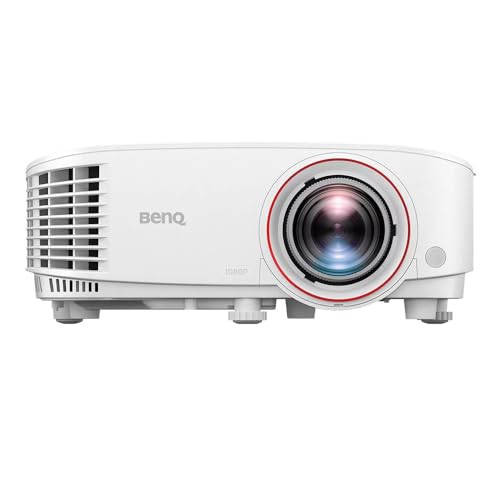
- Standard short throw (about 0.50:1 to 0.80:1): A wide angle lens projects a 100 inch image from roughly three to five feet away. This suits coffee table setups, bedrooms and sports simulators.
A common mistake is measuring only to the wall and forgetting the projector's own depth. Check the maker's throw distance chart for your target image size, and note whether the distance is measured from the wall to the front or the back of the unit.
Light Engine: Triple Laser vs LED
The light source affects color, lifespan and warm up time.
- Triple laser (RGB): Separate red, green and blue lasers give a wide color range, and the light turns on instantly. Makers commonly rate laser engines at 20,000 hours or more, with no lamp to replace.
- Solid state LED: Compact, energy efficient and cool running, usually rated around 20,000 hours. LED suits lighter, portable projectors.
How Many ANSI Lumens Do You Need?
For a room that is not fully dark, look for roughly 2,000 to 3,000 ANSI lumens. Brightness is best judged by ANSI or ISO lumens, so be wary of off brand models quoting thousands of unverified "marketing" lumens.
Higher output keeps daytime sports and streaming shows punchy when light filters through curtains. In a dedicated dark room, a lower figure can still look excellent, and a smaller image also looks brighter than a very large one from the same projector.
Why an ALR Screen Matters
An ambient light rejecting (ALR) screen is the best partner for a UST projector. Ordinary white screens and bare drywall reflect ceiling light toward your eyes and wash out contrast.
ALR screens use fine optical ridges that reflect the projector's upward light toward viewers while absorbing light from above. Choose a rigid, fixed frame screen so steep angles do not exaggerate ripples.
Match the screen to the projector: UST projectors need a screen made for steep angles, while standard short throw models can work with a regular gain screen or a gray screen for better black levels.
Input Lag and Refresh Rate for Gaming
For gaming, look for a Game Mode with low input lag. Standard home theater projectors can add 40 to 80 milliseconds of delay, which is noticeable on a PlayStation 5, Xbox Series X or gaming PC.
Gaming focused models often list figures under about 16 milliseconds at 1080p and 120Hz, and around 30 milliseconds at 4K 60Hz. Check the maker's specification sheet for the exact numbers, and confirm the HDMI ports support the refresh rate you want.
Built In Sound and Smart Streaming
Built in speakers and a streaming platform reduce clutter. Because these projectors sit at the front of the room, many include stereo speakers, and some are tuned by audio brands or support Dolby Atmos.
Models with Google TV or Android TV give direct access to apps such as Netflix, Prime Video and YouTube without a separate stick. If you already own a streaming box, this matters less than HDMI and eARC support.
Eye Protection Sensors for Families
Eye protection sensors are worth having if children or pets share the room. A UST projector fires light upward from a low console, so someone passing could look toward the lens.
Many premium models use sensors that dim the light when something enters the area above the lens, then restore brightness when it clears. Look for this feature in the maker's description.
Geometric Warp and Focus Adjustments
Getting a UST image to line up with a fixed frame screen takes fine adjustment. Look for multi point warp correction (eight or sixteen points is common) so you can fix each corner and edge from the remote.
Motorized focus is also handy, since it lets you sharpen the picture from the couch.
Popular Short Range Projector Formats Compared
Most short range projectors fall into three formats, each suited to a different home.
Laser TV Living Room Consoles
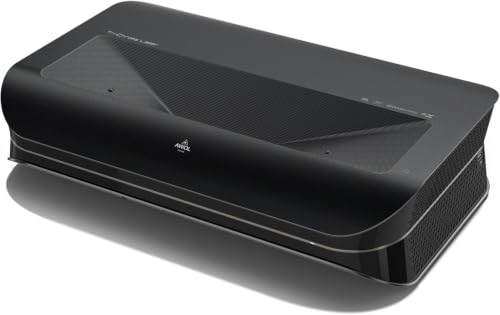
These UST projectors sit on a media console beneath an ALR screen and act as a television replacement. They suit large living rooms where a 100 inch picture is the goal.
Portable Short Throw Projectors
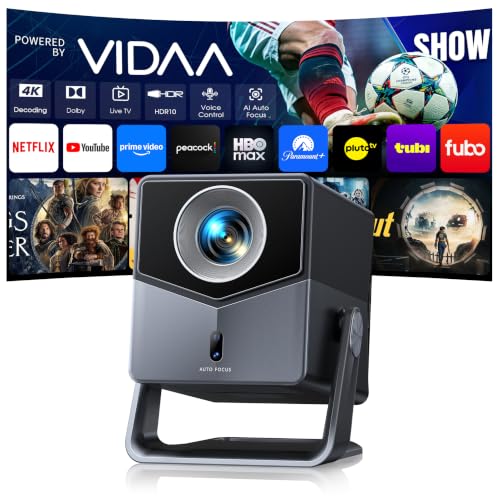
These compact units often include a handle, a battery and auto keystone correction. They are easy to move between a bedroom, living room and backyard, though they are usually dimmer than console models.
Home Cinema and Simulator Projectors
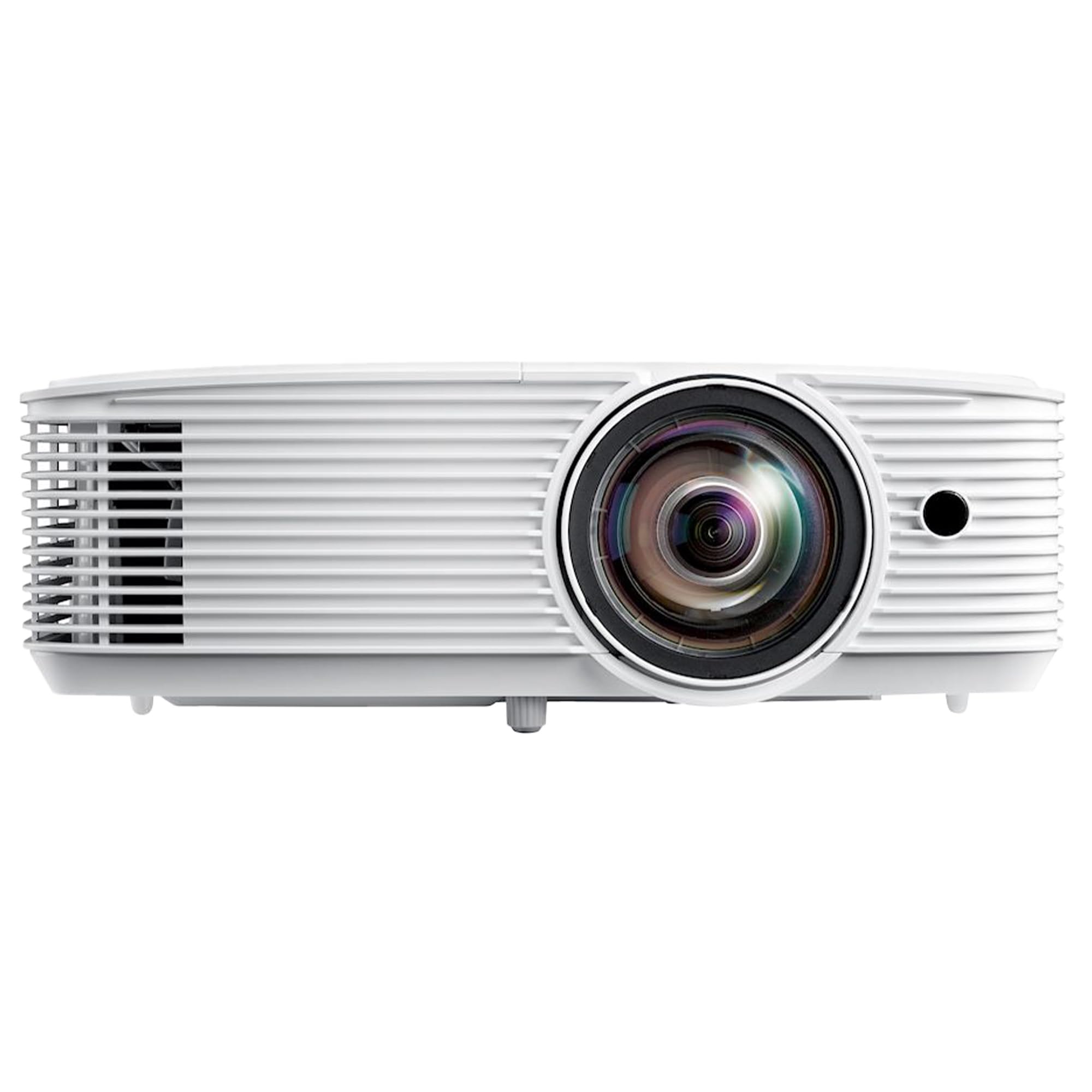
These sturdier models offer optical zoom and rugged housings for custom theater rooms and sports simulators. Brightness and lens adjustment matter more here than built in apps.
Setup Habits for Better Picture Geometry
Four simple habits improve sharpness and extend the life of a short range projector.
- Use a flat, tensioned screen: Steep UST angles show every wave in a cheap pull down screen, so choose a fixed frame or tab tensioned model.
- Level the projector first: Adjust the feet to level the image physically, since heavy digital keystone correction can slightly reduce sharpness.
- Clean the lens gently: Blow dust off with a rubber air bulb rather than wiping with rough fabric.
- Leave room for airflow: Keep about four to six inches clear around the vents so the projector does not overheat.
Also think about the console itself. A stable, level surface that can hold the projector's weight helps keep the image aligned over time, and a piece of furniture that is deep enough avoids the unit hanging over the edge.
If the projector sits in or near a kitchen or open plan space, cooking vapor and grease can settle on the lens and vents, so give it a clear spot away from the stove and clean the filters regularly.
Frequently Asked Questions
Can a short range projector really replace a living room television?
Yes, a UST laser projector can replace a TV when paired with an ALR screen. The screen keeps contrast high in a bright room. Sound and apps are often built in, though a separate soundbar can improve audio.
How far does an ultra short throw projector sit from the wall?
An ultra short throw projector typically sits about six to twelve inches from the wall. That distance produces an image of roughly 100 to 120 inches. Always check the maker's throw distance chart for your chosen size.
How long does a laser projector light source last?
Laser light engines are commonly rated between 20,000 and 30,000 hours. At four hours of viewing a day, that equals many years of use without lamp changes. Actual life depends on brightness mode and ventilation.
Can you project onto a bare wall?
You can use a smooth white wall, but results are usually weaker. Slight drywall texture casts tiny shadows at steep angles, and ceiling light washes out the image. A smooth, tensioned screen gives better sharpness and contrast.
Final Thoughts
Big screen viewing no longer needs ceiling mounts, long cable runs or a basement cinema. Focus on throw ratio, verified ANSI lumens, an ALR screen and low latency gaming modes, and the best short range projectors in the table will fit your room. Match the format to how you watch, then set it up carefully for the best picture.


