Best Cameras for Bird Watching: Complete Buying Guide
Disclosure: We may earn a commission when you buy through links on this page, at no extra cost to you. As an Amazon Associate I earn from qualifying purchases. Learn more

Superzoom, mirrorless and smart bird feeder cameras compared for birders, with three picks, a buying guide and tips by budget.
Birds are small, fast and usually far away, which makes them one of the hardest subjects to photograph. A phone or basic point and shoot rarely captures more than a distant speck, while the right camera can fill the frame with feather detail from across a meadow. This guide to the best cameras for bird watching explains which features matter, compares the main camera types and highlights picks for every budget.
The short answer: most birders should start with a superzoom bridge camera like the Nikon Coolpix P950 around $850, which reaches the equivalent of 2000mm with an 83x zoom and includes a dedicated Bird mode; backyard birders can let a smart feeder camera like the Kiwibit 4K around $190 capture visitors automatically, while serious photographers should choose an APS C mirrorless body with fast autofocus, like the Canon EOS R7, paired with a long telephoto lens.



Our Top 3 Picks at a Glance
These three cameras come from the product table above and cover the most common birding budgets and styles.


Best Overall
The Nikon Coolpix P950, around $850, is for birders who want huge reach without buying and carrying separate lenses. Its first strength is an 83x optical zoom reaching a 2000mm equivalent focal length, with image stabilization that keeps distant birds steady in the viewfinder. Its second strength is simplicity: built in Bird and Moon modes, 4K video and RAW support make it easy for beginners while still giving enthusiasts control.
The limitation is its small 16MP sensor, which produces noisier images in dim light than mirrorless cameras.
Best Value
The Kiwibit 4K smart bird feeder camera, around $190, is for backyard birders who want to see every visitor without waiting outside. Its first strength is automatic capture: motion alerts, 4K livestreaming with HDR and night vision and AI identification of more than 10,000 species. Its second strength is easy, year round operation with a solar panel, a 5200mAh battery and IP65 weather resistance.
The limitation is its fixed location; it captures only birds that visit the feeder.
Best Premium Pick
The Canon EOS R7, around $1,650 for the body, is for photographers who want sharp, professional bird images. Its first strength is a 32.5MP APS C sensor that adds telephoto reach thanks to its crop factor, paired with Dual Pixel CMOS AF across about 100% of the frame and subject tracking. Its second strength is speed: 15fps mechanical and 30fps electronic bursts, RAW Burst pre shooting and 5 axis in body stabilization.
The limitation is cost, since you must add a long telephoto lens for birding.
How to Choose the Best Cameras for Bird Watching: Buying Guide
Features That Matter for Bird Watching
Birding demands reach, speed and accuracy. Aim for an equivalent focal length of at least 400mm, and ideally 600mm or more, to photograph small songbirds. Fast continuous shooting of 10fps or higher captures wing positions in flight. Autofocus with animal or bird eye detection keeps focus on the bird instead of branches. A good electronic viewfinder helps you track birds in bright light where rear screens wash out.
Sensor Size and Image Quality
Sensor size affects detail and low light quality. Superzoom bridge cameras use small 1/2.3 inch sensors that trade quality for massive zoom ranges. 1 inch sensors offer a middle ground. APS C sensors, like the Canon EOS R7 and EOS R10, provide much cleaner images and a 1.6x crop that extends lens reach. Micro Four Thirds cameras like the OM System OM 1 Mark II double the effective focal length, letting smaller lenses reach far.
Low Light Performance
Birds are most active at dawn and dusk, when light is low. Larger sensors handle high ISO settings with less noise, so APS C and Micro Four Thirds cameras outperform superzooms early and late in the day. Image stabilization lets you use slower shutter speeds for perched birds. Bright lenses with wide apertures help, but long telephoto lenses are often f/5.6 or slower, making sensor performance more important.
Autofocus and Stabilization
Modern subject detection autofocus recognizes birds and animals, locking onto the eye even when the bird moves. Canon's Dual Pixel AF II on the R10 and R7 tracks people, animals and vehicles. In body image stabilization, found on the R7 and OM 1 Mark II, steadies any lens, while superzooms rely on lens stabilization. Strong stabilization is essential at long focal lengths, where tiny movements cause blur.
Durability and Weather Sealing
Birding often means rain, dew, dust and cold mornings. Weather sealed bodies, like the OM System OM 1 Mark II, resist moisture and dust far better than unsealed cameras. Smart feeder cameras carry IP65 or similar ratings for year round outdoor use. Carry a rain cover for unsealed cameras and long lenses.
Battery Life and Charging
Long mornings in the field drain batteries, especially with electronic viewfinders and burst shooting. Mirrorless cameras typically deliver several hundred shots per charge, so carry a spare. USB C charging lets you top up from a power bank. Solar powered feeder cameras, like the Kiwibit and Birdfy 2 Pro, keep running without manual charging in sunny locations.
Lenses and Reach
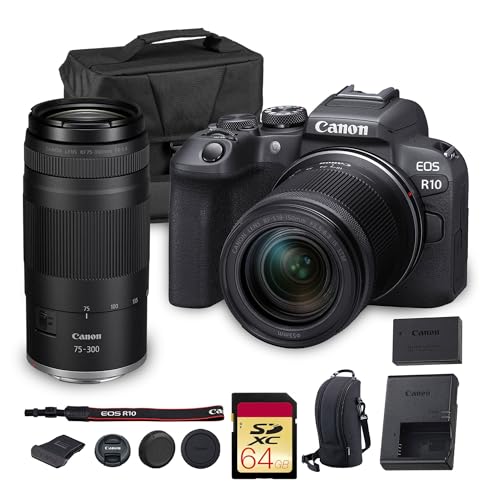
For interchangeable lens cameras, the lens matters as much as the body. Kit telephoto lenses like the RF 75 to 300mm included with the EOS R10 bundle are a budget starting point, giving roughly 480mm equivalent reach on APS C. Dedicated birders often upgrade to 100 to 400mm or 150 to 600mm lenses. Budget for the lens before choosing the body.
Types of Cameras for Bird Watching
Superzoom Bridge Cameras
Superzoom cameras, like the Nikon Coolpix P950, combine a fixed long zoom lens with a camera body shaped like a DSLR. They offer enormous reach for the price and no lens changes. The tradeoffs are smaller sensors and slower autofocus. They suit beginners, hikers and casual birders.
Mirrorless Cameras
Mirrorless cameras with telephoto lenses deliver the best image quality, fastest autofocus and highest burst rates. The Canon EOS R7, EOS R10 and OM System OM 1 Mark II are popular birding bodies. They cost more and weigh more with lenses but reward serious photographers.
Smart Bird Feeder Cameras
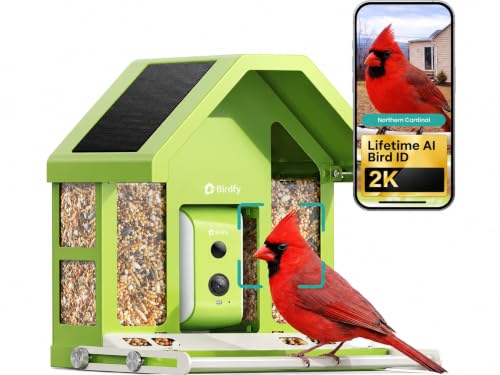
Smart feeder cameras, like the Kiwibit, Birdfy 2 Pro and Bird Buddy Pro, mount a camera on a feeder and capture visitors automatically, sending photos and AI species identification to your phone. They are ideal for families, beginners and anyone who wants to watch backyard birds from indoors.
Best Cameras for Specific Needs
Best Video Cameras for Bird Watching
The best video cameras for bird watching combine long reach with stable 4K recording. Look for strong stabilization, smooth autofocus during video and 4K at 30fps or higher. The Canon EOS R10 records 4K oversampled from 6K and tracks animals during video, while the Nikon P950 offers 4K with an enormous zoom range. Feeder cameras like the Kiwibit livestream 4K from the backyard.
Best Trail Cameras for Bird Watching
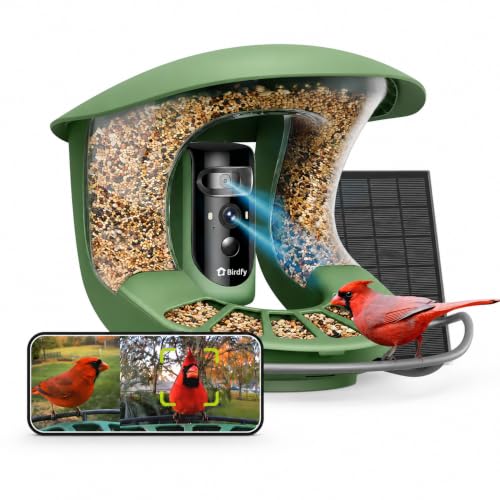
The best trail cameras for bird watching are motion activated cameras placed near feeders, water or nesting areas. Check for fast trigger speed, close focus capability and good daytime resolution, since many trail cameras are designed for larger animals. Smart feeder cameras like the Birdfy 2 Pro, with dual lenses for close and wide views, often work better for small birds than traditional trail cameras.
Best Bargain Cameras for Bird Watching
The best bargain cameras for bird watching deliver reach without high prices. Check for at least 600mm equivalent zoom, a viewfinder and decent burst speed. Smart feeder cameras around $190 to $260 offer excellent value for backyard birding, while the Canon EOS R10 bundle with a 75 to 300mm lens gives a capable mirrorless start for photographers on a budget.
Bird Photography Tips for Beginners
- Use a fast shutter speed: start at 1/1000 second or faster for active birds and 1/2000 for birds in flight.
- Focus on the eye: a sharp eye makes the whole image feel sharp.
- Get low and close slowly: approach birds gradually and shoot from their eye level.
- Shoot in good light: early morning sun from behind you gives warm, even light on feathers.
- Use burst mode: capture several frames to catch the perfect wing position.
Ethical Bird Photography
Good bird photography never stresses the birds. Keep a respectful distance, especially near nests, and back away if a bird changes its behavior or calls in alarm. Avoid using playback calls during breeding season, stay on trails in protected areas and never bait birds of prey. For feeder cameras, clean feeders every one to two weeks to prevent disease and place them close to windows or far from them to reduce collisions.
How to Make Your Camera Last Longer
- Use a lens cloth, not your shirt: fabric scratches lens coatings and smears glass.
- Carry a spare battery: cold mornings drain batteries quickly.
- Store in a dry, padded bag: protect gear from moisture and bumps, and use silica gel packs.
- Update firmware for AF improvements: manufacturers often improve autofocus and subject detection through updates.
- Clean feeder cameras regularly: wipe the lens and clean seed trays to keep images clear and birds healthy.
Cameras for Bird Watching: Your Questions Answered
What features matter most in cameras for bird watching?
What features matter most in cameras for bird watching? Reach, autofocus and burst speed matter most. Aim for at least 600mm equivalent zoom, bird or animal eye detection autofocus and 10fps or faster continuous shooting. Good stabilization and an electronic viewfinder make tracking distant birds much easier.
What does 83x zoom mean?
What does 83x zoom mean? An 83x zoom means the longest focal length is 83 times the shortest. On the Nikon P950, that spans roughly 24mm to 2000mm equivalent. The number alone does not show image quality; focal length in millimeters and sensor size give a clearer picture of real reach and detail.
Is a smartphone enough instead?
Is a smartphone enough instead? A smartphone is not enough for most bird photography, because phone zoom lenses are short and digital zoom loses detail. Phones work for birds very close by or through a spotting scope with an adapter. A superzoom or feeder camera is a big upgrade.
What specs matter most for beginners?
What specs matter most for beginners? Beginners should prioritize zoom reach, ease of use and a viewfinder. A superzoom with a dedicated bird mode, like the Nikon P950, delivers great results without lens changes. Smart feeder cameras are even simpler, capturing birds automatically.
How much should I spend on my first one?
How much should I spend on my first one? Most beginners should spend around $200 to $900. Smart feeder cameras cost around $190 to $260, while superzoom bridge cameras cost around $850. Mirrorless kits with telephoto lenses start around $1,700 and rise quickly with better lenses.
Which is better for low light?
Which is better for low light? Mirrorless cameras with APS C or Micro Four Thirds sensors are much better for low light than superzooms. Their larger sensors produce cleaner images at high ISO settings, which helps at dawn, dusk and under forest canopy.
Final Thoughts
Choosing a birding camera comes down to three things: enough reach to fill the frame, autofocus fast enough to track moving birds and a format that matches how you watch birds. The Nikon Coolpix P950 is the best all rounder, smart feeders like the Kiwibit capture backyard visitors automatically and the Canon EOS R7 delivers professional results. Compare the best cameras for bird watching in the product table above to find the right fit for your birding adventures.