
Best Laptop For Artificial Intelligence Students In 2026: The Complete Buying Guide
If you are searching for the best laptop for artificial intelligence students, the stakes are higher than for almost any other college purchase you will make. An artificial intelligence student's laptop is not just a note-taking device or a word processor. It is your primary workstation for training neural networks, running machine learning experiments, processing large datasets, writing Python and PyTorch code, and submitting assignments through cloud platforms that have strict computational requirements. The wrong laptop will bottleneck your learning, frustrate your workflow, and force an expensive upgrade long before graduation.
The good news is that in 2026, the market for laptops for AI students is the strongest it has ever been. Processors from Intel, AMD, Qualcomm, and Apple have all made significant leaps in on-device AI performance. NVIDIA's latest laptop GPUs bring unprecedented VRAM capacity into portable form factors. And the software ecosystem for AI and machine learning development has matured to a point where a well-chosen student laptop can handle a genuinely impressive range of coursework workloads locally, without depending entirely on cloud compute resources. This guide gives you a clear, practical framework for choosing the right machine.
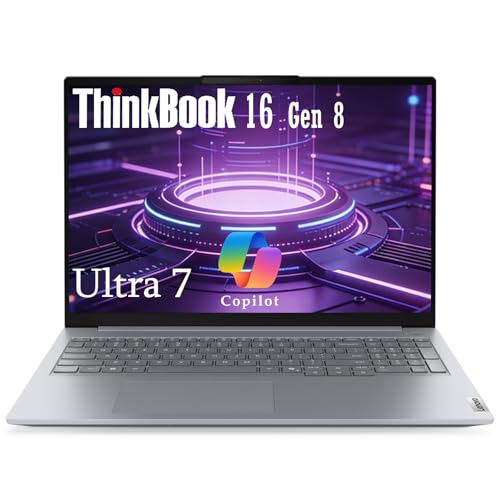
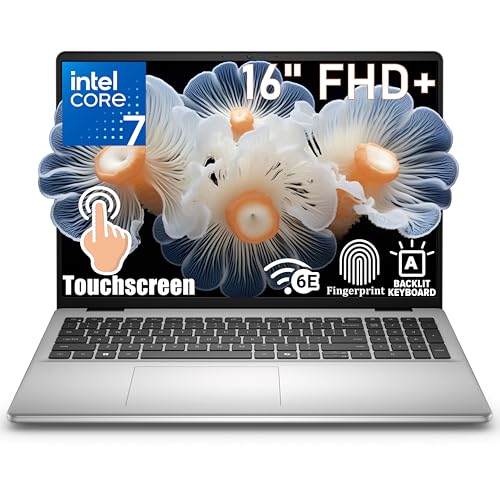
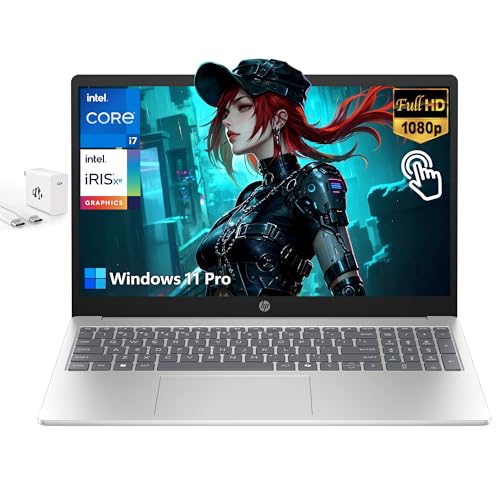
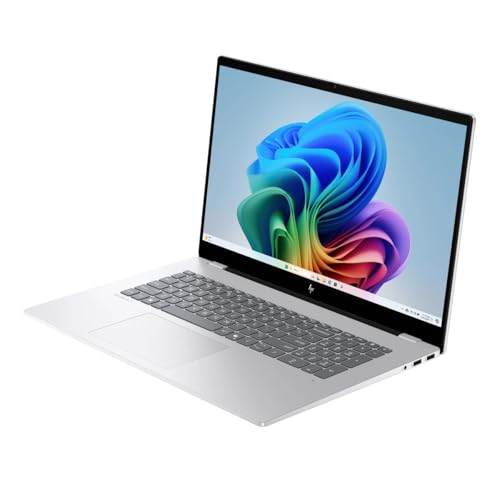
Why Artificial Intelligence Coursework Demands More From a Laptop
Artificial intelligence study is not like traditional computer science. The workloads involved in AI student coursework are categorically more demanding than general programming, web development, or even system administration. Understanding why helps you understand which specifications actually matter.
Machine learning model training is one of the most computationally intensive tasks a consumer laptop is ever asked to perform. Training even a moderately sized neural network on a local dataset involves billions of floating-point operations executed repeatedly across thousands of iterations. Without sufficient GPU acceleration and the memory bandwidth to feed it, training runs that should take minutes stretch into hours, making experimentation and iteration painfully slow.
Data preprocessing is a second major workload that many AI students underestimate before they begin their coursework. Loading, cleaning, transforming, and preparing large datasets for training pipelines consumes substantial CPU resources and RAM. Running multiple preprocessing steps simultaneously alongside a Jupyter notebook, a virtual environment, and a browser with course materials open requires more memory than most non-technical laptops carry.
Development environment management adds another layer of resource demand. Serious AI and machine learning students typically run multiple Python environments using tools like Conda or virtualenv, containerized applications using Docker, and occasionally full virtual machines for isolated experiments. Each layer consumes CPU, RAM, and storage that a minimal-spec laptop cannot spare.
The honest summary is this: artificial intelligence is a resource-intensive discipline. The laptop you choose for AI coursework needs to be significantly more capable than what most students in other fields require, and the specifications that matter most are different from what general-purpose laptop marketing emphasizes.
The Specifications That Truly Define the Best AI Student Laptop
GPU and VRAM: The Most Critical Specification Almost Every List Gets Wrong
For artificial intelligence students who plan to train models locally, the GPU and its VRAM capacity are the single most important specifications on the laptop. Not the CPU clock speed. Not the display resolution. The GPU and its VRAM. Independent testing consistently identifies VRAM as the specification that determines whether local machine learning training works smoothly or fails completely.
Here is the practical reason: when you train a deep learning model, the entire model, the batch of training data, and the intermediate computational results all need to fit inside the GPU's dedicated VRAM simultaneously. If the model or batch size exceeds the available VRAM, training either crashes, falls back to much slower system RAM, or forces you to reduce batch sizes so dramatically that training becomes impractically slow.
For AI students in 2026, the practical VRAM thresholds break down as follows. 8 GB of GPU VRAM handles introductory coursework, smaller image classification models, natural language processing assignments with smaller transformer architectures, and standard computer vision tasks at moderate resolutions. 12 GB of VRAM is the comfortable sweet spot for most undergraduate AI coursework, allowing larger model architectures and bigger batch sizes without constant memory management headaches. 16 GB or more of VRAM opens up fine-tuning larger pretrained models locally, running inference on models in the 7 billion parameter class, and handling more advanced graduate-level workloads.
NVIDIA's RTX laptop GPU series remains the dominant choice for AI students on Windows because of CUDA support. The CUDA computing platform is the foundation of PyTorch, TensorFlow, and virtually every major deep learning framework. Most university AI coursework, research tooling, and online tutorials assume CUDA availability. When you see code examples using model.cuda() or .to(device) in PyTorch notebooks, they are assuming an NVIDIA GPU with CUDA support. Choosing a laptop without CUDA-capable GPU hardware puts you at a persistent disadvantage in coursework environments built around these frameworks.
RAM: The Specification That Separates Smooth from Frustrating
System RAM is the second most important specification for an AI and machine learning student laptop, and the one where budget pressure most frequently leads to regrettable compromises. The baseline recommendation across expert sources and independent testing in 2026 is consistent: 32 GB of RAM is the practical minimum for serious AI coursework, with 16 GB acceptable only for lighter coursework or students who plan to do most heavy training on cloud platforms.
The reason 32 GB makes such a meaningful difference comes down to the simultaneous demands of a typical AI student workflow. Data preprocessing pipelines consume RAM proportional to dataset size. The development environment with multiple active conda environments and Docker containers consumes RAM continuously in the background. Jupyter notebooks cache intermediate results in memory for faster re-execution. And the operating system, browser, code editor, and communication tools all compete for the remaining headroom. On a 16 GB system, these competing demands produce constant memory pressure that manifests as sluggish performance, slow context switching, and occasional system freezes at the worst possible moments.
For students who plan to experiment with local large language models using tools like Ollama or LM Studio, or who want to fine-tune smaller open-source models as part of independent research, 64 GB of RAM becomes a meaningful consideration. Large language models in the 7 billion parameter class require approximately 8 GB of RAM for quantized inference, but fine-tuning them effectively requires substantially more headroom alongside the training overhead.
RAM type matters alongside capacity. LPDDR5X memory, which ships in the most current thin-and-light AI laptops, delivers significantly higher memory bandwidth than LPDDR4X. For machine learning workloads that involve moving large tensors between system memory and the GPU, this bandwidth difference is measurable in real training time. When comparing otherwise similar AI student laptops, prioritize the one with LPDDR5X specification.
Storage: Speed is Non-Negotiable, Capacity Matters More Than Most Students Expect
NVMe SSD storage is the only acceptable storage type for a laptop used for AI coursework. Modern datasets, model checkpoints, and development environments generate enormous amounts of read and write activity. SATA SSDs are measurably slower in this context, and traditional hard drives are completely inadequate for any serious AI student workload.
For storage capacity, 512 GB is the absolute minimum and will feel constraining within one to two semesters for most AI students. A single large image classification dataset can consume 50 to 150 GB on its own. Model checkpoints saved during training accumulate quickly. Development environments with multiple framework installations consume 10 to 20 GB each. The operating system and applications claim another 50 to 100 GB. The practical recommendation for AI students entering a full program is 1 TB NVMe SSD as a starting point, with 2 TB as a future-proof choice for students who work with video datasets, multiple large projects simultaneously, or who prefer to keep several semesters of coursework materials locally organized.
Storage speed specification matters beyond the NVMe label. Gen 4 NVMe SSDs deliver roughly twice the read and write throughput of Gen 3 alternatives. For AI workloads involving frequent dataset loading and model checkpoint saving, this difference is tangible during long training sessions. Confirm whether the laptop you are considering uses Gen 3 or Gen 4 NVMe before making a decision, especially at mid-range price points where both generations appear without obvious labeling.
CPU: Essential but Not the Primary Differentiator
For AI students, the CPU matters less than marketing tends to suggest. Most of the computationally intensive work in deep learning has migrated to the GPU. The CPU's role in an AI student laptop is primarily data preprocessing, environment management, running Jupyter servers, managing Docker containers, and handling the general operating system workload alongside GPU-accelerated training.
A modern 8-core to 12-core CPU from Intel Core Ultra, AMD Ryzen 7 or 9, or Apple M-series handles all of these tasks without becoming the bottleneck in typical student workflows. The scenarios where a faster CPU makes a meaningful difference are data science workflows with heavy pandas or NumPy processing on large structured datasets, reinforcement learning simulations that run on CPU rather than GPU, and natural language processing tasks using CPU-bound libraries.
The more important CPU-related consideration for AI students is thermal performance under sustained load. A laptop whose CPU throttles aggressively during long training runs will slow the GPU-accelerated training alongside it by creating a system-level bottleneck. When evaluating AI student laptops, independent reviews that test sustained CPU and GPU performance under 30 to 60 minute workloads are significantly more useful than peak benchmark scores measured over seconds.
Display: Often Overlooked, Genuinely Important for Long Study Sessions
AI students spend long hours reading research papers, reviewing code, analyzing training curves, and staring at terminal output. The display quality of your AI coursework laptop has a direct impact on eye fatigue, reading comprehension, and the enjoyability of your study environment over a multi-year degree program.
A minimum resolution of 1920 by 1080 pixels on a 15-inch to 16-inch screen provides adequate screen real estate for side-by-side code and documentation. 2560 by 1600 or higher resolution on a 14-inch to 16-inch display delivers noticeably sharper text and more comfortable extended reading. An IPS or OLED panel with accurate color reproduction and at least 300 nits of brightness for comfortable indoor use should be considered a baseline requirement rather than a premium option for a laptop you will use for three to four years of intensive study.
Cloud-First vs. Local-First: Understanding Your AI Student Workflow Strategy
One of the most important decisions an artificial intelligence student makes before choosing a laptop is their intended workflow strategy: cloud-first or local-first. This decision dramatically affects which laptop specifications matter most and where the budget should be concentrated.
A cloud-first AI student plans to run the majority of heavy model training on platforms like Google Colab, AWS, Azure, or university-provided compute clusters. The local laptop primarily handles code editing, data exploration, environment management, and lighter inference tasks. For this workflow, the GPU in the laptop matters significantly less. A capable CPU, 32 GB RAM, fast NVMe SSD, a reliable keyboard and display, and excellent battery life become the priority specifications. This approach is often more cost-effective because the budget saved on GPU hardware can be redirected toward cloud compute credits during intensive project phases.
A local-first AI student prefers to run training experiments directly on the laptop for faster iteration, greater privacy, offline capability, and independence from cloud billing and connectivity requirements. For this workflow, the dedicated GPU with maximum VRAM becomes the primary purchase driver. The trade-offs are a heavier machine, shorter battery life, a higher upfront cost, and a laptop that runs noisier and warmer during training sessions.
Most AI students in practice occupy a middle ground: doing exploratory data analysis, small-scale experiments, and prototyping locally on the laptop, then scaling successful experiments to cloud compute for final training runs. This hybrid approach allows a reasonable local GPU specification (8 to 12 GB VRAM) to serve the majority of daily needs while cloud resources handle the workloads that genuinely benefit from more power than any laptop can economically provide.
Portability vs. Power: The Trade-Off Every AI Student Must Navigate
The fundamental tension in choosing a laptop for AI students is portability against power. The most capable local AI training laptops are large, heavy, and battery-hungry gaming or workstation machines. The most portable thin and light laptops compromise on GPU performance and cooling capacity in ways that limit their AI training capability.
Thermal management is the hidden specification that determines real-world performance of an AI student laptop over sustained workloads. A laptop with impressive peak GPU specifications housed in a chassis with inadequate cooling will throttle performance dramatically during long training runs, delivering a fraction of its rated GPU performance in the real training scenarios that matter. Budget AI student laptops frequently fall into this trap: impressive GPU specifications combined with thermal designs that cannot sustain them under load.
When researching AI student laptops, prioritize reviews and benchmarks that test sustained performance over 30 to 60 minutes rather than peak burst performance measured in seconds. A laptop that maintains 90 percent of its rated GPU performance throughout a 45-minute training run is meaningfully more valuable for AI coursework than a thinner machine whose performance drops to 60 percent after the first five minutes when thermals saturate.
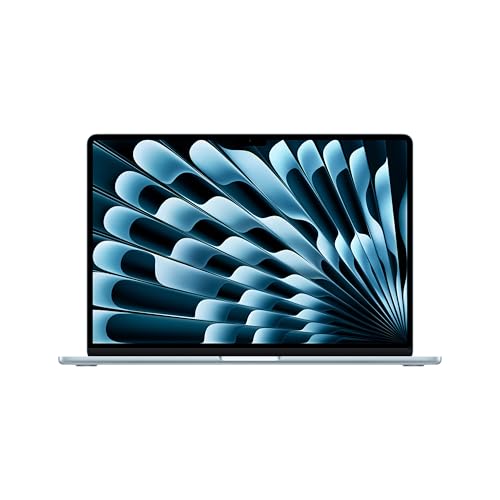
For students who prioritize portability above all else, Apple Silicon MacBook Pro represents a compelling compromise. Apple's unified memory architecture shares the same high-bandwidth memory pool between the CPU, GPU, and Neural Engine, allowing larger models to run efficiently on unified memory than would be possible with equivalent-capacity discrete GPU VRAM. A MacBook Pro with 36 GB or 48 GB of unified memory can run models that would exceed the VRAM limits of many discrete laptop GPUs. The significant caveat is CUDA compatibility: most deep learning frameworks are optimized for NVIDIA's CUDA platform, and while Apple's Metal framework and the MLX library provide alternatives, students whose coursework or research specifically requires CUDA should choose a Windows laptop with a dedicated NVIDIA GPU instead.
Battery Life: Realistic Expectations for AI Student Laptops
Battery life on laptops for AI and machine learning students deserves honest expectations. The most powerful local AI training machines are not the best battery performers. A gaming laptop with an RTX discrete GPU running at full TGP during a training session will exhaust its battery in 60 to 90 minutes under load. In regular mixed-use mode without active training, the same machine may deliver 4 to 6 hours, well below the 10-plus hours quoted in manufacturer specifications.
This reality argues for a pragmatic approach to battery life for AI students: choose a laptop with battery life sufficient for a full day of lecture attendance, note-taking, and light coding in between, and plan to be plugged in whenever running actual training workloads. A laptop that delivers 8 hours of genuine mixed-use battery life with the GPU in a lower-power state and 2 hours under active training load covers most student scenarios effectively without requiring a compromise to GPU performance that would limit the machine's primary purpose.
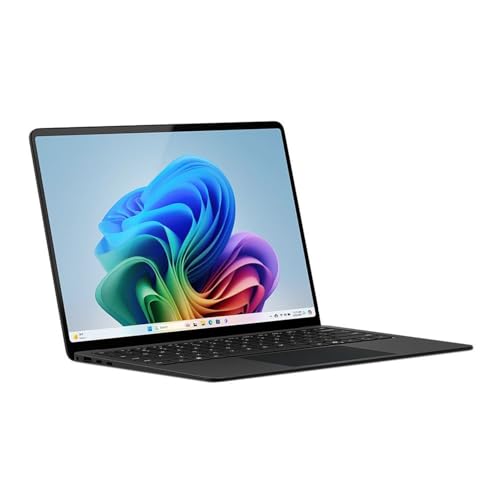
Thin and light AI laptops using Qualcomm Snapdragon X Elite or Apple M-series processors offer dramatically better battery life than discrete GPU alternatives, making them genuinely compelling for AI students whose workload is primarily cloud-based, development-focused, or involves smaller local models that run efficiently on integrated graphics and the NPU.
Budget Tiers: What to Expect at Each Price Point
Understanding what the AI student laptop market delivers at different budget levels helps calibrate expectations and identify the best value in your price range.
At the $800 to $1,100 range, you can find Copilot+ certified Windows laptops with 40-plus TOPS NPUs, 16 GB RAM (some with 32 GB), and integrated graphics suitable for cloud-first AI students who run heavier workloads remotely. Some models at the higher end of this tier include entry-level discrete GPUs with 6 to 8 GB VRAM for light local training. Battery life tends to be strong in this tier, and the machines are generally portable and quiet for everyday campus use.
At the $1,200 to $1,800 range, you find the most compelling value for AI students who want meaningful local GPU capability alongside reasonable portability. Laptops in this tier typically offer RTX discrete GPUs with 8 to 12 GB VRAM, 32 GB RAM, and 1 TB NVMe storage in chassis with adequate but not exceptional thermal headroom. This is the tier that balances local training capability, portability, and price most effectively for the majority of AI undergraduate and master's students.
At the $1,800 to $2,500 and above range, you access laptops with 16 GB VRAM discrete GPUs, 32 to 64 GB RAM, Gen 4 NVMe storage, and premium thermal management systems that sustain peak GPU performance through extended training sessions. MacBook Pro configurations with 36 to 48 GB unified memory also occupy this tier and offer the best option for AI students who prioritize Apple Silicon efficiency, macOS stability, and large local model capability without CUDA requirements.
Final Thoughts: Choosing the Best Laptop for Artificial Intelligence Students
The best laptop for artificial intelligence students in 2026 is not defined by the highest clock speed or the most impressive marketing language on the box. It is defined by the GPU VRAM capacity that matches your local training ambitions, the RAM headroom that keeps your development environment responsive under real AI student workloads, the NVMe SSD speed and capacity that handles modern datasets without bottlenecks, and the thermal design that sustains performance during the long training runs that define AI coursework.
Start by defining your workflow strategy: will you train primarily in the cloud, primarily locally, or through a hybrid approach? That single decision narrows the field more than any other. Then prioritize GPU VRAM over everything else if local training is a priority, RAM at 32 GB as the baseline for any serious AI workload, and NVMe Gen 4 SSD storage at 1 TB or more. Treat CPU benchmarks, display resolution beyond a comfortable baseline, and brand reputation as secondary filters applied after the primary specifications are confirmed.
A laptop purchased with this framework will serve an artificial intelligence student through a full undergraduate or master's program, adapt to increasingly demanding coursework as skills develop, and avoid the frustrating mid-program upgrade that compromised initial choices inevitably require. Choose deliberately, check the thermal reviews, confirm the CUDA compatibility for your specific frameworks, and invest in RAM that cannot be upgraded later. Your future self will thank you at the end of every successful training run.


