
Best Large Format Printers: What Actually Matters Before You Buy
Disclosure: We may earn a commission when you buy through links on this page, at no extra cost to you. As an Amazon Associate I earn from qualifying purchases. Learn more

How we judge wide format printers for photos, plans, posters and banners, with three picks, a checklist and red flags.
Large format printers open up projects that standard office printers simply cannot handle, from gallery quality photo prints and architectural plans to posters, signs and banners. They range from 13 by 19 inch desktop models around $500 to 44 inch production machines costing several thousand dollars, and the specs can be confusing. This guide to the best large format printers lays out the checklist we use to judge them, then shows three picks that pass every criterion.
The short answer: photographers and artists should choose a 13 to 17 inch pigment ink photo printer such as the Canon imagePROGRAF PRO-1100; offices and schools that need tabloid prints should pick an 11 by 17 or 13 by 19 inch ink tank or business inkjet like the Epson EcoTank ET-15000; and architects, engineers and print shops should choose a 24 to 44 inch roll fed plotter like the HP DesignJet T650.



How We Evaluate Large Format Printers
We score wide format printers on six criteria. Each includes a clear threshold for good and poor performance.
Measuring for Size and Portability
Large format printers need space not only for the machine but for paper loading and output. Desktop 13 to 17 inch models are roughly 25 to 27 inches wide and need clearance front and back. Twenty four inch plotters often require a stand and around 40 inches of width, while 36 and 44 inch printers need dedicated floor space. Measure doorways, desks and workspace before ordering. Good: a footprint that fits your space with room to load media. Poor: a printer that blocks walkways or cannot open its paper path fully.
Printer Type (Photo Inkjet, Ink Tank, Plotter, Laser)
Photo inkjets use pigment or dye inks for high quality photos and fine art. Ink tank wide format printers lower running costs for posters and office documents. Technical plotters print CAD drawings, maps and blueprints on rolls. Wide format LED and laser systems exist for high volume monochrome plans but cost far more. Good: a type matched to your main use. Poor: buying a photo printer for high volume plans or a plotter for gallery prints.
Footprint and Noise
Wide format printers can be noisy during printhead cleaning and roll cutting. Desktop photo printers suit home studios, while larger plotters work better in offices or workshops. Some models have quiet modes for shared spaces. Good: quiet operation for your environment and stable placement. Poor: loud cleaning cycles in small shared rooms or unstable stands.
Reliability and Support
Wide format printers are a significant investment, so reliable drivers, firmware updates and service options matter. Canon, Epson and HP offer professional support, onsite warranty options and wide availability of inks and parts. Good: established brand, regular driver updates and accessible service. Poor: unknown brands with limited support or hard to find consumables.
Print Quality and Resolution
Print quality depends on the number of ink colors, printhead resolution and ink type. Photo printers with 8 to 12 pigment inks produce wide color gamuts, deep blacks and long lasting prints. Technical plotters focus on sharp lines and accurate text. Resolutions of 2400 dpi or higher are standard, but ink systems and media matter more. Good: crisp lines, smooth gradients and stable color. Poor: banding, muddy shadows or fading prints.
Cost per Page and Ink Costs
Running costs often exceed the printer's price over time. Ink tank printers offer very low cost per print, while professional photo printers use larger cartridges that cost less per milliliter than small consumer cartridges. Roll paper is usually cheaper than cut sheets. Good: transparent ink costs and high capacity cartridges or tanks. Poor: tiny cartridges that run out quickly and expensive proprietary media.
3 Picks That Pass Our Checklist
These three printers come from the product table above and meet every criterion on our checklist for their intended use.


Best Overall
The Canon imagePROGRAF PRO-1100, around $1,300, is our pick for photographers and artists who want gallery quality prints up to 17 inches wide. Its first strength is the LUCIA PRO II system with 11 pigment based inks plus a Chroma Optimizer, delivering a broad color gamut, rich dark areas and uniform gloss with excellent scratch resistance. Its second strength is a professional workflow, including Canon's Professional Print and Layout software that works as a plug in for Adobe apps, color calibration tools and an air feeding system that prevents paper skew. Each ink holds 80 mL, lowering cost per print versus smaller cartridges.
The limitation is that it prints cut sheets only, so it is not suited to roll based banner or plan printing.
Best Value
The Epson EcoTank ET-15000, around $560, suits home offices, schools and small businesses that need tabloid and wide format prints at low running costs. Its first strength is the cartridge free supertank system, which uses refillable ink bottles to make posters, spreadsheets and presentations far cheaper to print than cartridge printers. Its second strength is versatility: it prints, copies, scans and faxes, supports Wi Fi and Ethernet and handles wide format prints up to 13 by 19 inches, with up to 4800 by 2400 dpi resolution.
The limitation is that its dye based inks are not as long lasting as pigment inks for fine art and archival photos.
Best for Heavy Use
The HP DesignJet T650 36 inch plotter, around $2,250, is for architects, engineers, contractors and schools that print plans, maps and posters regularly. Its first strength is a 36 inch roll fed design that handles large technical drawings and posters with automatic cutting. Its second strength is business support, including a two year onsite warranty and HP's established DesignJet ink and service ecosystem.
The limitation is that it is designed for technical and graphic work rather than fine art photography, and it requires a stand and dedicated space.
Quick Buyer Checklist
- Does the maximum print width match your largest projects?
- Do you need roll paper for banners or plans, or only cut sheets?
- Is pigment ink important for long lasting prints?
- Do you have space for the printer, stand and media loading?
- Are ink costs and cartridge sizes clearly listed?
- Does it connect over Wi Fi or Ethernet for shared use?
- Is onsite or extended warranty support available?
- Will you print often enough to keep printheads healthy?
Red Flags to Watch For
- Vague specifications. Listings without maximum media size, ink type or resolution details hide important limits.
- Unclear consumable costs. Printers with tiny or hard to find cartridges can become expensive quickly.
- Suspicious reviews. Many short, similar five star reviews posted together suggest manipulation.
- No support network. Unknown brands may lack drivers, replacement printheads or service.
- Short warranties. Wide format printers are expensive; look for at least one year of coverage, ideally onsite.
Picking the Right Large Format Printers for Different Uses
Best Desk Top Large Format Printers: What to Check
The best desk top large format printers fit on a sturdy table and print up to 13 by 19 or 17 by 22 inches. Check desk depth for paper loading, rear and front clearance and weight. Photo models like the Canon PRO-1100 and office models like the Epson ET-15000 are popular desktop options.
Best Large Format Printers for Schools: What to Check
The best large format printers for schools focus on durability, simple operation and low running costs for posters, banners and classroom displays. Look for network printing, roll media for event banners and good service plans. A 24 to 36 inch plotter handles most school projects.
Best Laser Large Format Printers: What to Check
The best laser large format printers, usually LED wide format systems, serve high volume monochrome plan printing for engineering firms and reprographic shops. Check monthly volume, toner costs and service contracts. Most small offices are better served by inkjet plotters, which cost much less upfront.
Best Large Format Printers for Small Business
The best large format printers for small business balance cost, versatility and speed. Tabloid ink tank printers suit marketing materials and presentations, while 24 inch plotters handle posters and signage. Choose models with low ink costs, network connectivity and reliable warranty support.
Best Chinese Large Format Printers: What to Check
The best chinese large format printers, often eco solvent, UV or DTF machines from lesser known brands, can offer wide widths at lower prices. Check local technical support, availability of printheads and parts, software compatibility and safety certifications before buying, since service can be challenging.
Best Large Format Printers for Plans
The best large format printers for plans print accurate lines and small text on 24 to 36 inch rolls quickly. Look for CAD friendly drivers, automatic roll cutting and HP GL support. The HP DesignJet T650 is a strong choice for architecture and construction offices.
Best Large Format Printers for Banners
The best large format printers for banners use roll media, pigment or durable inks and wide formats of 24 inches or more. For outdoor banners, eco solvent or UV printers offer better weather resistance. Plan for finishing tools like grommets and laminators.
Best Large Format Printers for Blueprints: What to Check
The best large format printers for blueprints prioritize line accuracy, speed and low cost per drawing. Check roll widths of 24 or 36 inches, monochrome printing costs and network connectivity for sharing across teams. Technical plotters handle blueprints far more efficiently than photo printers.
Best Large Format Printers for Commercial Printers
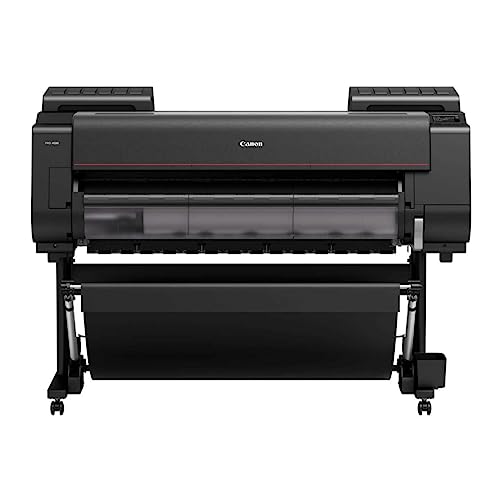
Commercial print shops need 44 inch or wider production printers with high capacity inks, fast speeds and robust color management. The Canon imagePROGRAF PRO-4100 44 inch printer is an example of a production photo and graphics printer for professional studios.
How to Make Your Large Format Printer Last Longer
Print regularly, at least weekly, to prevent printhead clogs. Keep the printer covered to reduce dust, and maintain stable temperature and humidity in the room. Use genuine or high quality inks and run nozzle checks before important jobs. Replace maintenance boxes when prompted, and store paper flat in its packaging to prevent curling.
Pigment vs Dye Ink: Which Do You Need?
Ink type affects print longevity, color and cost. Pigment inks consist of tiny particles that sit on the paper surface, resisting fading and water for decades when stored properly. They are the standard for fine art prints, archival photos and professional exhibitions. Professional photo printers like the Canon PRO-1100 and many plotters use pigment inks.
Dye inks dissolve into the paper, producing vivid colors and smooth gloss on photo paper at lower cost, but they fade faster when exposed to light. Dye based printers like the Epson EcoTank ET-15000 and Canon PIXMA PRO-200S are excellent for posters, presentations and personal photos. Choose pigment if your prints need to last or be sold, and dye if cost and vivid color matter most.
Roll Paper vs Cut Sheet Printing
Cut sheet printers handle individual sheets of paper up to their maximum size, ideal for photos and fine art in standard sizes like 13 by 19 or 17 by 22 inches. Roll fed printers use continuous rolls, allowing long prints such as panoramas, banners and plans, and they automatically cut prints to length. Roll paper is generally cheaper per square foot.
If you plan to print banners, long panoramas or many technical drawings, choose a roll capable printer. For photographers printing in standard sizes, cut sheet printers are simpler and more affordable. Some professional photo printers support both.
How Much to Spend on a Large Format Printer
Large format printers fall into distinct price bands. Around $400 to $700 buys wide format office inkjets and ink tank printers that print up to 11 by 17 or 13 by 19 inches, plus 13 inch photo printers like the Canon PIXMA PRO-200S. These suit home offices, students and hobby photographers.
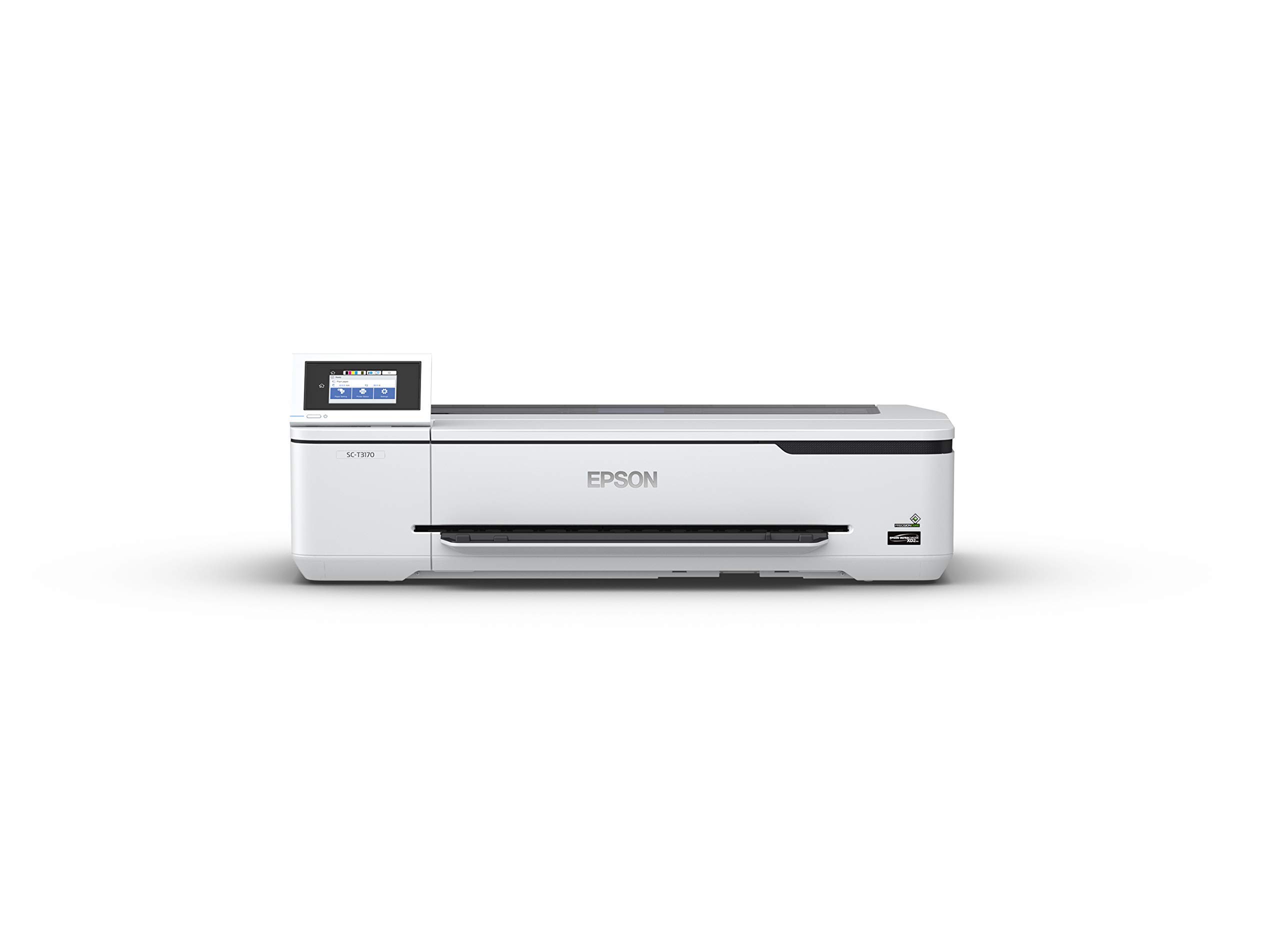
Around $1,000 to $1,700 brings professional 17 inch photo printers and entry 24 inch plotters, such as the Epson SureColor T3170. These handle exhibition prints, posters and small plan sets. Around $2,000 to $5,000 covers 36 and 44 inch plotters and production photo printers for architecture firms, schools and print shops. Above that, production signage printers with eco solvent, latex or UV inks serve commercial businesses.
Remember to budget for ink, paper, stands, maintenance cartridges and extended warranties. For many buyers, consumables over three years cost as much as the printer.
Choosing Paper and Media
Media choice shapes the final result. Glossy and luster photo papers deliver vibrant color for photos, while matte fine art papers made from cotton rag offer a classic gallery look with pigment inks. Canvas rolls produce prints ready for stretching and framing.
For technical work, bond paper is affordable for plans and drafts, while coated papers produce brighter colors for posters. Banner printing uses vinyl or polyester media, often with specialized inks for outdoor durability. Always install the correct media profile in your printer driver or editing software so colors and ink density match the paper. Buying sample packs from paper makers is an inexpensive way to compare surfaces before committing to full boxes or rolls.
Large Format Printers: Your Questions Answered
Are ink tank printers worth it for wide format printing?
Yes, ink tank printers are worth it for frequent wide format document and poster printing. They cost more upfront but dramatically reduce ink costs per print. They are ideal for schools, offices and small businesses, though professional photographers may prefer pigment based photo printers.
What does cost per page mean?
Cost per page is the ink and paper cost of each print. It helps compare printers beyond the purchase price. For large format printers, consider cost per square foot, since prints vary in size. Larger ink cartridges, ink tanks and roll paper typically lower costs.
What size large format printer do I need?
Choose a printer slightly wider than your most common print size. Photographers often need 13 to 17 inches, offices need 13 by 19 for tabloid, and architects and schools need 24 to 36 inches for plans and posters. Larger widths increase cost and space requirements.
Inkjet or laser: which is cheaper long term for large format?
Inkjet is cheaper for most large format users, while laser or LED wide format systems suit very high volume monochrome printing. Inkjet plotters cost far less upfront and print color well. LED systems have lower cost per page at massive volumes but require significant investment.
How often should I use a large format printer?
Use a large format printer at least once a week to keep printheads healthy. Infrequent use allows ink to dry in nozzles, leading to clogs and wasted ink during cleaning cycles. If you print rarely, a small weekly nozzle check or sample print helps maintain reliability.
Final Thoughts
The right large format printer depends on what you print and how often. Photographers should choose a pigment ink photo printer, offices and schools benefit from low cost ink tank wide format printers and architects and print shops need roll fed plotters. Focus on maximum width, ink type, running costs and support.
Compare the best large format printers in the product table above to find the right printer for your projects and budget.


