Sony
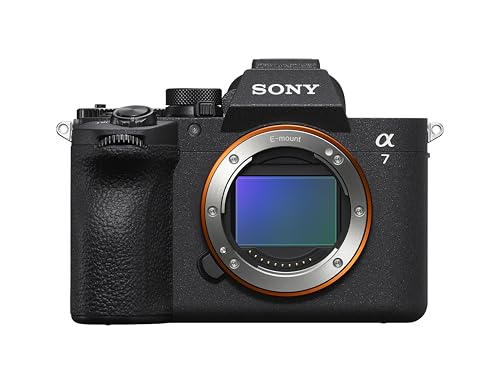
Sony Alpha a7 V Full-Frame Mirrorless Camera Body AI AF 30fps | 5-Axis in-Body Stabilization (Body Only), AI Autofocus
Disclosure: We may earn a commission when you buy through links on this page, at no extra cost to you. As an Amazon Associate I earn from qualifying purchases. Learn more
Highlights
- A partially stacked Exmor RS CMOS image sensor features high-speed circuitry above and below the sensing layer. Sensor readout is approx. 4.5 x*1 faster than the α7 IV, maximum shutter speed is 1/16000 s, *2 blackout-free bursts at up to 30 fps are available with AF/AE tracking, *3 and video can be recorded at 4K 120p.*4 This advanced sensor contributes up to an unprecedented 16 stops of dynamic range*5 with smooth gradations.
- The new BIONZ XR2 processing engine delivers dramatic improvements in image and sound quality, communication, integration, and operation. It also incorporates AI-based Real-time Recognition AF and*6 Real-time Tracking, *7 plus accurate, stable color reproduction. A lightweight RAW format has been included, while user interface, networking, and file management functions have been refined for smooth workflow.
- The new 33.0-megapixel*8 sensor and BIONZ XR2 processing engine work together to deliver up to 16 stops of dynamic range. *9 Lifelike gradations from shadows to highlights enable highly effective HDR processing when needed, and effective noise reduction applied at all sensitivities achieves high resolution throughout the ISO 100-51200 still and movie range (expandable to 50-204800 for stills and 100-102400 for movies).
- An advanced optical stabilization unit, gyro sensors, and algorithm accurately detect and correct image shake. Up to 7.5-step central and 6.5-step peripheral stabilization*14 allows handheld shooting without having to boost sensitivity. The body also works with compatible lenses*15 for even better stabilization. Even shake that is amplified at telephoto focal lengths is effectively suppressed.
- AI processing in the new BIONZ XR2 processing engine improves recognition by approximately 30% over the α7 IV. Human pose estimation technology uses detailed form and pose data to achieve reliable human eye recognition as well as accurate recognition of body and head position, even with challenging subjects. Multiple subjects can also be recognized, making it possible to track the desired subject.
Why You'll Love It
- Capture fast action with blackout free bursts up to 30 fps and continuous autofocus and exposure tracking
- Follow people more reliably with AI recognition that identifies eyes, heads, bodies, and human poses
- Record detailed video at 4K 120p for projects that benefit from high frame rate footage
- Preserve highlight and shadow detail with up to 16 stops of dynamic range
- Shoot handheld with up to 7.5 stops of central image stabilization and 6.5 stops at the periphery
- Choose ISO settings from 100 to 51200 for stills and movies, with expanded ranges available for specific needs
Pros
- +33.0 megapixel full frame sensor
- +Blackout free bursts up to 30 fps
- +AI based subject recognition and tracking
- +Up to 7.5 step in body stabilization
- +4K video recording at 120p
Cons
- -Body only, lens must be considered separately
- -Advanced autofocus and video features may exceed basic photography needs
- -Expanded ISO ranges differ between stills and movies
Detailed Review
The Sony Alpha a7 V mirrorless camera is built for photographers and hybrid creators who want fast subject tracking, detailed still images, and high frame rate video in one body. Its 33.0 megapixel full frame sensor combines with a BIONZ XR2 processing engine to support demanding shooting situations, from following moving people to preserving detail across bright highlights and darker shadows. The emphasis is on responsiveness and subject recognition rather than simply increasing resolution, making this an appealing option for people whose subjects do not always stay still.
The partially stacked Exmor RS CMOS sensor is designed to read image data approximately 4.5 times faster than the sensor in the Alpha a7 IV. That faster readout supports blackout free continuous shooting at up to 30 frames per second with autofocus and exposure tracking, along with a maximum shutter speed of 1/16000 second. For action, events, or changing expressions, these features offer more opportunities to capture a particular moment while the camera continues to follow the subject. The benefit depends on how often your photography involves movement, since a slower paced subject may not require such rapid shooting.
Autofocus is another central strength. The BIONZ XR2 processor incorporates AI based real time recognition and tracking, with recognition improvements of approximately 30% over the Alpha a7 IV. Human pose estimation helps the camera recognize eyes and interpret head and body positions, including when a person presents a challenging pose. Multiple people can be recognized, allowing you to track the intended subject. This approach is useful for photographers who need to direct their attention toward composition and timing rather than continually adjusting focus as a person moves.
Image quality and stabilization round out the package. Sony specifies up to 16 stops of dynamic range, while the ISO range runs from 100 to 51200 for stills and movies. Expanded settings reach 50 to 204800 for still photographs and 100 to 102400 for movies. The five axis in body stabilization system uses optical stabilization hardware, gyro sensors, and an algorithm to correct camera shake, with up to 7.5 stops centrally and 6.5 stops peripherally. Compatible lenses can contribute further stabilization. Video recording reaches 4K 120p, giving hybrid creators a substantial high frame rate option.
The main trade off is that this is a body only purchase, so the complete camera setup needs to be considered separately. Its extensive tracking, burst shooting, stabilization, and video capabilities will be most valuable to people who regularly use them, rather than buyers who primarily take uncomplicated still photographs. The expanded ISO settings also differ between stills and movies, so it is worth matching the available ranges to your intended work. Verdict: Choose this full frame mirrorless camera if you want 33.0 megapixel images, AI assisted subject tracking, rapid continuous shooting, and 4K 120p video in one system. If your needs center on straightforward photography without fast action or advanced video, a simpler camera may be a more appropriate fit.
Who Should Buy It
A great fit if you:
- You photograph moving people and want autofocus to recognize eyes, heads, and body positions as subjects change their pose.
- You regularly capture fast action and want continuous shooting up to 30 frames per second with autofocus and exposure tracking.
- You create both photographs and video and want 4K recording at 120p from the same camera body.
- You work with scenes containing bright highlights and deep shadows and value the stated dynamic range of up to 16 stops.
- You often shoot handheld and want in body stabilization to help correct camera movement, including when using compatible lenses.
Consider something else if you:
- You mainly take uncomplicated still photographs and would prefer a simpler camera with fewer advanced shooting capabilities.
- You need a ready to shoot package and would rather choose a complete camera kit that includes the lens suited to your work.
Before You Buy
Confirm on the listing:
- Check which items are included in the body only package and whether you need to purchase a lens or other accessories separately.
- Verify compatibility between your intended lenses and the camera, particularly if you want to benefit from the additional stabilization available with compatible lenses.
- Review the complete package details and operating requirements to make sure they suit your existing photography or video setup.
- Confirm the supported recording options and expanded ISO settings against the formats and shooting conditions you expect to use.
How to compare your options: Start with your main subject and decide whether AI based recognition, tracking, and continuous shooting at up to 30 frames per second would materially help you capture it. If video is equally important, compare the stated 4K 120p recording capability and the camera's stabilization features. For image quality, consider the 33.0 megapixel resolution, stated dynamic range, and available ISO settings together rather than choosing on resolution alone. Finally, compare complete system needs, including lens compatibility and what each package includes, so you can judge the camera as part of your intended setup.
Getting the Most From It
Begin by matching your camera settings to the subject. For moving people, explore the AI based real time recognition and tracking options, including recognition of eyes, heads, and body positions. If several people appear in the frame, become familiar with selecting the subject you want to follow.
For fast action, consider whether continuous shooting with autofocus and exposure tracking will help you capture the moment. The camera supports blackout free bursts up to 30 frames per second, but your chosen shooting approach should still reflect the subject and the kind of image you want.
For handheld photography, learn how the five axis in body stabilization works with your shooting setup. If you use compatible lenses, review how their stabilization works with the camera body. This can help you make informed choices when composing at telephoto focal lengths or when trying to limit camera shake.
If video is part of your workflow, familiarize yourself with the available recording settings, including 4K 120p. Review the ISO options for stills and movies separately, and use the camera's file management and interface refinements to build a workflow that fits your projects. Follow the supplied instructions for setup and care.
FAQ
Does the Sony Alpha a7 V include a lens?
No, this is a body only camera. Check the package details if you need a lens or other items for your intended setup.
How many megapixels does the camera offer?
It has a 33.0 megapixel sensor. The camera also specifies up to 16 stops of dynamic range to help preserve gradations from shadows to highlights.
Can it shoot fast moving subjects?
Yes, it supports blackout free continuous bursts at up to 30 frames per second with autofocus and exposure tracking. Its AI based recognition can identify human eyes, heads, and body positions to assist subject tracking.
Does it record high frame rate video?
Yes, video recording is supported at 4K 120p. The camera also provides a stated ISO range of 100 to 51200 for movies, expandable to 100 to 102400.
How does the in body stabilization help?
The five axis system corrects detected camera shake and provides up to 7.5 stops of central and 6.5 stops of peripheral stabilization. Compatible lenses can provide additional stabilization, so confirm lens compatibility before buying.
Specifications
- Camera type: Full frame mirrorless camera body
- Image sensor: 33.0 megapixel partially stacked Exmor RS CMOS
- Image processor: BIONZ XR2
- Continuous shooting: Up to 30 frames per second with AF and AE tracking
- Maximum shutter speed: 1/16000 second
- Video recording: 4K 120p
- Dynamic range: Up to 16 stops
- ISO range for stills: 100 to 51200, expandable to 50 to 204800
- ISO range for movies: 100 to 51200, expandable to 100 to 102400
- In body stabilization: Five axis, up to 7.5 stops centrally and 6.5 stops peripherally
- AI recognition: Real time recognition and tracking with human pose estimation
- Sensor readout: Approximately 4.5 times faster than the Alpha a7 IV
- Package type: Body only
Product Details
| Brand | Sony |
| ASIN | B0G4SC4R2P |