
9800x3d vs 9950x3d: Which Is Better in 2026?
Disclosure: We may earn a commission when you buy through links on this page, at no extra cost to you. As an Amazon Associate I earn from qualifying purchases. Learn more

9800x3d vs 9950x3d: eight focused cores against sixteen, what each means for games and heavy work, and which is worth the price.
Both chips share a stacked cache and a socket, so 9800x3d vs 9950x3d comes down to a clear question: do you want eight cores focused on gaming, or sixteen cores that also handle heavy creative work? The Ryzen 7 9800X3D is the gamer's favorite at a lower price, while the Ryzen 9 9950X3D adds a big block of extra cores for rendering, compiling and multitasking. The product table right after this introduction lists the X3D processors currently available.
This guide explains how the two differ in design, what each costs you in money and cooling, and which fits your use.
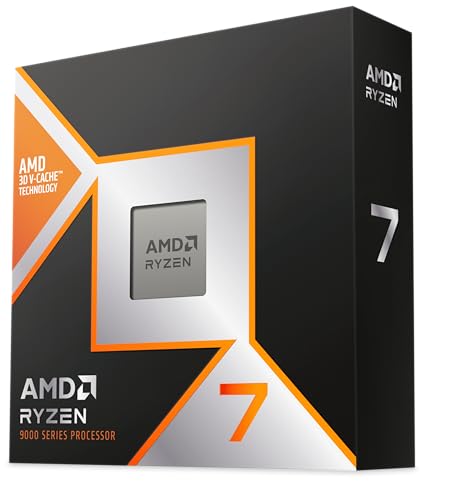


Core Counts and Design
The 9800X3D has eight cores and sixteen threads, with 96MB of L3 cache, all on one chip with stacked cache over every core. This simple layout is a big part of why it excels at games: every core sees the same large cache, and there is no need for software to decide where to run a game.
The 9950X3D has sixteen cores. It combines two core groups, one with the stacked cache and one with higher clock speeds and standard cache. The operating system and AMD's drivers steer games to the cache-heavy group and heavy workloads across all cores. Boost speeds reach up to 5.7GHz on the 9950X3D according to listings.
- 9800X3D: eight cores, uniform cache, simple and consistent for gaming.
- 9950X3D: sixteen cores, a mix of cache and clock speed, strong in games and heavy work.
Gaming Performance
For games, the two chips are close. Because games rarely use more than eight cores well, the extra cores of the 9950X3D add little, and the 9800X3D is often equal or slightly ahead because of its simpler design and consistent behavior. Differences are small enough that most players would not notice them in normal play.
The exception is when you game and run other heavy tasks together, such as streaming with a software encoder, or keeping a render going in the background. In that case the extra cores give the 9950X3D room to breathe. For pure gaming, the cheaper chip is the rational pick.
Creative and Productivity Work
Here the 9950X3D pulls ahead. Video rendering, 3D modeling, code compiling, simulations and large photo batches all scale with core count, and sixteen cores finish them noticeably faster than eight. If you do this work for pay or often, the time saved over weeks easily covers the extra cost.
The 9800X3D is still capable at these tasks, and a casual editor will be happy with it. The gap matters mainly for people who wait on exports every day. Check benchmarks for the particular software you use, since some programs scale better than others.
Cooling, Power and Setup
Neither chip includes a cooler. The 9800X3D is generally easy to cool and suits a good air cooler. The 9950X3D with sixteen cores draws more power under heavy load and calls for a stronger cooler, such as a 280mm or 360mm liquid cooler or a top-tier air cooler, especially for long rendering sessions.
The 9950X3D's dual-group design also benefits from current chipset drivers and Windows updates, so that games land on the right cores. Install the chipset package from AMD after setting up the system, and keep the BIOS updated. These steps are simple, and the result is a smooth experience.
Price and Value
The 9950X3D costs well above the 9800X3D, and the table shows how large the gap is today. For a pure gaming build, that money is better spent on the graphics card, which affects frame rates far more. For a work-and-play machine, the premium is the price of having one processor that does both well.
There are middle options. The 9900X3D has twelve cores and sits between the two in price, and the 9950X3D2 Dual Edition sits above it at a higher price still. Our best CPU guide places these chips among alternatives.
Streaming, Multitasking and Background Loads
Modern desktops rarely do just one thing. A typical evening might include a game, a voice chat, a browser with many tabs, a music player and a recording or streaming program. Eight fast cores cope with this mix, but sixteen cores leave more headroom, which keeps frame times steady when background programs wake up and demand attention.
If you stream with the graphics card's hardware encoder, most of that extra load disappears, and the cheaper chip is enough. Software encoding gives better quality at a given bitrate but loads the processor heavily, which is where the 9950X3D shows its value.
Future Proofing and Resale
More cores age well. Software slowly learns to use them, and a sixteen-core chip will stay useful for heavy work for longer than an eight-core one. For games, eight cores with a big cache should remain excellent for years, and a later upgrade on the same socket is possible if you want it.
Both chips hold resale value reasonably well, particularly the gaming-focused model, which tends to stay in demand. Keep boxes and paperwork if you plan to sell later, and avoid overclocking that voids the warranty.
9800x3d vs 9950x3d: Which Should You Choose?
Choose the 9800X3D if you
- Build mainly for gaming and want the best value.
- Prefer a simpler cooling and driver setup.
- Would rather put money into the graphics card.
Choose the 9950X3D if you
- Game and also render, edit or compile regularly.
- Run several heavy tasks at once, such as streaming while gaming.
- Want one chip that handles everything and can pay for it.
For a closer look at the cheaper chip, read our Ryzen 7 9800X3D review.
Motherboard and Memory Considerations
Both use Socket AM5 and DDR5 memory. A mid-range board is enough for the 9800X3D, but the 9950X3D draws more power, so a board with stronger power delivery gives it a more stable base. Memory around 6000 is a popular match for both, and 32GB is a sensible capacity for gaming, with 64GB useful for creative work.
Check the board's BIOS version before buying, since newer chips may need an update that old boards do not have out of the box. Many sellers offer a BIOS update service, or boards with a flashback feature that lets you update without a processor.
FAQ
Is the 9950X3D better for gaming than the 9800X3D?
Not by much. Games use few cores, so the two perform similarly, and the 9800X3D is sometimes ahead.
Do I need a strong cooler for the 9950X3D?
Yes, a high-end air cooler or a larger liquid cooler is advisable for heavy loads.
Can both use the same motherboard?
Yes, both use Socket AM5, though the board's power design matters more for the bigger chip.
Is the 9900X3D a good middle choice?
It suits buyers who want more cores than eight without paying for sixteen.
The summary of 9800x3d vs 9950x3d is clear: the 9800X3D wins on price and simplicity for gamers, and the 9950X3D earns its premium when creative work and gaming share the same PC.


