Arctic MX-6 vs Thermal Grizzly Kryonaut: Value or Peak Cooling?
Disclosure: We may earn a commission when you buy through links on this page, at no extra cost to you. As an Amazon Associate I earn from qualifying purchases. Learn more

Arctic mx-6 vs thermal grizzly kryonaut compared on cooling gains, handling, safety and price per use.
Arctic's MX-6 and Thermal Grizzly's Kryonaut are two of the most talked about pastes of the last few years, and they aim at slightly different buyers. The arctic mx-6 vs thermal grizzly kryonaut choice pits a safe, affordable and easy paste against a premium compound with a following in the overclocking world.
The product table right after this intro lists both pastes in several sizes, so you can compare price per gram before reading on.



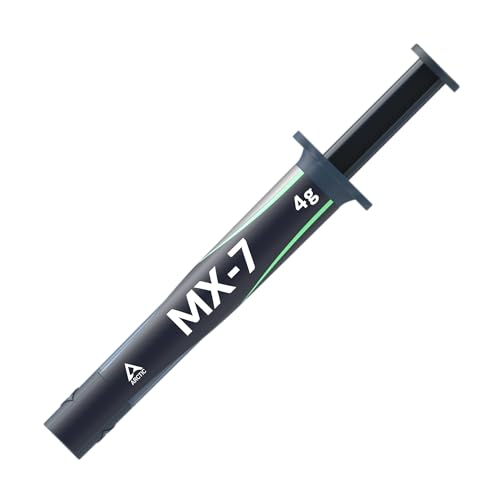

What Each Paste Offers
Arctic MX-6
The listing describes MX-6 as a paste with very high thermal conductivity, improved thermal resistance compared with MX-4, long durability and a non-conductive, non-capacitive design. It is sold for processors, graphics cards, consoles and laptops, and it is cheap enough for casual builders.
Thermal Grizzly Kryonaut
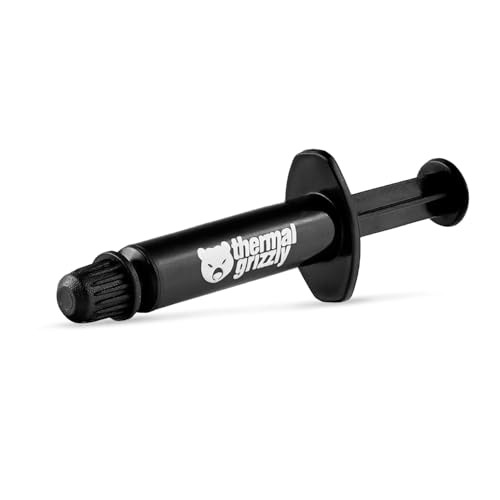
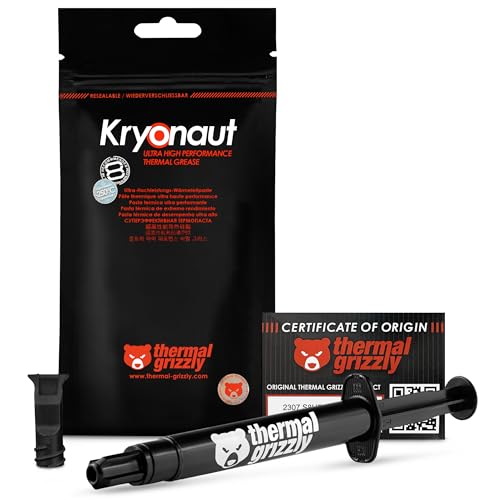
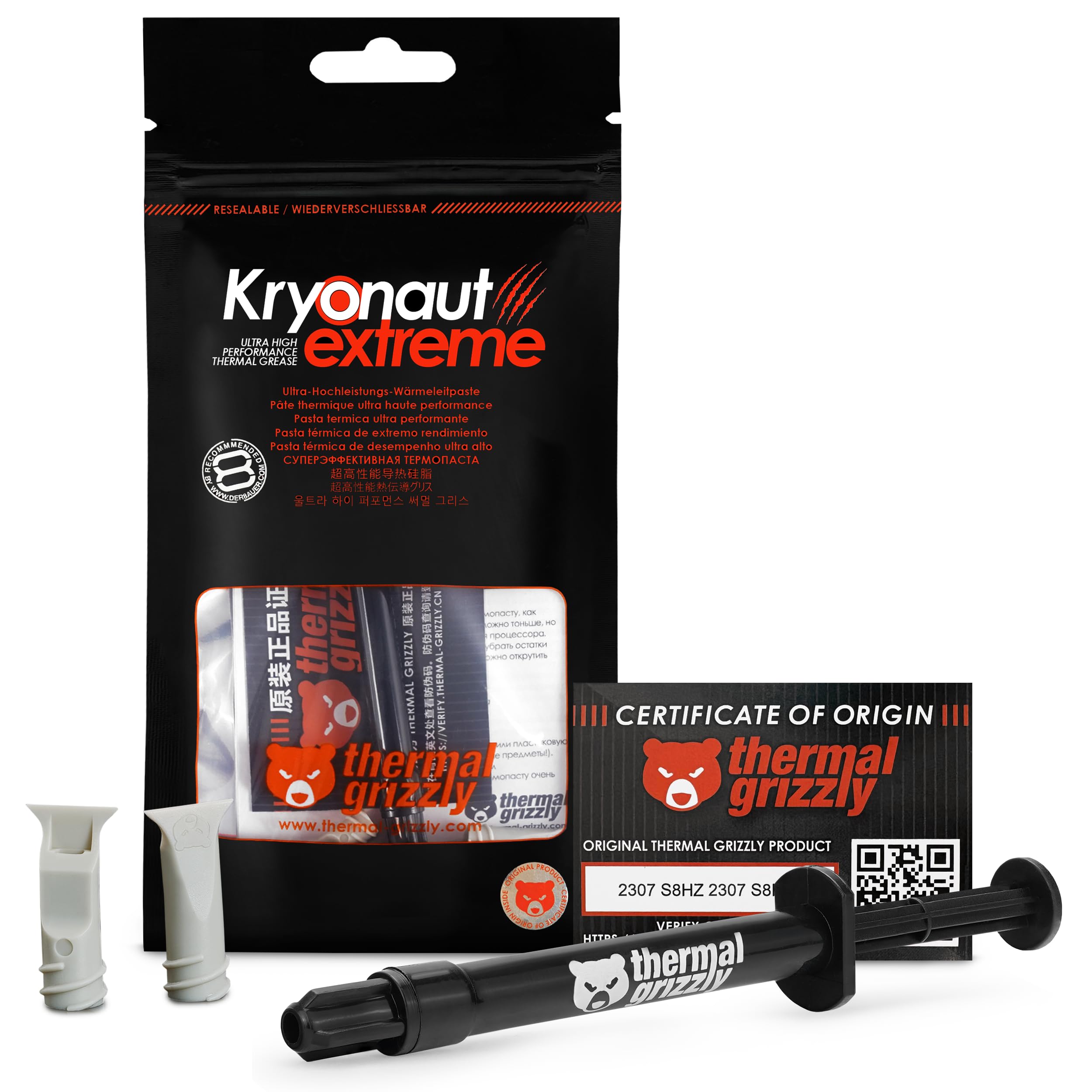
Kryonaut is sold as an extreme performance compound for demanding setups and overclocking. The listing mentions a syringe and spatula for application and a long lasting effect that does not dry out even at 80 degrees. It comes in small tubes and larger syringes.
Cooling Results
On most systems the two are close, with Kryonaut a degree or two cooler under a heavy load and MX-6 within a small margin. The gap grows on a high power processor with a strong cooler, where better heat transfer shows up as a lower peak temperature. On a modest build with a mid-range cooler, the difference is difficult to measure.
Why the Cooler Matters More
The paste fills tiny gaps between two metal surfaces. If the cooler base is flat and mounted firmly, either compound works near its best. A poor mount or a rough base wastes the advantage of a premium paste, so fix the mount before you pay for better paste.
Price and Packaging
MX-6 is cheaper in nearly every size. A small tube costs a few dollars, and larger tubes bring the cost per use down. Kryonaut costs more, especially in large syringes, and the price difference on a single build is a few dollars. For a person who repastes several machines, the cost difference adds up quickly.
- MX-6: lower cost, forgiving, often sold with cleaners.
- Kryonaut: higher cost, precise syringe, strong reputation for peak performance.
Safety and Handling
MX-6 is clearly labeled as non-conductive and non-capacitive, which makes it very forgiving if a little ends up near contacts. Kryonaut is also a non-metallic paste, but any paste on sockets or pins can cause problems, so keep both away from contacts. Neither is a liquid metal, and neither will damage aluminum coolers the way liquid metal can.
Application
Use a pea sized dot on the center of the processor for either paste. Kryonaut is thicker, so press the cooler down firmly and evenly. MX-6 spreads easily under pressure.
Checking Your Own Gain
If you want to know whether a premium paste helps your PC, record a baseline before you change anything. Run a steady, demanding workload for ten minutes with the same fan settings, and note the highest processor temperature. After you repaste, repeat the same run and compare. A gain of a couple of degrees with the same fan speed is typical, and a gain of five or more usually means the old paste was in poor shape.
Keep the room temperature similar between the two runs, since a warm room hides the improvement. Close other programs, and use the same monitoring tool each time.
Price Per Use
A small tube of either paste holds enough for several applications on a desktop processor, and a laptop needs only a tiny amount. Divide the price by the number of builds you expect to do, and the gap between the pastes looks smaller. On one build, the difference is a coffee. Over a dozen, it is a small gift card.
How Fresh Paste Behaves Over Time
Every paste changes with heat cycles. Thicker compounds can slowly separate or dry, which raises temperatures after years. Both makers claim long durability, and owners report stable results for a long time, but a processor that runs hot after years is a sign that paste should be replaced. Replacing it with either compound gives a clear improvement in that case.
If you plan to leave the PC alone for many years, pay a little more attention to the mounting quality and the amount of paste, because these affect how well the paste lasts.
Which Should You Buy?
Buy MX-6 if you want a safe, simple and low cost paste that outperforms the cheap compounds. Buy Kryonaut if you chase every degree, run an overclock or build in a tight case. If you already own either, there is no need to switch unless your temperatures are a problem.
See the arctic mx-6 review, the arctic mx-6 vs arctic mx-4 comparison and the best thermal paste page for more.
Scenarios and Recommendations
Stock Speed Gaming PC
Either paste will do, and MX-6 is the more sensible choice for the price. The extra money for Kryonaut is better spent on a better cooler or a case fan.
Overclocked Processor
Choose Kryonaut and a strong cooler. The lower temperature gives headroom for a higher clock or a lower voltage.
Laptop Repaste
Use a small amount of either. Many laptops benefit from a repaste more than from the choice of compound, so the better habit is to apply fresh paste with care.
Graphics Card Repaste
Both are used for graphics card repasting. Keep the thermal pads for memory and power parts, and replace them with the same thickness if they tear.
FAQs
Is Kryonaut better than MX-6?
Slightly, in peak performance. MX-6 is better on price and ease.
Can I use either on a console?
Yes, both are used for repasting consoles.
Do I need a premium paste for a normal PC?
No. MX-6 covers most builds comfortably.
Do they dry out?
Both last for years. The makers market long durability.
Final Verdict
The arctic mx-6 vs thermal grizzly kryonaut decision favors MX-6 for value and safety and Kryonaut for peak performance. Compare the sizes in the table, and check the product page for current pricing.