
Atmos vs Non Atmos: Which Is Better in 2026?
Disclosure: We may earn a commission when you buy through links on this page, at no extra cost to you. As an Amazon Associate I earn from qualifying purchases. Learn more

Atmos vs Non Atmos: when Dolby Atmos soundbars are worth the extra cost and when a simple soundbar sounds just as good.
The atmos vs non atmos question comes up every time someone shops for a soundbar, and the honest answer is that Dolby Atmos is a real upgrade only when your room, your content and your budget all line up. In the wrong setup, a good non-Atmos soundbar sounds just as satisfying for less money.
This guide explains what Atmos does, what you need to hear it, and when a simpler soundbar is the smarter buy. The product table shows both kinds of soundbars side by side, so you can see how the price gap looks right now.




Atmos vs Non Atmos: What Is the Difference
A standard soundbar plays stereo or channel-based surround, with sound placed to the left, right and sometimes behind you. Dolby Atmos adds a height dimension. Instead of fixed channels, the audio mix describes objects that can move around the room, including above you, such as rain, a helicopter or an overhead announcement.
To reproduce that, an Atmos soundbar usually adds upward-firing speakers that bounce sound off the ceiling, and often adds wireless rear speakers. A non-Atmos soundbar skips those parts, which is why it is smaller and cheaper.
What You Need to Hear Atmos
Atmos content
You need a source that carries Atmos: streaming apps such as Netflix, Disney+ and Apple TV on supported plans, Blu-ray discs, and many game consoles. If you mostly watch broadcast TV or older shows, you will get little benefit.
The right connection
Atmos from a TV usually travels over an HDMI eARC port, and your TV must pass the Atmos signal through. Bluetooth cannot carry Atmos, so check that your TV and the soundbar are connected with the correct HDMI port.
A suitable room
Upward-firing speakers work best with a flat ceiling of normal height. High, vaulted or very soft ceilings weaken the effect, and an open-plan room may lose it completely.
Soundbar Examples at Each Level
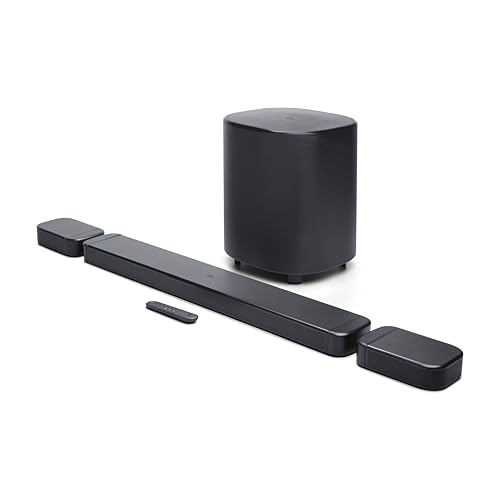
Atmos models such as the JBL Bar 700MK2 pair a soundbar with a wireless subwoofer and detachable rear speakers, and list Dolby Atmos and DTS Virtual:X support with a large wireless sub for deep bass. At the top end, models such as the Sonos Arc Ultra and the Samsung Q990D go further with extra channels.
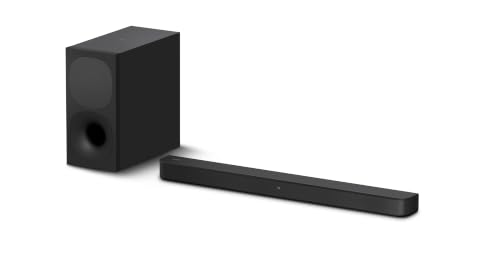
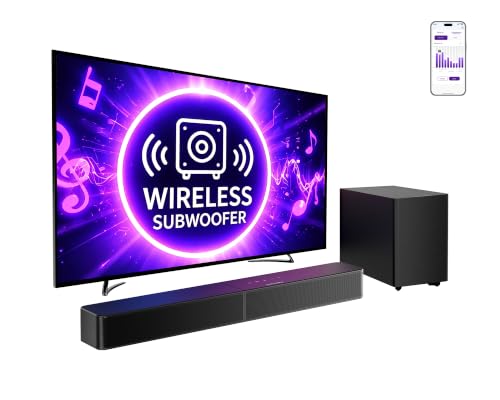
Non-Atmos models cost much less. The Sony HT-S400, for example, is a 2.1 channel bar with a wireless subwoofer, Dolby Digital and front surround processing, and models from Samsung, Philips and Ultimea offer similar setups at lower prices.
Sound Quality Beyond the Label
The Atmos badge does not guarantee better sound. A well-built non-Atmos soundbar with a strong subwoofer and clear dialogue can beat a cheap Atmos model with weak drivers. Dialogue clarity, bass quality and how the bar handles volume matter every day, while Atmos effects appear only in some scenes.
Look for a dialogue enhancement mode, a night mode that softens loud effects, and an app or remote that makes adjustments easy.
Price and Value
A basic 2.1 soundbar sits in the low to mid price range. Entry-level Atmos soundbars cost noticeably more, and full Atmos systems with rear speakers cost far more. If the budget is tight, a good non-Atmos bar with a subwoofer is a better use of money than a cheap Atmos bar that cannot place sound well.
Which Should You Buy
- Choose Atmos if you stream a lot of movies, have a normal ceiling and a TV with eARC.
- Choose non-Atmos if you mostly watch TV shows, live in a small room or want to spend less.
- Choose a larger Atmos setup if you want an immersive home theater and have space for rear speakers.
For more models, see our guides to the best soundbar, the sonos arc ultra review, the sonos beam gen 2 review and the bose tv speaker review.
Setting Up a Soundbar for the Best Sound
Placement changes the result more than most people expect. Put the soundbar directly below the TV at the center, with nothing blocking the front, and keep it a few centimeters clear of the wall so bass does not boom. For an Atmos model, avoid shelves above the bar that block the upward-firing drivers, and keep the subwoofer on the floor near a wall or corner for stronger bass.
Use the setup app or the on-screen menu to run the room calibration if the soundbar offers it, then adjust the bass and dialogue levels to taste. If you use rear speakers, put them slightly behind and to the side of the seating position, and check that their power cables reach the outlet before you decide on the spot.
Finally, set your TV to pass-through or bitstream audio so that the full Atmos signal reaches the soundbar. A wrong TV setting is the most common reason people think their Atmos system is not working.
Small Rooms and Apartments
In a small room or an apartment with thin walls, a huge Atmos system is not always practical. Loud bass bothers neighbors, and a short room does not give surround effects space to develop. A compact non-Atmos bar with a night mode and a subwoofer you can turn down often gives a better daily experience than a large Atmos setup.
FAQ
Is Dolby Atmos worth it for a soundbar?
It is worth it if you watch Atmos content and your room suits ceiling reflection. Otherwise a good non-Atmos soundbar is the better value.
Do I need a special TV?
You need a TV with HDMI eARC to pass Atmos to the soundbar, or a streaming device connected directly to the soundbar.
Can a non-Atmos soundbar play Atmos content?
Yes. It plays a downmixed stereo or surround version, without the height effects.
Do I need rear speakers?
Not required, but rear speakers improve the surround effect in an Atmos system, especially in a larger room.
Final Verdict
If you want the most immersive movie sound and your setup supports it, Atmos is a worthwhile upgrade, and the atmos vs non atmos choice is easy. If you want simple, clear sound for TV and music on a budget, a non-Atmos soundbar with a subwoofer is the better pick. Compare both types in the product table before you decide.
Prices and availability can change, so check the product page before ordering.


