Best 6x9 Speakers: The Buyer Checklist We Use
Disclosure: We may earn a commission when you buy through links on this page, at no extra cost to you. As an Amazon Associate I earn from qualifying purchases. Learn more

How we judge 6x9 car speakers on power, sensitivity, tuning, fit and build, with three picks, a checklist, red flags and care tips.
Factory car speakers are often the weakest part of a vehicle's sound system, and 6x9 speakers are the most popular upgrade because their large oval cones deliver fuller bass than round speakers of similar size. Choosing the right pair means understanding power ratings, sensitivity and fit, not just the wattage printed on the box. This guide to the best 6x9 speakers shares the checklist we use to judge them, with clear thresholds for good and poor performance.
The short answer: most drivers should choose a coaxial 6x9 speaker with a 4 ohm impedance, sensitivity of 90dB or higher if you use a factory stereo, around 60 to 150 watts RMS per speaker and a mounting depth that fits your car, such as the Polk Audio DB692 around $115; budget upgrades like the DS18 G6.9Xi around $75 sound far better than factory speakers, while the Alpine SPE 6090 around $140 handles more power for systems with an amplifier.




How We Evaluate 6x9 Speakers
We score each pair against the criteria below. A speaker must meet the good threshold on sound quality, power handling and fit to earn a recommendation.
Sound Quality and Tuning
Sound starts with the design. Coaxial 6x9 speakers place a tweeter, and sometimes a midrange, in front of the woofer, making them easy drop in replacements. 2 way designs pair a woofer with a tweeter, while 3 way designs, like the DS18 G6.9Xi and Polk DB692, add another driver for more detail. Component systems separate the tweeter for better imaging but need more installation work.
Frequency response shows the range a speaker reproduces; look for lows near 30 to 65Hz and highs above 18kHz. Polypropylene or treated paper cones and silk or Mylar dome tweeters give a balanced sound. Good: smooth, full range with tight bass. Poor: harsh highs and boomy, distorted lows.
Power Handling and Sensitivity
Ignore peak wattage claims and focus on RMS power, which shows the continuous power a speaker can handle. Factory stereos supply about 15 to 25 watts RMS per channel, while aftermarket amplifiers supply 50 to 150 watts or more. Match the speaker's RMS rating to your power source.
Sensitivity, measured in dB, shows how loud a speaker plays with little power. With a factory stereo, choose 90dB or higher, like the Alpine SPE 6090 at 91dB. With an amplifier, sensitivity matters less. Good: RMS rating that matches your system and high sensitivity for factory power. Poor: huge peak numbers with no RMS rating.
Placement and Fit
6x9 speakers usually mount in rear decks, rear doors or front doors of trucks and SUVs. Check the mounting depth, cutout size and screw pattern against your vehicle; the Alpine SPE 6090, for example, lists a 5 15/16 by 8 3/4 inch cutout. Vehicle specific brackets and wiring harnesses make installation simpler and avoid cutting factory wires.
Good: confirmed fit with included grilles and hardware. Poor: speakers too deep for door windows or rear deck clearance.
Impedance and Wiring
Most car speakers use 4 ohm impedance, which matches factory stereos and most amplifiers. Some specialty midrange speakers use 8 ohms and need careful matching. Built in crossovers direct frequencies to the right drivers. Good: 4 ohm coaxial speakers with built in crossovers for simple wiring. Poor: mismatched impedance that strains your amplifier or reduces output.
Durability and Water Resistance
Car speakers face heat, cold, humidity and vibration. Steel or coated baskets, rubber surrounds and treated cones last longer than foam surrounds and thin stamped baskets. Marine rated speakers add moisture protection; the Polk DB692 carries IP56 marine certification, making it suitable for boats, motorcycles and ATVs as well as cars. Good: rubber surrounds and marine or UV resistance. Poor: foam surrounds that crack within a few years.
Brand Support and Warranty
Established brands like Polk Audio, Alpine, Infinity, DS18 and Kicker offer real specifications, replacement parts and warranty support. Good: at least a one year warranty and published specs. Poor: unbranded speakers with vague specs and no support.
3 Picks That Pass Our Checklist
These three pairs come from the product table above and pass every point on our checklist.


Best Overall
The Polk Audio DB692, around $115, is for drivers who want a durable, great sounding upgrade for cars, trucks or boats. Its first strength is sound: a 3 way coaxial design with a polypropylene woofer and silk dome tweeter covers 30Hz to 22kHz and handles up to 150 watts RMS. Its second strength is durability, with IP56 marine certification, coated steel baskets and a rubber surround that resist moisture and vibration.
The limitation is that it shines brightest with an amplifier; on low factory power, it plays well but does not reach its full output.
Best Value
The DS18 G6.9Xi, around $75, suits budget minded drivers replacing worn factory speakers. Its first strength is a 3 way design with two Mylar dome tweeters per speaker for clear highs. Its second strength is a durable steel basket and 4 ohm impedance that works with factory stereos and amplifiers alike. Power handling is 60 watts RMS, perfect for factory and modest aftermarket systems.
The limitation is power headroom; it is not built for high powered amplifiers.
Best for Heavy Use
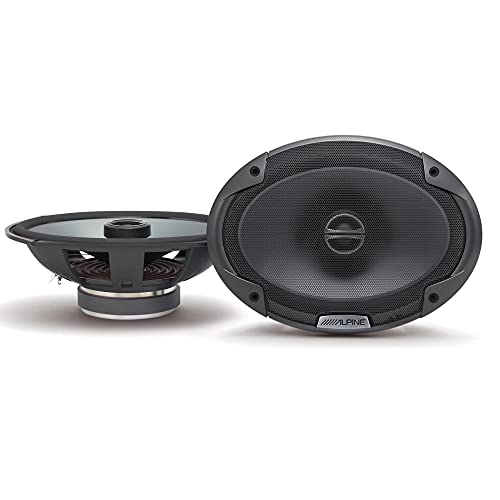
The Alpine SPE 6090, around $140, is for listeners who play loud and often. Its first strength is power handling of 75 watts RMS per speaker with 91dB sensitivity, so it plays loud on factory power and handles an amplifier well. Its second strength is Alpine's reliable build and published cutout dimensions that make fitment easy to confirm.
The limitation is a 65Hz low end, so pair it with a subwoofer for deep bass.
Quick Buyer Checklist
- Does the speaker fit your vehicle's cutout and mounting depth?
- Does the RMS rating match your stereo or amplifier?
- Is sensitivity 90dB or higher if you keep the factory stereo?
- Is the impedance 4 ohms to match your system?
- Does it use a rubber surround and durable basket?
- Are grilles and mounting hardware included?
- Do you need marine rating for a boat or open vehicle?
- Does the brand publish full specs and offer a warranty?
Red Flags to Watch For
- Peak power with no RMS rating: giant wattage numbers without RMS specs often signal low quality speakers.
- Missing frequency response or sensitivity: reputable brands always list these specs.
- Foam surrounds on cheap speakers: foam degrades in hot cars and cracks within a few years.
- Suspicious reviews: many short five star reviews posted together may signal manipulation.
- No warranty or brand support: avoid sellers that offer no warranty or contact details.
Choosing the Best 6x9 Speakers for Your System
Factory stereo users should prioritize sensitivity and a modest RMS rating, choosing pairs like the DS18 G6.9Xi or Infinity REF697F. Amplified systems benefit from higher RMS handling, such as the Polk DB692 or CT Sounds Meso. Boat and motorcycle owners should choose marine rated models. If bass matters most, add a subwoofer, since 6x9 speakers improve midbass but cannot replace a dedicated sub.
Installation Tips for 6x9 Speakers
Most 6x9 upgrades take an hour or two with basic tools. Disconnect the battery before working on wiring, remove the factory speaker and note which wire is positive. Use a vehicle specific harness adapter so you do not cut factory wires, and confirm polarity so both speakers move in phase; reversed polarity makes bass sound thin. Add foam baffles or sound deadening around the mounting area to reduce rattles and improve midbass. Finally, play a familiar song at low volume, then raise it gradually to confirm everything sounds clean before driving.
Care and Maintenance Tips
- Keep head unit firmware updated: updates to your stereo can improve EQ and sound settings.
- Protect the drivers: use grilles and avoid placing items on rear deck speakers.
- Clean grilles regularly: dust and debris reduce clarity; wipe with a dry cloth.
- Avoid clipping: distorted sound at high volume can damage tweeters, so turn down when sound becomes harsh.
6x9 Speakers: Your Questions Answered
Do I need an amplifier?
Do I need an amplifier? You do not need an amplifier for most 6x9 speakers, especially models with 90dB or higher sensitivity. Factory stereos power them well for everyday listening. An amplifier lets higher RMS speakers reach their full volume and bass without distortion, so add one if you like to play loud.
Are 3 way speakers better than 2 way?
Are 3 way speakers better than 2 way? Not always. 3 way speakers add another driver for more detail, but well designed 2 way speakers often sound smoother and more natural. Quality of drivers and crossover design matter more than driver count.
How long do car speakers last?
How long do car speakers last? Quality car speakers with rubber surrounds often last ten years or more. Foam surround speakers may crack after a few years in hot climates. Avoid overpowering speakers and keep volume below distortion to extend their life.
What IP rating do I need for outdoor use?
What IP rating do I need for outdoor use? For boats, motorcycles and open vehicles, choose marine rated speakers with at least IP55 or IP56 protection against water spray and dust. The Polk DB692 carries IP56 marine certification. Standard car speakers have no IP rating and should stay inside enclosed vehicles.
Can I replace 6.5 inch speakers with 6x9?
Can I replace 6.5 inch speakers with 6x9? Usually not without modification. 6x9 speakers need a larger oval cutout, so fitting them in 6.5 inch locations requires cutting or custom adapters. Check your vehicle's factory speaker sizes before buying.
Our Verdict
Choosing 6x9 speakers comes down to three things: matching RMS power and sensitivity to your system, confirming the fit for your vehicle and choosing durable materials. The Polk DB692 is the best all rounder, the DS18 G6.9Xi is an excellent budget upgrade and the Alpine SPE 6090 handles heavy listening. Compare the best 6x9 speakers in the product table above to find the right pair for your car.