
Best Audiophile Full Range Speakers: A First Time Buyer's Guide for 2026
Disclosure: We may earn a commission when you buy through links on this page, at no extra cost to you. As an Amazon Associate I earn from qualifying purchases. Learn more

New to single driver sound? This guide to the best audiophile full range speakers explains sensitivity, cone types, enclosures and amp pairing in plain English.
If you like the idea of vocals that seem to stand in the room and you own, or plan to buy, a low power tube or Class A amplifier, single driver speakers are worth a serious look. Most people picture high end audio as tall cabinets packed with separate woofers, midrange domes and tweeters, yet a devoted group of listeners prefers one specialized driver that reproduces the whole musical range with no crossover in the signal path. The best audiophile full range speakers offer vocal immediacy, a coherent soundstage and an easy electrical load for small amplifiers.
Terms like whizzer cone, point source, back loaded horn and Qts can feel overwhelming at first. This guide breaks the category down in plain language: how one cone covers everything from bass plucks to cymbal decay, which specs matter for your room, and which setup mistakes trip up newcomers. The picks in the table below are chosen with those same criteria in mind, so you can compare them against the checklist as you read.


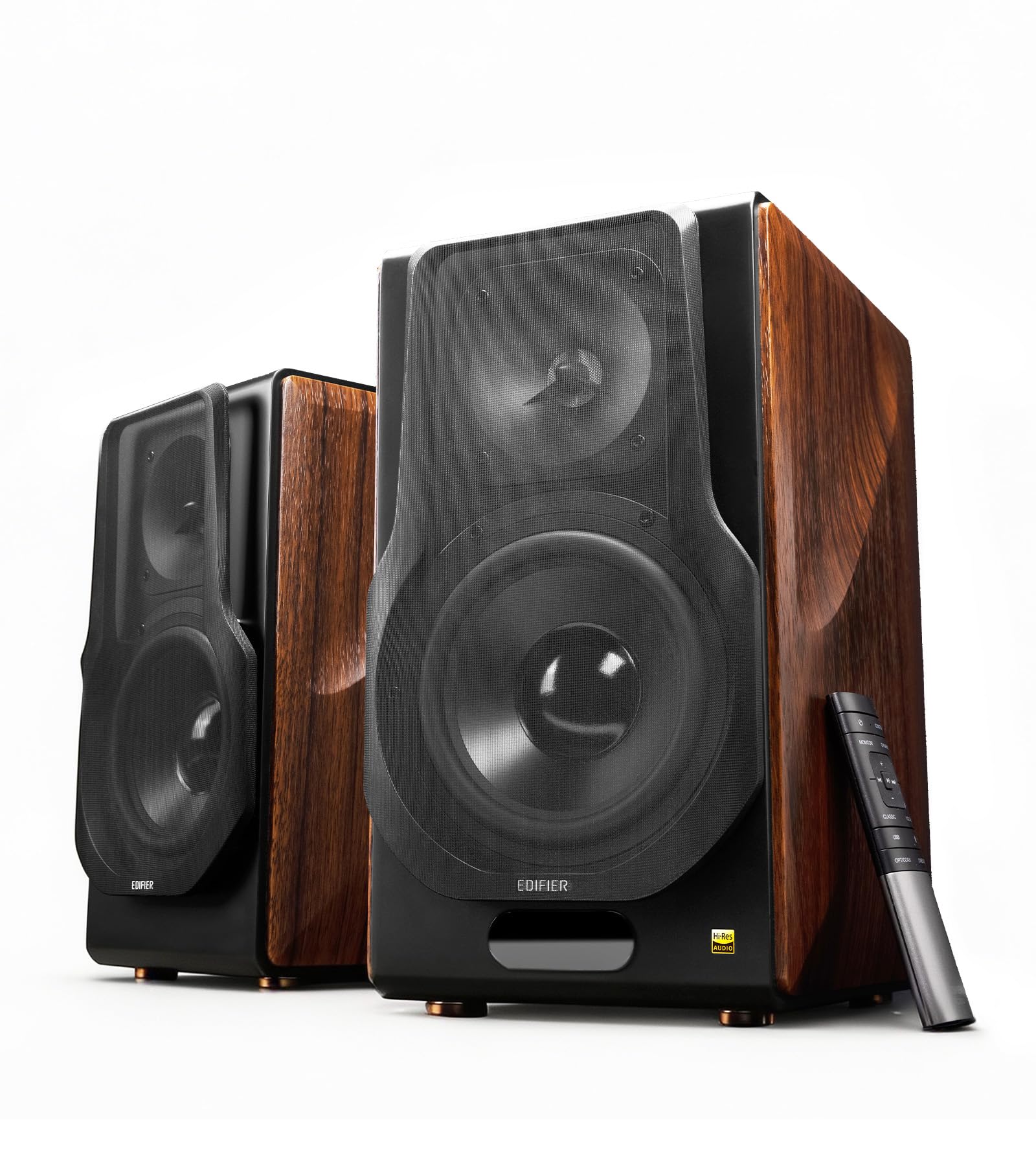


The Basics of Single Driver Speakers
A full range speaker is a loudspeaker that sends the entire audio signal to one drive unit, with no crossover splitting it into bands. That one driver connects straight to the amplifier terminals and covers the bass, midrange and treble together.
In a conventional two way or three way speaker, a passive crossover on an internal circuit board divides the signal and sends low notes to a woofer and high notes to a tweeter. The split often lands between about 1,800 and 3,000 Hz, right in the region where vocals, acoustic guitars, violins and pianos live. Crossovers can add phase shifts, small timing differences between drivers and some energy loss in their coils and capacitors.
A single driver, usually 3 to 8 inches across, plays from roughly 45 to 60 Hz up to 18,000 or 20,000 Hz, depending on size and cabinet. Because every note comes from one point at the same instant, many listeners hear a unified, lifelike image. The price of that simplicity is limited deep bass and narrower treble spread, which the sections below address.
Key Specs Explained in Plain English
Single driver speakers work on different mechanical principles than ordinary bookshelf boxes, so their spec sheets deserve a fresh read. Check these six points before you buy.
Sensitivity (dB at 1 Watt / 1 Meter) and Amplifier Pairing
Sensitivity tells you how loud a speaker plays with 1 watt of power measured at 1 meter. Typical multi way bookshelf speakers rate about 85 to 87 dB and need plenty of amplifier power, while full range drivers with light voice coils and strong magnets commonly reach 91 to 98 dB, and horn loaded cabinets can go higher.
Every 3 dB of extra sensitivity halves the amplifier power needed for the same volume. A 95 dB speaker on a low wattage single ended triode amp or a modest Class A solid state amp can fill a medium living room at lively levels. If you plan to use a small tube amp, look for 93 dB or higher.
Cone Material and Dual Cone (Whizzer) Design
A full range cone has to stay stiff during bass strokes while also moving thousands of times per second for treble, so material choice matters. Makers use paper pulp blended with natural fibers such as hemp or bamboo, treated wood veneers, or thin aluminum and magnesium alloys. Treated paper cones are popular for their natural damping and warm midrange, with less metallic ringing.
On drivers from 5 to 8 inches, you will often see a small second cone attached at the center of the main one. This whizzer cone decouples from the large diaphragm at high frequencies and acts like a mechanical tweeter, extending treble dispersion without any electronic crossover part.
Driver Diameter (3 Inch to 4 Inch vs 6.5 Inch to 8 Inch)
Small drivers handle treble better and large drivers handle bass better, and you must choose which matters more in your room. Physics sets that tradeoff between diameter, air displacement and high frequency beaming.
Compact 3 and 4 inch drivers have very little moving mass, so they track fast treble detail and spread highs widely across the room. Their small surface area limits deep bass in larger rooms unless you add a transmission line cabinet or a subwoofer.
Larger 6.5 and 8 inch drivers move more air, giving fuller midbass on upright bass, cello and kick drums. But an 8 inch cone is wider than the wavelength of treble above roughly 8,000 Hz, so those highs narrow into a beam and you need to aim the speakers toward your seat.
Magnet Motor Systems: Alnico, Neodymium, and Ferrite
The magnet behind the cone drives the voice coil, and its material affects both cost and character. Entry and midrange drivers typically use strontium ferrite ceramic magnets, which give strong flux at a fair price. Higher end drivers often use Alnico, an alloy of aluminum, nickel and cobalt, or neodymium, sometimes with copper shorting rings on the pole piece.
Many listeners find that Alnico motors keep fine detail and smooth vocal texture as the music gets louder. A high flux density in the magnetic gap generally helps transient snap and bass control, so check the maker's stated figure if it is listed.
Enclosure Architecture: Back Loaded Horn, Transmission Line, Bass Reflex, and Open Baffle
The cabinet shapes the bass, because high efficiency drivers have short voice coil travel and low damping, so they depend on the enclosure below about 150 Hz. Buyers usually choose among four cabinet styles.
- Back Loaded Horn (BLH) and Voigt Pipe: A long, folded, expanding horn inside a floorstanding cabinet reinforces the rear wave of a 4 to 8 inch driver, boosting bass output and dynamics.
- Quarter Wave Transmission Line (MLTL): The rear energy travels through a damped labyrinth tuned to a quarter of the driver's resonant wavelength, giving articulate low notes from a slim tower.
- Bass Reflex (Ported Bookshelf or Tower): A tuned vent extends the low end in compact desktop or stand mounted boxes, which suits smaller rooms and nearfield listening.
- Open Baffle (Dipole Panel): A driver with higher Qts sits on a flat board with no box, avoiding cabinet coloration and radiating sound forward and backward for an airy, wide soundstage.
Impedance Curve (4 Ohm, 8 Ohm, and 16 Ohm)
Single driver speakers present a gentle, predictable electrical load, which makes them easy for amplifiers to drive. With no multi way crossover creating sharp impedance dips and phase swings, most are rated at a nominal 8 Ohms, or 16 Ohms on vintage inspired designs.
You will see a rise at the bass resonance and at very high frequencies because of voice coil inductance, but nothing wild. That benign load is one reason low power tube amplifiers without negative feedback sound relaxed with these speakers.
Matching Speakers to Your Music and Room
The right pair depends as much on what you play and where you sit as on any spec. Think through your habits before comparing the picks in the table.
Which Music Suits Single Driver Speakers Best?
Single driver speakers shine on acoustic, vocal and small ensemble music. Folk, jazz trios, chamber music, solo piano, classic singer songwriter albums and well recorded blues rely on midrange realism, which is exactly where a crossover free design is strongest.
Dense, loud material such as modern electronic music, big orchestral climaxes and heavy rock asks for deep bass and high headroom. A small full range driver can still play it enjoyably at moderate volume, but it is not the ideal tool at party levels. If your library is half and half, plan on a gentle subwoofer or choose a larger 8 inch horn cabinet.
How Does Room Size and Layout Affect the Choice?
A small, well treated room usually favors compact drivers, while a large open room favors bigger drivers or horn loading. Smaller rooms reinforce bass naturally, so a 4 inch driver in a ported box can sound full when placed near a wall. Large rooms lose bass energy and need more cone area or the help of a horn to keep the sound from feeling thin.
Hard surfaces such as bare floors, large windows and glass cabinets reflect treble, which can make narrow beaming drivers sound bright. A rug between you and the speakers, curtains, or a bookshelf with uneven items on the back wall will tame this. Soft furnishings also make open baffle speakers more forgiving, since they radiate to the rear as well.
What Should You Consider About Budget and Build Quality?
Budget mostly decides driver quality and cabinet craftsmanship, so spend first on the driver and amplifier match rather than on cosmetics. Entry level pairs generally start around a few hundred dollars, while hand built horn and Alnico designs can run into the thousands. The picks in the table cover several of these tiers.
Look at cabinet materials. Birch plywood and solid hardwood panels resist resonance better than thin particleboard, and internal bracing keeps long horn paths stiff. Check that the terminals are sturdy binding posts rather than tiny spring clips, since you will be connecting and adjusting them often.
Rookie Mistakes to Avoid
Single driver systems reward careful setup, and newcomers stumble when they treat them like ordinary boxed speakers. Avoid these four classic errors.
- Expecting home theater sub bass from a small driver: A 4 or 5 inch driver excels at vocal realism and acoustic texture, not 20 Hz explosions. If you love deep electronic bass, add a fast sealed subwoofer crossed over gently below about 60 Hz.
- Ignoring toe in angle: Single drivers beam highs more narrowly than dome tweeters, so pointing cabinets straight ahead can sound dull or bright. Try angling them inward so their axes cross near your shoulders or just behind your head.
- Pairing high sensitivity speakers with a noisy amplifier: A 96 dB horn speaker on a cheap high power receiver with a high noise floor will let audible hiss through in quiet passages. Match sensitive speakers with quiet, low wattage Class A or tube amplifiers.
- Judging the sound in the first ten minutes: Stiff cloth surrounds and pleated spiders on these drivers often need dozens of hours of moderate playback to loosen up and settle to their intended bass balance.
Getting Started: Setup and First Use
A good setup lets the speakers disappear and leaves only the music. Follow these four steps to get there.
- Position cabinets away from side walls and adjust rear wall distance: Start with an equilateral triangle between the speakers and your chair, for example 7 feet apart and 7 feet from your seat, and keep them at least 2 feet from side walls to reduce early reflections. Move ported or horn cabinets closer to the rear wall, about 12 to 24 inches, for bass warmth, and pull open baffles 3 to 4 feet out for the most depth.
- Align the driver center with seated ear height: Because treble radiates from the center of the cone, place bookshelf models on rigid stands about 24 to 28 inches tall so the driver sits within a couple of inches of your ear height.
- Connect decent copper speaker cable with solid terminations: Terminate 12 to 14 AWG copper wire with snug banana plugs or spades, and check that red and black polarity match on both channels so center vocals lock into focus.
- Dial in toe in with acoustic vocal tracks: Play a familiar solo vocal and guitar recording, then rotate both cabinets inward in small steps until the singer settles into a pinpoint center image and the treble sounds balanced.
Care and Long Term Maintenance
These speakers need very little upkeep, but a few habits protect the drivers and keep the sound consistent. Most of the care comes down to gentle handling and sensible placement.
How Do You Clean the Cone and Cabinet?
Dust the cone with a soft, dry brush and never press on the center cap. Paper and fiber cones are delicate, and a fingertip can dent them permanently. Wipe wood veneer with a barely damp microfiber cloth and dry it at once, and avoid spray cleaners, which can seep into seams and swell the panels.
How Should You Protect the Drivers from Damage?
Keep volume reasonable with small amplifiers and avoid clipping, since a distorted signal from an overdriven amp is the most common way to harm a light voice coil. Remove grilles carefully if you have magnetic ones, and keep children and pets from poking the cones. Switch the amplifier off before connecting or moving cables to prevent loud thumps and accidental shorts.
Where Should You Store and Place Them for Longevity?
Place speakers away from radiators, direct sunlight and damp corners. Heat and humidity swings dry out cloth surrounds and can warp wood panels over time. If you move house, wrap each cabinet in a blanket, keep the cone side up, and carry the speaker by the box rather than the terminals.
Frequently Asked Questions
What size audiophile full range speaker do I need for my room?
For a desk or a small bedroom under about 150 square feet, a 3 or 4 inch driver in a compact bass reflex or transmission line cabinet is a good fit. For medium to large living rooms of roughly 180 to 350 square feet, choose a 6.5 or 8 inch driver in a floorstanding horn, transmission line or open baffle design.
Do I need a special amplifier for full range speakers?
No proprietary amplifier is required, but these speakers sound best with a quiet, good quality low wattage amp. Class A solid state amps of 10 to 30 watts and single ended triode tube amps of a few watts show off the speed of a high sensitivity driver far better than a big home theater receiver.
How long do full range speakers last?
Well built pairs can last decades, since the drive unit is simple and the cabinet has no crossover capacitors to age. Surrounds made of cloth or rubber are the parts most likely to need eventual replacement, and treated paper or metal cones hold up well with normal care.
Are single driver full range speakers better than two way speakers?
They are better for midrange purity, vocal intimacy and pairing with low power tube amps, because they remove the crossover from the vocal band. Conventional two way and three way speakers are better if you want wide dispersion for group listening, deep bass and louder playback at parties.
Do full range speakers need a subwoofer?
Not always, but a subwoofer helps if you want bass below roughly 50 Hz. Large horn and transmission line cabinets can reach low enough for most acoustic music on their own, while small 3 to 5 inch designs pair well with a sealed subwoofer set to cross over gently.
What is a baffle step compensation network, and is it worth having?
It is a simple inductor and resistor circuit that smooths the upper midrange lift caused by a narrow cabinet front. In slim bookshelf and tower designs a well tuned baffle step filter is worth having, because it balances midbass fullness against upper vocal clarity without splitting the signal across several drivers.
Final Thoughts
Hearing a singer or a jazz trio through a crossoverless point source speaker is a distinct experience, and it rewards a little planning. Match the driver size and cabinet type to your room, favor sensitivity of 91 dB or more if you use a tube or Class A amplifier, and spend twenty minutes adjusting toe in. Compare the picks in the table above to find the right pair for your listening room.


