
Best CO2 Monitors by Budget: Smart Picks
Disclosure: We may earn a commission when you buy through links on this page, at no extra cost to you. As an Amazon Associate I earn from qualifying purchases. Learn more
What budget, midrange and premium CO2 monitors offer, from GoveeLife and Temtop to Aranet4 and Airthings, plus the features worth paying for.
Carbon dioxide builds up quickly in bedrooms, home offices and classrooms with closed windows, and high levels are linked to stuffiness, drowsiness and poorer focus. CO2 monitors range from around $70 desk gadgets to $300 plus multi sensor air quality stations, and the price gap is not always obvious. This guide to the best co2 monitors explains what each budget tier gets you, so you spend on accuracy and features that actually help you breathe easier.
The short answer: most homes should buy a CO2 monitor with a true NDIR or photoacoustic NDIR sensor, accuracy around plus or minus 50ppm, a clear display and alerts, such as the Aranet4 around $190 with its 4 year battery and e ink screen; budget buyers can get the GoveeLife H5140 around $70 with app alerts and smart home support, while the Airthings View Plus around $330 adds radon, particles and VOCs for whole home air quality monitoring.



Top 3 Picks by Budget
These three monitors come from the product table above and represent the best value in each tier.


Best Budget Pick
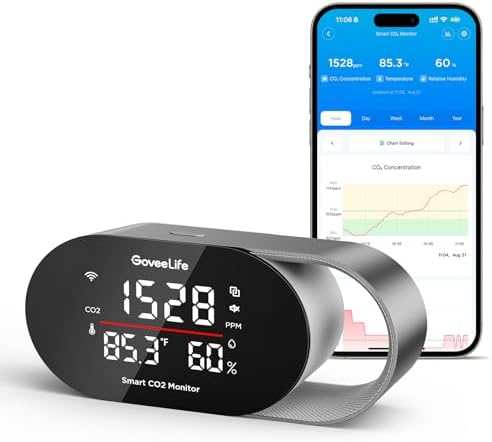
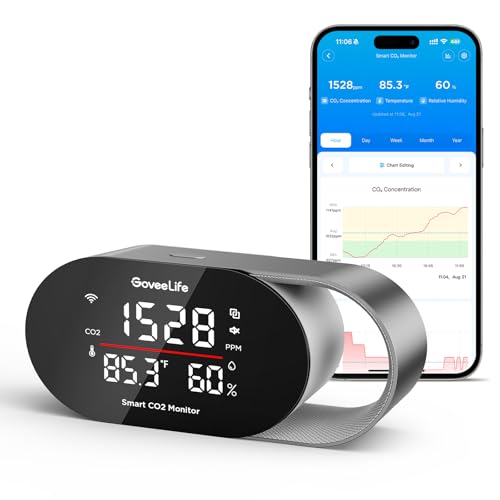
The GoveeLife Smart Air Quality Monitor H5140, around $70, is for first time buyers who want reliable CO2 readings and smart features without spending much. Its first strength is a photoacoustic NDIR sensor rated at plus or minus 40ppm plus 5%, with a fast 5 second refresh and pressure compensation. Its second strength is smart home integration: app alerts, two years of history with CSV export and voice queries through Alexa or Google Assistant.
The limitation is power; it runs from an outlet, so it is less portable than battery monitors.
Best Midrange Pick
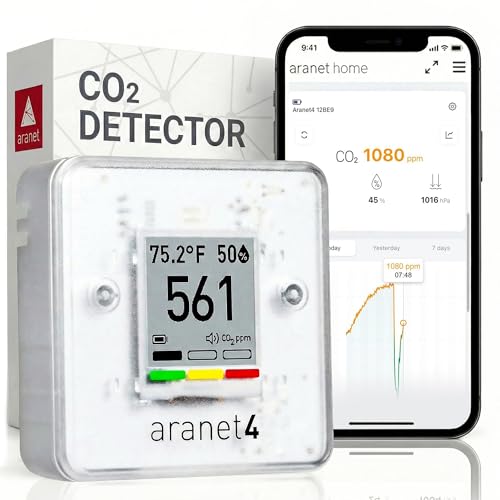
The Aranet4, around $190, suits buyers who want proven accuracy and total placement freedom. Its first strength is a nondispersive infrared sensor known for precise, stable CO2 readings, plus temperature, humidity and pressure. Its second strength is an e ink display that delivers up to 4 years of battery life, so you can place it anywhere without cables.
The limitation is the app history, which stores about 90 days of data, and it does not measure particles or VOCs.
Best Premium Pick
The Airthings View Plus, around $330, is for homeowners who want a complete picture of indoor air. Its first strength is breadth: it measures radon, PM2.5, CO2, VOCs, humidity, temperature and pressure in one battery powered unit. Its second strength is Airthings' app with live data, trend analysis, notifications and an optional extended warranty to five years.
The limitation is cost; if you only need CO2, a dedicated monitor delivers similar value for much less.
What Your Money Gets You at Each Price Tier
Budget Tier: What to Expect
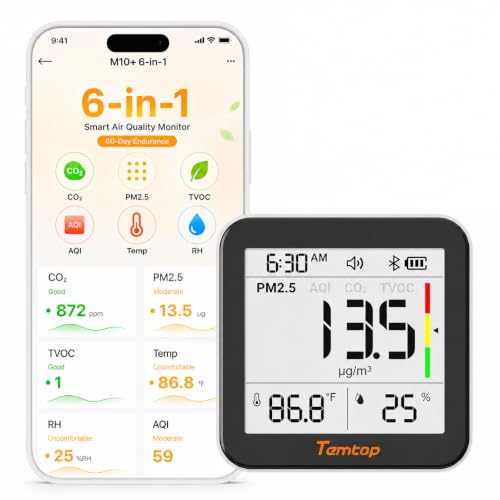
Budget CO2 monitors cost around $60 to $100. At this level, good models like the GoveeLife H5140 and Temtop M10+ include NDIR sensors, displays and app connectivity. The tradeoffs are fewer sensors, shorter history and plug in power or shorter battery life; the Temtop M10+ lasts around 60 days per charge. Avoid very cheap monitors that use estimated eCO2 from VOC sensors instead of true CO2 measurement. This tier suits bedrooms and home offices.
Midrange Tier: The Sweet Spot for Most Buyers
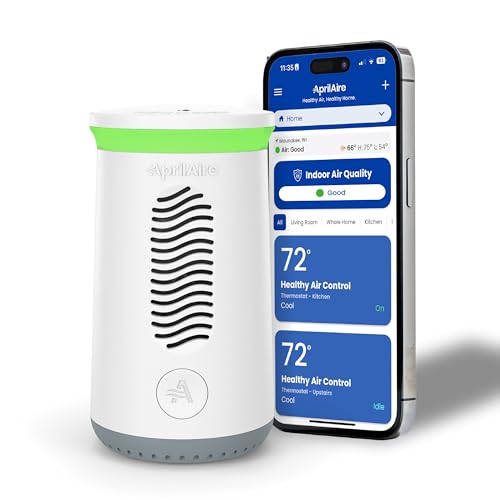
Midrange monitors cost around $120 to $200 and include the Aranet4, BREATHE Airmonitor Plus Gen 2 and AprilAire 5 in 1 WiFi monitor. You gain better sensor reputations, longer battery life, more sensors like PM2.5 and TVOC, WiFi alerts and longer data history. The BREATHE adds formaldehyde and particle readings, while the AprilAire integrates with home HVAC ecosystems. For most homes, this tier balances accuracy and features.
Premium Tier: When Spending More Pays Off
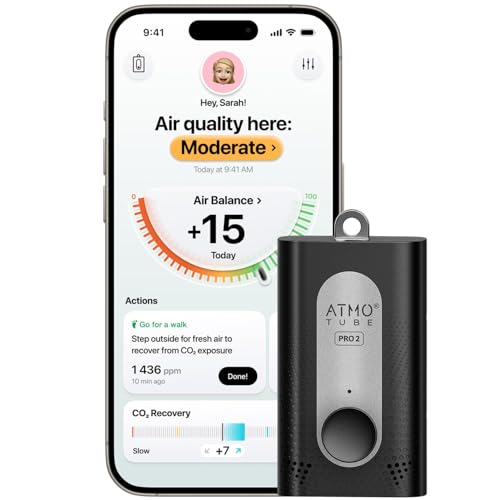
Premium monitors cost around $250 to $350 and include the Airthings Wave Plus, Airthings View Plus and Atmotube PRO 2. They add radon detection, laser particle sensors, professional grade portability or multi room systems. Spending more pays off for homeowners in radon prone areas, families with allergies or asthma who track particles and people who want portable indoor and outdoor monitoring. For CO2 alone, premium models are not necessary.
Features Worth Paying For (and Ones to Skip)
Sensor Type and Accuracy
The sensor is the most important feature, and it is worth paying for at every tier. True NDIR sensors, including photoacoustic NDIR designs, measure CO2 directly by detecting how CO2 absorbs infrared light. Look for stated accuracy around plus or minus 30 to 50ppm plus a few percent. Skip monitors that only list eCO2 or estimated CO2, since these calculate values from VOC readings and can be badly wrong.
Display and Readability
A clear display lets you glance at CO2 levels without opening an app. E ink screens, used by the Aranet4, Temtop M10+ and Airthings View Plus, are easy to read in daylight and save battery. Color LED bars, like on the GoveeLife, give quick green, yellow and red status. Large color screens look nice but are not essential, so skip paying extra for them if you mostly use the app.
Battery vs Plug In Power
Battery powered monitors let you move the sensor to any room and place it at breathing height, which matters for accurate readings. Multi year battery life, as on the Aranet4, is worth paying for. Plug in monitors offer constant power and faster refresh rates. Short battery portable units suit occasional checks and travel.
Smart Controls, Alerts and Apps
App alerts, data history and smart home integration help you act on readings. WiFi models send notifications when CO2 rises above your threshold, while Bluetooth models sync when your phone is nearby. Integration with Alexa, Google Assistant or HVAC systems, as on the GoveeLife and AprilAire, can trigger fans or ventilation. Long data history helps you spot patterns. These features are worth paying for if you want automation; skip them if you only need a display.
Extra Sensors
Multi sensor monitors measure PM2.5 particles, VOCs, formaldehyde, humidity and radon alongside CO2. They are worth paying for if you cook often, live near wildfire smoke or have allergies. Radon sensing is worth it in high radon regions. If ventilation is your only concern, a dedicated CO2 monitor is enough.
Choosing CO2 Monitors for Your Situation
Best CO2 Monitors for My Home
When choosing the best co2 monitors for my home, focus on three things. First, place one in the bedroom or office where you spend the most time with doors closed. Second, choose battery power if you want to move it between rooms. Third, pick WiFi alerts if you want reminders to open a window or run ventilation. The Aranet4 is an excellent all round choice for home use.
CO2 Monitors for Offices and Classrooms
Shared spaces fill with CO2 quickly. Choose monitors with large, color coded displays visible across the room and alerts that remind people to ventilate. Plug in models with fast refresh rates suit offices and classrooms.
Understanding CO2 Levels
Outdoor air contains about 420ppm of CO2. Indoors, levels below about 800ppm indicate good ventilation, 800 to 1,000ppm suggests the room could use fresh air and readings above 1,000 to 1,500ppm are commonly associated with stuffiness and reduced concentration. Bedrooms often climb above 1,500ppm overnight with closed doors. When readings rise, open a window, run a bathroom or kitchen fan or improve HVAC ventilation.
Common CO2 Monitor Mistakes
- Buying eCO2 monitors: estimated readings from VOC sensors are not true CO2 measurements.
- Placing it near a window or vent: drafts dilute readings and hide stuffy air elsewhere in the room.
- Ignoring the bedroom: CO2 usually peaks overnight with the door closed, so monitor where you sleep.
- Reacting to brief spikes: breathing near the sensor or cooking causes short peaks; watch trends instead.
Long Term Costs to Factor In
CO2 monitors have low ongoing costs. Battery models may need new batteries every one to four years, around $5 to $10. Rechargeable models cost only a few cents of electricity. NDIR sensors last around 10 to 15 years, and many self calibrate automatically using outdoor air baselines; some benefit from occasional manual calibration outdoors. There are no required subscriptions for the monitors in this guide. Warranties range from one year to extended five year options with Airthings registration.
CO2 Monitors: Your Questions Answered
Where should I put my CO2 monitor?
Where should I put my CO2 monitor? Place your CO2 monitor at breathing height, around three to five feet off the floor, in the room you use most, such as a bedroom or office. Keep it away from windows, vents and your face, since breathing directly on it skews readings. One monitor per main room gives the best picture.
How accurate are cheap CO2 monitors?
How accurate are cheap CO2 monitors? Cheap CO2 monitors with true NDIR sensors are reasonably accurate, typically within about 50ppm plus a few percent. Very cheap monitors that list eCO2 estimate CO2 from VOCs and can be far off. Always check that the listing mentions NDIR or photoacoustic NDIR.
Do I need to calibrate it?
Do I need to calibrate it? Most NDIR monitors calibrate automatically over time by assuming the lowest reading equals outdoor air. If readings seem high, place the monitor outside or by an open window for several minutes and run manual calibration in the app or settings.
Is a CO2 monitor the same as a carbon monoxide detector?
Is a CO2 monitor the same as a carbon monoxide detector? No, they measure different gases. CO2 monitors track ventilation and air freshness, while carbon monoxide detectors warn about a deadly gas from fuel burning appliances. Every home with gas appliances or attached garages still needs a certified CO detector.
How long do they last?
How long do they last? Quality CO2 monitors with NDIR sensors last around 10 years or more. Battery life ranges from weeks on portable rechargeable units to up to four years on the Aranet4. Firmware updates and occasional calibration keep readings accurate over time.
Our Verdict
Choosing a CO2 monitor comes down to three things: a true NDIR sensor, a power source that suits where you will place it and alerts or displays that make you act on the readings. The GoveeLife H5140 offers excellent value, the Aranet4 is the best dedicated CO2 monitor for most homes and the Airthings View Plus delivers a complete air quality picture. Compare the best co2 monitors in the product table above to find the right fit for your home and budget.


