
Best Competition Mid Range Speakers for 2026: The Buyer Checklist We Use
Disclosure: We may earn a commission when you buy through links on this page, at no extra cost to you. As an Amazon Associate I earn from qualifying purchases. Learn more

Car audio competitors and SPL builders can use this guide to choose competition mid range speakers by sensitivity, motor, voice coil and crossover setup.
Car audio competitors and high SPL builders need drivers that stay clear when thousands of watts of bass are shaking the cabin. Standard factory or casual aftermarket speakers cannot keep up, because they overheat, distort and eventually burn out under that kind of power. The best competition mid range speakers are chosen by sensitivity, motor force, voice coil construction and thermal power handling rather than by consumer audio marketing.
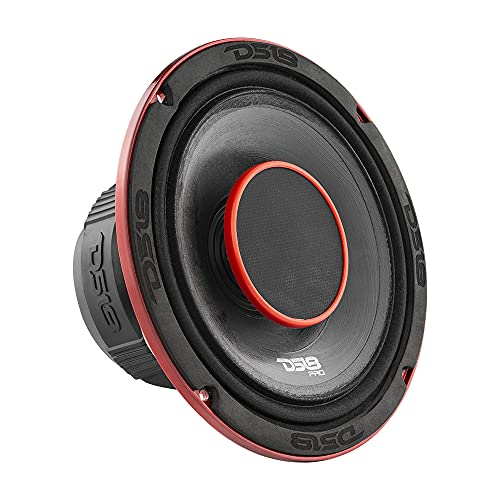
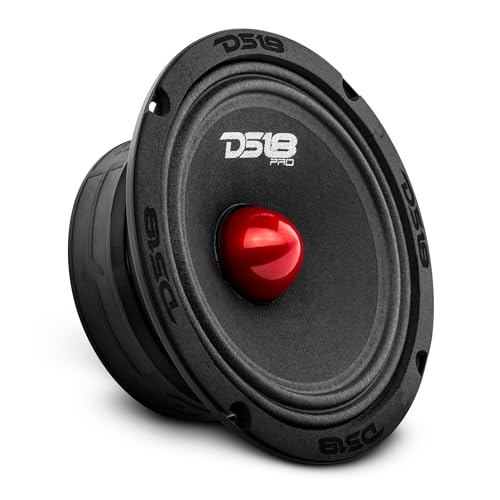
Competition class midrange drivers work like miniature stadium PA speakers. They use stiff paper cones, cloth accordion surrounds, bullet phase plugs and large neodymium or ferrite magnet assemblies. Below, we explain the key specs, the crossover points, the red flags and the setup habits that help a driver win on the meter while staying clean. The picks in the table show models that fit this profile.


What to Look for in Competition Mid Range Speakers
A good competition midrange driver meets seven performance criteria, covering sensitivity, motor, voice coil, phase plug, cone, impedance and frequency range. The sections below take them one at a time. Car audio has its own rules, so judge each spec against the demands of a loud, closed cabin rather than a living room.
What sensitivity rating should a competition midrange have?
Look for 96 dB or higher at one watt and one meter, because sensitivity is the most important spec in competition audio. It measures how much sound pressure a speaker produces from one watt of power at a distance of one meter. Typical car speakers sit around 88 to 90 dB and turn most amplifier power into heat.
Competition drivers range from 96 dB to 102 dB or more. Every 3 dB of extra sensitivity halves the amplifier power needed for the same volume, so a 99 dB driver plays about twice as loud as a 93 dB driver on the same amplifier. That headroom also means less strain and less heat during long demos.
Neodymium or ferrite: which motor is better?
Neither is better in every build, so choose by space, weight and budget. The magnet motor controls how forcefully the voice coil moves through the magnetic gap.
- Neodymium magnet motors: They deliver strong magnetic flux in a compact, lightweight package. That helps in shallow custom fiberglass pods and doors, and the transient response is quick, though they usually cost more.
- Strontium ferrite motors: They use thick ceramic magnet rings with high thermal mass. That mass soaks up heat during long sound demos, but the motors are heavier and larger.
If your doors are already crowded with window tracks and braces, neodymium often saves the most trouble. If you have deep custom pods and long demo runs, ferrite is a sensible way to save money.
What voice coil size and power rating do you need?
Aim for a voice coil of about 1.5 to 2.0 inches in diameter with a clearly stated continuous RMS rating. RMS power handling decides whether a driver survives a full competition season. Coils wound with high temperature materials such as Kapton formers are common in this class.
Many drivers use CCAW (copper clad aluminum wire), which keeps moving mass low for a clean upper midrange. Vented pole pieces and cooling vents move air with every cone stroke, which helps prevent thermal failure.
Why do competition midranges use bullet phase plugs?
A bullet phase plug replaces the dust cap to manage heat and smooth the upper midrange. It is usually machined aluminum or dense composite fixed to the center pole piece.
It acts as a heatsink that pulls heat away from the voice coil core. It also keeps high frequency waves from different parts of the cone from colliding at the center, which reduces phase cancellation and harsh beaming in the vocal range.
What cone and surround materials work best?
Treated paper cones with accordion cloth surrounds are the usual choice, because they are light, well damped and stiff. Paper blended with cotton or Kevlar fibers gives low moving mass without much cone flex.
Multi roll cloth surrounds are treated with damping resin instead of thick rubber. They limit excursion, keep the cone in its linear piston range, and help prevent bottoming out at high volume. Cloth is less forgiving of moisture than rubber, so keep door drain holes clear and use a water shield behind the panel.
Should you choose 4 Ohm or 8 Ohm drivers?
Pick the impedance that gives your amplifier a stable load once all drivers are wired together. Competition midranges come in both 4 Ohm and 8 Ohm versions, and builds often use four, six or eight drivers across the front doors.
Four 8 Ohm drivers wired in parallel present a 2 Ohm load, which suits many high powered amplifiers. Always check the amplifier's minimum stable impedance before wiring.
What frequency range and crossover setting should you use?
Most competition midranges play from roughly 100 Hz up to about 8 kHz, so they need an active high pass filter. Set it on an amplifier or DSP at roughly 120 to 160 Hz with a 24 dB per octave slope. This protects the stiff suspension and lets the driver put its energy into vocals.
Quick Buyer Checklist
Run through these questions before you buy competition midrange drivers.
- Is the sensitivity 96 dB or higher? Higher sensitivity gives more volume per amplifier watt.
- Have you measured mounting depth and magnet diameter? A large magnet must clear window glass and tracks, or you need spacer rings or a custom pod.
- Does the impedance match your wiring plan? Choose 4 Ohm or 8 Ohm versions so multiple drivers give a stable load.
- Do you have an active high pass filter? Unfiltered bass can tear the cloth surround.
- Do you have super tweeters? Competition midranges roll off above about 6 to 8 kHz, so bullet tweeters handle the top end.
- Is the RMS rating stated clearly? Peak numbers alone say little about how long a driver survives.
Red Flags to Watch For
Four warning signs suggest a speaker is not a true competition driver.
- Sensitivity under 91 dB sold as competition: Real competition drivers are efficient; low numbers point to ordinary consumer parts.
- Huge peak power claims with a 1 inch voice coil: A coil that small cannot handle hundreds of watts RMS, so check the continuous rating.
- Flimsy stamped steel baskets: Look for rigid cast aluminum frames that do not flex when bolted down.
- No frequency response or impedance graph: Reputable pro audio makers publish measured curves and Thiele/Small parameters.
Setup and Tuning Tips
Good installation protects your drivers and adds volume you cannot buy with a bigger magnet. These habits cover the most common mistakes.
- Set the high pass filter around 120 Hz to 150 Hz: Removing low bass lets the driver focus on vocal projection without bottoming out.
- Add sound deadening to door panels: Butyl sheets stop thin metal doors from rattling under intense pressure.
- Set amplifier gains with an oscilloscope or distortion detector: Tuning by ear invites clipping, which generates heat that can burn voice coils quickly.
- Seal the baffle: Use a solid mounting ring and gasket so rear waves do not leak into the cabin and cancel the front output.
- Check polarity on every driver: One reversed speaker in an array cancels output in the vocal range.
Frequently Asked Questions
What is the difference between a competition midrange speaker and a regular car speaker?
A competition midrange is a pro audio style driver built for much higher volume and power. It uses a stiff paper cone, accordion cloth surround and large magnet, and often reaches 98 dB or more. Regular car speakers aim for warm sound at moderate levels inside a closed cabin.
Do competition midrange speakers produce bass?
No, they are designed for vocals and midrange frequencies, roughly 120 Hz to 6 kHz. You need dedicated subwoofers for deep bass. Sending low bass to a midrange can damage the suspension.
How much amplifier power do competition midranges need?
Many competition midrange drivers work well with roughly 150 to 300 watts RMS of clean power each. Always follow the maker's stated RMS rating. Clean power from a properly set amplifier is safer than a larger amplifier set too hot.
Why do competition midranges use bullet phase plugs?
The phase plug improves clarity and cooling. It prevents high frequency cancellation at the center of the cone and acts as a heatsink that draws heat from the voice coil core.
Final Thoughts
Winning builds start with drivers made to take extreme power while keeping vocals crisp. Look for sensitivity above 96 dB, a strong neodymium or ferrite motor, a bullet phase plug, a clearly stated RMS rating and a proper high pass crossover. With those in place, the best competition mid range speakers in the table should hold up at competition volume.


