
Best Mid Range Floor Speakers for 2026: Types Compared and How to Choose
Disclosure: We may earn a commission when you buy through links on this page, at no extra cost to you. As an Amazon Associate I earn from qualifying purchases. Learn more

Choosing the best mid range floor speakers for a medium or large room? Compare 2.5 way, 3 way and horn loaded towers, plus sizing and setup tips.
Anyone moving up from compact bookshelf monitors to full height tower speakers wants music that feels less like it comes from small boxes and more like a live performance in the room. A tower uses the vertical space from floor to waist height that a speaker stand would occupy anyway, so you gain two or three woofers, more dynamic headroom and deeper low end (often down to the high 30 Hz range) without using extra floor space. Shopping for the best mid range floor speakers (typically around $500 to $1,600 per pair) can still be confusing, because 2.5 way towers, true 3 way designs, horn loaded cabinets and active wireless towers sound and behave very differently.
This guide breaks down each major type of mid range floorstanding loudspeaker so you can match the crossover design and cabinet loading to your room size, amplifier power and musical taste. The picks in the table show current options, and the sections after it explain how to choose among them.


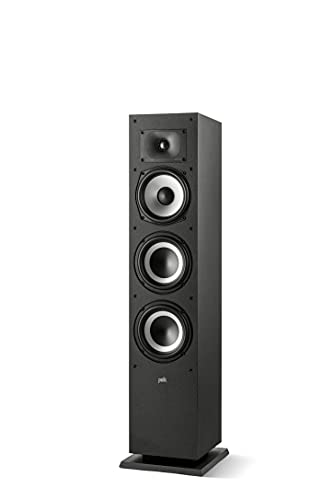
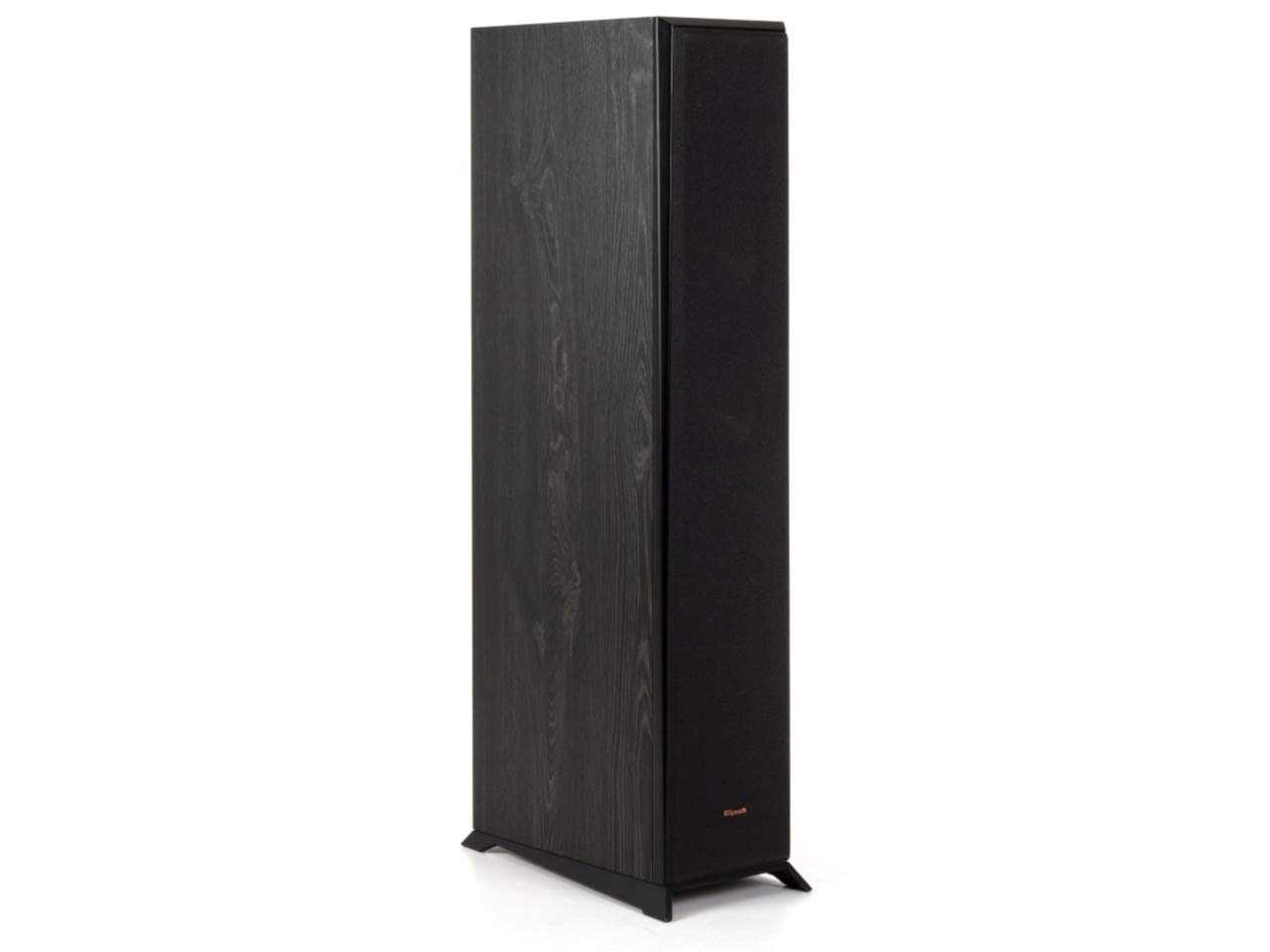


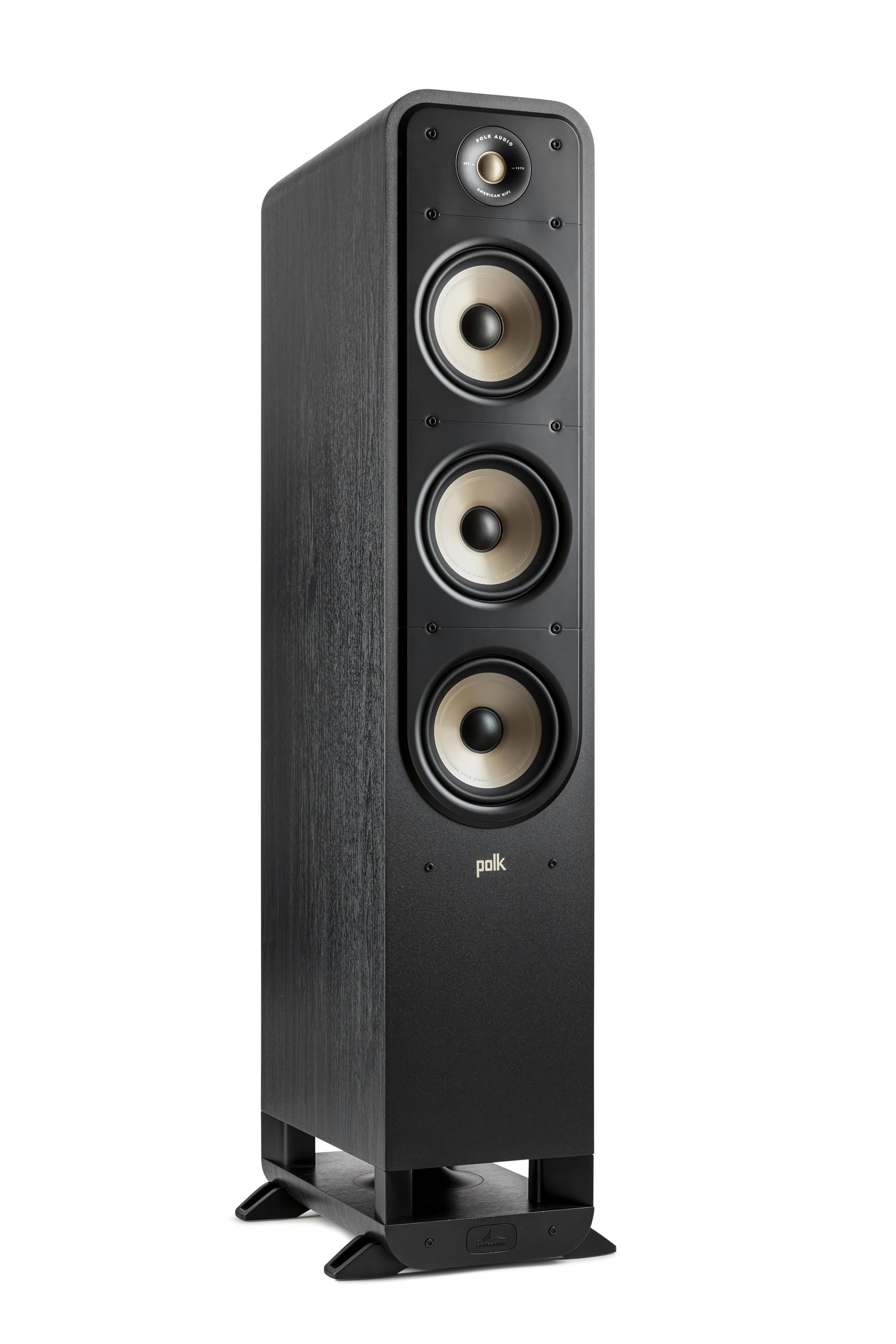
Types of Mid Range Floor Speakers Compared
Floorstanding speakers fall into four acoustic designs, based on how they divide the frequency range across their woofers and tweeters. The summary table below compares them before the detailed breakdown.
| Type | Best For | Pros | Cons | Typical Price (Per Pair) |
|---|---|---|---|---|
| 2.5 Way Bass Reflex Towers | Medium living rooms, rock/pop music, and slim modern footprints | Narrow cabinet baffle improves stereo imaging; extra bass woofer adds warm punch | Upper woofer still handles both low bass and vocal midrange | Around $500 to $1,000 |
| True 3 Way Dedicated Midrange Towers | Critical stereo listening, classical/jazz vocals, and large open rooms | Dedicated midrange driver keeps vocals clear during heavy bass passages | More complex crossover; wider or taller cabinet; wants a stronger amp | Around $750 to $1,600 |
| Horn Loaded & Concentric Driver Towers | Home theaters, live concert dynamics, and low wattage or tube amplifiers | High sensitivity (often 93 to 98 dB) plays loud on modest power; strong transient snap | Horn tweeters can sound forward in bright, bare walled rooms | Around $600 to $1,500 |
| Active Powered Wireless Floor Towers | Minimalist living rooms wanting no external receiver or amp | Built in amplifiers, HDMI ARC, phono input and WiFi/Bluetooth in the tower | Needs AC power at the main tower; harder to upgrade the amp later | Around $800 to $1,600 |
2.5 Way Bass Reflex Floorstanding Speakers
A 2.5 way bass reflex tower is a slim two woofer design that adds bass weight without a wide cabinet, and it dominates the $500 to $1,000 bracket. It looks like a 3 way tower, usually with a 1 inch dome tweeter on top and two matching 5.25 inch or 6.5 inch woofers below. Electrically the woofers do different jobs: the top one covers bass and midrange vocals, while the bottom one is rolled off higher up so it only reinforces bass and lower midbass.
Designers use this layout because a narrow cabinet placed away from walls loses low frequencies as sound wraps around it (called baffle step loss). The second woofer restores much of that lost warmth while the front baffle stays slim, which helps pinpoint stereo imaging. It is a sensible default for apartments and mid sized living rooms where the speakers must look unobtrusive.
True 3 Way Dedicated Midrange Towers
True 3 way towers give vocals and instruments their own driver, and they appear mostly in the $750 to $1,600 upper tier. Instead of one woofer producing a kick drum and a female vocal at the same time, the audio band is split into three zones: dual 6.5 inch or 8 inch woofers for bass, a dedicated midrange cone of roughly 4 to 5.25 inches, and a tweeter on top.
Because the midrange cone never has to move for heavy bass notes, intermodulation distortion drops. Even during an orchestral crescendo or a heavy bass line at high volume, vocals, piano and acoustic guitar stay steady and unstrained. Listeners who favor jazz, classical or acoustic music tend to value this separation most.
Horn Loaded and Concentric Driver Towers
Horn loaded and concentric (coaxial) towers suit listeners who want live music dynamics or easy movie impact from a modest receiver. Horn loaded towers seat a compression tweeter inside a flared waveguide, raising sensitivity to roughly 94 to 98 dB at 1 watt / 1 meter. That means they play about twice as loud as an 88 dB tower on the same amplifier power.
Concentric towers take a different approach by mounting the tweeter at the center of the midrange cone, with woofers below. This combines the point source imaging of a studio monitor with the bass weight of a full tower cabinet. If your room has hard walls and bare floors, add a rug or curtains so a horn tweeter does not sound harsh.
Active Powered Wireless Floor Speakers
Active towers build the amplifier and streaming gear into the speaker, so no separate receiver is needed. Typical features include Class D amplification, a DAC, an HDMI eARC input for a television, an optical input, sometimes a turntable phono stage, and Bluetooth or WiFi streaming. You plug the master tower into the wall and run a single speaker cable (or connect wirelessly) to the companion tower.
The trade-off is flexibility: if an internal amplifier or streaming module becomes dated, you cannot swap it as easily as a separate receiver. Choose active towers when simplicity matters more than future upgrades.
2.5 Way Towers vs True 3 Way Towers: Which Should You Choose?
Pick a 2.5 way tower for medium rooms and slim looks, and a 3 way tower for larger rooms and critical listening. Comparing the two across four practical criteria makes the decision easier.
- Vocal Clarity Under Heavy Bass Load: True 3 way towers win with complex orchestral, progressive rock or electronic tracks at loud volumes, because the midrange driver is isolated from woofer movement.
- Cabinet Footprint and Baffle Width: 2.5 way towers often use dual 5.25 inch woofers in a cabinet about 6.5 to 7.5 inches wide, whereas many 3 way towers with 6.5 or 8 inch woofers measure 8.5 to 10.5 inches wide.
- Amplifier Current Demands: A 3 way crossover uses more parts and often dips to 4 Ohms in the upper bass, so it benefits from a stronger amplifier. A simpler 2.5 way tower is usually easier for a modest receiver to drive.
- Price to Performance Under $800: Below $800 per pair, a well executed 2.5 way tower with better drivers often sounds more coherent than a budget 3 way that stretched its parts budget across four drivers and a complex crossover.
How to Choose the Right Mid Range Floor Speaker
Check these four specifications before ordering any tower pair so it fits your room and your existing audio gear.
Room Size Matching and Port Orientation
Match tower size to room size: small rooms suit slim towers or none at all, and large rooms suit 3 way designs. Floorstanding speakers move two to three times more air than bookshelf speakers, so in a 10 x 10 foot bedroom a dual 8 inch tower will overload the room's bass modes and sound boomy.
For medium rooms (about 160 to 280 square feet), a slim tower with dual 5.25 inch or 6.5 inch woofers is ideal. For large living rooms and open concept spaces (300 square feet and up), choose a 3 way tower with dual 6.5 inch or 8 inch woofers. Also check where the bass reflex port vents: front firing or downward firing ports allow placement within 8 to 12 inches of the front wall, whereas rear firing ports need roughly 16 to 30 inches of clearance behind the cabinet.
Cabinet Bracing, MDF Thickness, and Outrigger Feet
Solid cabinet construction keeps bass tight and vocals clean. A tall 38 to 44 inch tower has large side panels that can vibrate like a guitar body if built from thin particleboard, smearing bass notes. In this price tier, look for cabinets of high density MDF around 0.75 inch (18mm) thick, with internal cross bracing and a thick front baffle.
Check the base too. Quality floor speakers include cast aluminum or heavy steel outrigger bars with carpet spikes (which pierce rug fibers to anchor the tower to the subfloor) and rubber or brass isolation pads for hardwood and tile. A wide base also makes a tall tower safer around children and pets.
Sensitivity (dB), Impedance (Ohms), and Bi Wire Terminals
Sensitivity and impedance tell you how easily an amplifier will drive the speaker. Many mid range towers are rated at 6 Ohms or 4 Ohms even when labeled "8 Ohms compatible." With an entry level AV receiver, keep volume moderate or add an external power amp. If you want easy volume from any receiver, look for towers around 89 dB to 96 dB sensitivity.
Bi wire terminals (two sets of binding posts) are useful but not essential. They let you experiment with bi wiring or bi amping later, and they are common on 3 way designs.
Single Speaker vs Pair Pricing Verification
Always check whether a listed price covers one speaker or a pair. Unlike bookshelf speakers, which are nearly always sold in pairs, many floorstanding towers are priced and boxed individually ("Each") because shipping boxes can weigh 40 to 65 pounds apiece. Look for wording such as "Single Speaker (Order 2 for a Stereo Pair)" so you can compare true total costs.
Also factor in delivery. Boxes this heavy and tall are awkward on stairs, so measure doorways and the path to the listening room before ordering, and keep the original packaging until you are sure of the fit.
Tips to Get the Most From Your Mid Range Floor Speakers
Once your towers are unboxed, three setup practices help lock in tight bass and focused center vocals.
- Level the floor spikes so the cabinet cannot rock: Press diagonally on the top corners of each tower; if the cabinet moves even slightly, adjust the threaded spikes and tighten their locknuts. A rigid coupling to the floor tightens midbass punch.
- Keep towers at least 24 inches from room corners: Pushing a bass reflex tower into a corner boosts bass in the 60 Hz to 100 Hz range and can drown out vocals. Pull them out and space them roughly 6 to 9 feet apart.
- Replace thin terminal jumpers with short speaker wire jumpers: If your towers have bi wire binding posts joined by thin stamped brass plates, short lengths of 12 AWG copper speaker wire make a more solid connection.
Angle each tower slightly toward the listening seat (toe in) and adjust until the vocal image locks in the center. In an open plan living space, keep background noise from appliances and fans in mind, since it can mask quiet passages when music is playing.
Frequently Asked Questions
How long do mid range floorstanding speakers last?
A pair of passive mid range floorstanding speakers with butyl rubber woofer surrounds and braced MDF cabinets can last for decades. Passive towers contain no software or batteries to become obsolete, so they are among the longest lasting home entertainment purchases. Foam surrounds on some models may need replacing after many years.
Do I still need a subwoofer if I buy floorstanding tower speakers?
For two channel stereo music, most mid range towers reach down to roughly 35 to 42 Hz and deliver full bass without a subwoofer. For home theater effects with deep rumble, a powered 10 or 12 inch subwoofer still adds low frequency weight. Many owners start with towers alone and add a sub later.
Are floorstanding speakers better than bookshelf speakers at the same price?
Floorstanding speakers usually give deeper bass and higher volume at the same price, while bookshelf speakers put slightly more of the budget into the tweeter and midrange. A tower also saves the cost of separate speaker stands. For rooms over about 200 square feet, towers generally give a fuller presentation.
How much amplifier power do mid range floor speakers need?
Most mid range towers perform well with a stereo amplifier or AV receiver rated between 50 and 120 watts per channel into 8 Ohms. High sensitivity horn loaded towers (94 dB or more) can reach loud levels with as little as 15 to 30 watts per channel. Check the speaker's recommended amplifier range in its specifications.
Should I bi wire or bi amp my floorstanding speakers?
Bi wiring offers a minimal audible change over a single heavy 12 AWG copper cable, while bi amping can give real gains in headroom and bass control. Bi amping means using two amplifier channels per speaker, such as unused surround channels on a 7.1 receiver. It is optional, so only try it if your receiver and speakers support it.
Final Thoughts
Full size tower speakers bring bass scale, vocal height and dynamics to music and film that smaller speakers rarely match. Choose a slim 2.5 way bass reflex tower for medium rooms and modern looks, a true 3 way tower for critical listening in larger spaces, or a high sensitivity horn loaded or active wireless tower for easy home theater and streaming. Compare the picks in the table above to find the best mid range floor speakers for your room and amplifier.


