
Best Mid Range Speakers Home Theater for 2026: What Actually Matters Before You Buy
Disclosure: We may earn a commission when you buy through links on this page, at no extra cost to you. As an Amazon Associate I earn from qualifying purchases. Learn more

Building a movie room on a budget? Use this guide to the best mid range speakers home theater setups, from center channels to 80 Hz crossovers.
If you are tired of turning the volume up to catch whispered dialogue and then scrambling to turn it down when an action scene explodes, a dedicated surround system solves that problem. It anchors voices to the screen while wrapping rain, helicopter flyovers and orchestral scores around your seats. Shopping for the best mid range speakers home theater setups (typically around $600 to $2,000 for a 5.0 or 5.1 system or matched left, center and right components) means checking dispersion and crossover details that regular stereo buyers often overlook.
Before you order a surround bundle or piece together a 5.1.2 Dolby Atmos room, run each candidate through the checklist below. It explains why the center channel design makes or breaks dialogue, how to judge voice matching across the front stage, and how an 80 Hz subwoofer crossover protects your AV receiver. The picks in the table are a good place to start comparing, and the sections after them help you decide what your room actually needs.

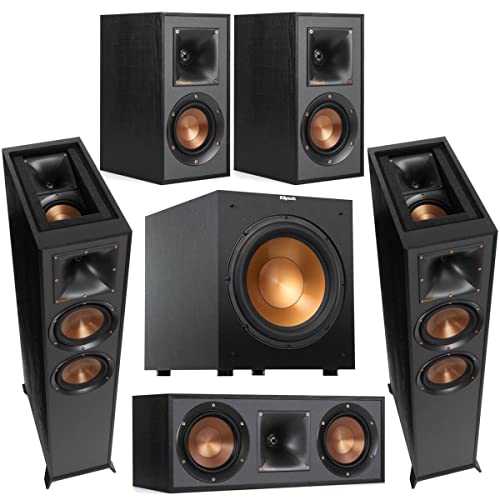

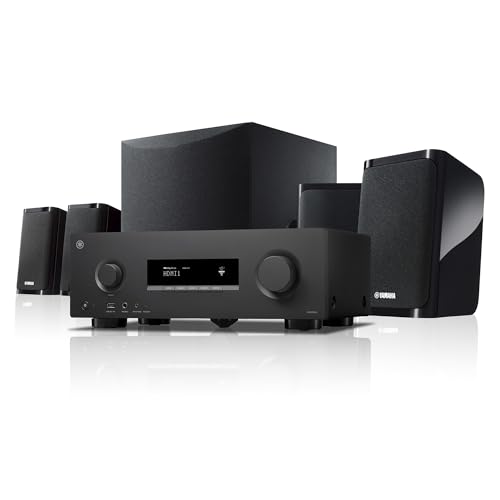


What to Look For in Mid Range Home Theater Speakers
Seven specs separate a good cinema system from a pile of mismatched boxes. Unlike two channel stereo, where two speakers handle everything, a movie soundtrack uses discrete channels, and the center speaker under your screen carries most of the dialogue and on screen effects. Each spec below is something you can check on a product page or in the manual before you buy.
Center Channel Design: 3 Way, Concentric or 2 Way MTM?
A 3 way or concentric center channel gives the clearest dialogue across a wide couch, while a basic 2 way MTM layout can sound muffled off axis. Most inexpensive horizontal centers use an MTM (midwoofer, tweeter, midwoofer) design with the two woofers sitting 10 to 14 inches apart. For anyone seated far to the left or right, sound from the two woofers arrives at slightly different times, causing comb filtering that dulls vocal frequencies roughly between 800 Hz and 2,500 Hz.
A true 3 way center places a dedicated midrange and tweeter in the middle, flanked by bass woofers. A concentric (coaxial) center puts the tweeter in the middle of the midrange cone. Either way, the voice sources stay aligned, so dialogue stays clear for every seat on a wide family sofa.
Front Stage Timbre Matching (Left, Center, Right)
The left, center and right speakers should come from the same product series so sounds keep the same character as they pan across the screen. If you pair metal dome towers with a soft silk dome center from another brand, a car crossing the screen will audibly change tone in the middle.
Look for the same tweeter material, waveguide shape and midrange cone material across all three. In a dedicated projection room with an acoustically transparent screen, three identical bookshelf or on wall speakers across the front is a common cinema approach.
Sensitivity and Dynamic Headroom
Look for front speakers with sensitivity of roughly 87 to 92 dB (at 2.83V, 1 meter) so they handle loud peaks without strain. Movie mixes have a much wider dynamic range than compressed pop music, with big jumps between quiet conversation and a sudden gunshot or launch.
Low sensitivity speakers with small voice coils tend to heat up during long action sequences and can sound harsh right when the movie peaks. Higher sensitivity paired with a midbass driver that has room to move helps keep loud scenes clean, and it also lets a mid range receiver work less hard.
Subwoofer Crossover at 80 Hz
Every speaker in the system should play cleanly down to about 55 to 65 Hz so it blends with a subwoofer crossed over at 80 Hz. In a calibrated theater, you set the main and surround speakers to "Small" in the receiver's bass management menu, and a powered subwoofer handles the deep explosions and rumble.
Avoid tiny cube satellites with 2.5 inch drivers that roll off far higher, around 150 Hz. They leave a gap in male voices and upper bass between the cubes and the subwoofer, so actors sound thin and the bass seems to come from the corner.
Surround and Dolby Atmos Height Speakers
Choose direct radiating surround speakers if you want Dolby Atmos or DTS:X, because object based mixes place sounds at specific points around and above you. Older dipole surrounds were designed to diffuse background sound and do not suit this job as well.
Check that the series offers matched compact surrounds, or low profile on wall models with keyhole mounts. For height channels, look for Atmos elevation modules that sit atop the front speakers and bounce sound off a flat ceiling, or models that mount high on the wall or in the ceiling.
AV Receiver Impedance Compatibility
Choose speakers with a nominal impedance of 6 to 8 ohms and minimum dips that stay above roughly 4 ohms. A 5.1.2 or 7.1.4 system asks a single receiver to power seven to eleven speakers at once, and very low impedance speakers can push the receiver into thermal protection and shut it off mid movie.
Mainstream receivers from brands such as Denon, Marantz, Yamaha, Onkyo and Sony are generally designed to drive 6 and 8 ohm speakers, so this is rarely a problem if you stay in that range. Always confirm the rating in your receiver's manual.
Binding Posts and Wire Management
Choose 5 way binding posts on every channel, since they accept bare wire, spade lugs and 4mm banana plugs and stay put when you vacuum behind the console. For long surround runs, 14 AWG is a common choice, and 12 AWG suits very long distances. In wall runs need CL2 or CL3 rated cable to meet code.
Matching Speakers to Your Room Size and Budget
Room size and budget decide which kind of system makes sense, and a mid range budget stretches furthest when you spend it in the right places. The ranges below are rough starting points, not fixed rules.
Small Rooms Under About 200 Square Feet
In a bedroom, den or apartment living room, compact bookshelf speakers with a good center and a 8 to 10 inch subwoofer are usually enough. Large towers add little here and can overload the room with bass. Put the extra money into a better center channel and consider on wall surrounds, which keep floor space free and sit closer to the seating position.
Medium Rooms Around 200 to 350 Square Feet
This is the size where mid range systems shine, because the speakers can play at satisfying levels without being pushed hard. A 5.1 or 5.1.2 layout with bookshelf or slim tower fronts, a matched center and a 10 or 12 inch subwoofer fits most living rooms. If your budget is around $1,200 to $1,800, spending a larger share on the front three speakers usually pays off more than adding extra surrounds.
Large or Open Plan Rooms
Bigger spaces ask more of every speaker, so prioritize higher sensitivity, larger woofers and a receiver with enough power to avoid clipping. Floorstanding towers across the front, a full size center and a larger subwoofer (or two smaller ones placed in different spots for smoother bass) help the system fill the room. Open plan spaces also leak sound into kitchens and hallways, so aim surrounds at the seating area and keep volume in mind for neighbors.
Where to Spend and Where to Save
Put most of your money into the center channel, the front pair and the subwoofer, since these carry the bulk of the soundtrack. Surround speakers can be a step down in size, as long as they come from the same series and match the front tone. Receivers are often discounted during big sale events, so it can be worth watching the deals page for a stronger receiver or subwoofer to pair with your speakers.
Speaker Packages vs Buying Separates
A matched speaker package is the simplest route, while buying separates lets you tailor each channel. Both can work well at this price level if the tonal character stays consistent.
When a Bundled 5.1 Package Makes Sense
Packages from one manufacturer guarantee tonal matching and often cost less than the same pieces bought individually. They suit first time builders, rooms of average size and anyone who wants a system that works without much research. Check that the package lists a real center channel and a powered subwoofer, and confirm the cables and brackets you will need are included or cheap to add.
When Separates Are Worth the Effort
Buying separately makes sense if you already own a good pair of front speakers, want a larger center than a package offers, or plan to expand later into Atmos. Stay within one speaker series where you can, since that protects timbre matching across the front stage. Mixing a few series from the same brand is usually fine for surrounds, which carry mostly ambient sound.
Quick Buyer Checklist
Answer these seven yes or no questions before buying your home theater speaker system.
- Does the center channel use a 3 way or concentric layout (or at least a wide waveguide)? Do not skimp here, since it carries most of the dialogue.
- Are the left, center and right speakers from the same brand and model line? This keeps panning across the screen smooth.
- Does every speaker reach down to about 60 Hz so it crosses over smoothly at 80 Hz? If not, the voice range will sound thin.
- Have you measured the gap between your media console and the bottom of your TV? Many full size 3 way centers stand 7.5 to 9 inches tall and can block the screen edge.
- Do you have an AV receiver? Passive 5.0 and 5.1 speaker packages need a receiver to decode Dolby Atmos and amplify the channels, while the subwoofer has its own amp.
- If you want up firing Atmos modules, is your ceiling flat drywall between about 7.5 and 12 feet? They work poorly on vaulted, angled or acoustic drop ceilings, so use wall or ceiling mounted height speakers instead.
- Can the surrounds fit beside or slightly behind your sofa (roughly 90 to 110 degrees)? Compact or keyhole mountable models are easiest.
Red Flags to Watch For
Skip any bundle that shows these four warning signs.
- Home theater in a box systems with proprietary plugs and a passive subwoofer: They lock you into thin cables and parts that cannot be upgraded or connected to a standard receiver later.
- Tiny plastic satellite cubes paired with a boomy bass module: A 2.5 inch cone cannot reproduce the body of the human voice between roughly 100 Hz and 250 Hz, so actors sound thin.
- A rear ported center channel pushed inside a closed cabinet cubby: The box traps bass energy and turns male dialogue into a muffled boom. Place the center on top of the console with its front edge flush to the lip.
- Inflated "2,000 watts peak power" claims on a $300 speaker pack: Passive speakers do not produce power. Look for honest continuous power handling ratings and real sensitivity numbers.
Common Buying Mistakes to Avoid
Most disappointing home theaters come from a few repeatable errors rather than from bad products. Knowing them in advance saves returns and rewiring.
- Buying a receiver that is too small: A budget stereo receiver cannot decode surround formats. Pick an AV receiver with enough channels for your layout plus room to add height speakers later.
- Ignoring the subwoofer: Spending everything on speakers and adding a tiny sub leaves the movie without impact. Plan for a sub that is rated to play down to about 25 to 30 Hz.
- Choosing speakers by looks alone: Finishes matter, but a slim cabinet with a weak center will hurt dialogue. Check driver layout and frequency range first.
- Placing speakers too close to walls without checking the manual: Rear ported speakers can sound boomy against a wall. Follow the placement guidance from the maker, or pick sealed models for tight spots.
- Skipping room calibration: Even good speakers sound uneven until levels and distances are set. The automatic setup on most receivers takes only a few minutes.
Setup and Care Tips
A few calibration steps after unboxing make a bigger difference than most upgrades.
- Aim the center channel at ear height: If it sits on a low console below the TV, slip small isolation wedges under the front edge so the tweeter points at your seated ears rather than your knees.
- Run your receiver's room correction (Audyssey, Dirac Live or YPAO): Use a tripod at ear height and measure from 6 to 8 positions around the sofa. Afterward, confirm speakers are set to "Small" with an 80 Hz crossover.
- Keep surrounds at or slightly above seated ear height: This keeps the base 5.1 layer near ear level, which leaves the widest separation for overhead Atmos effects.
- Try the subwoofer crawl: Place the sub in your main seat, play a bass heavy track, and crawl around the room to find the spot where bass sounds smoothest. Put the subwoofer there.
- Tidy cables and dust the drivers: Use cable raceways along baseboards, and wipe grilles with a dry microfiber cloth. Give the receiver a few inches of open space above its vents.
Frequently Asked Questions
What is the most important speaker in a home theater system?
The center channel is the most important speaker, with the powered subwoofer a close second. The center carries most spoken dialogue, while the subwoofer delivers the deep tactile impact that makes movies feel cinematic.
Should I buy floorstanding towers or bookshelf speakers for the front channels?
In a small to medium room (under about 300 square feet) with a capable 10 or 12 inch subwoofer crossed over at 80 Hz, bookshelf speakers on stands sound very close to towers for movies. The savings can go toward a better center channel or subwoofer. Choose towers for larger rooms or if you also listen to stereo music without the subwoofer.
How long does a mid range home theater speaker system last?
A passive speaker set can easily last 20 years or more with normal care. Video formats change, but you usually only replace the receiver, since passive speakers and copper wiring stay compatible.
Do I need a 7.1 system, or is 5.1.2 Dolby Atmos better for most living rooms?
For most living rooms, 5.1.2 Atmos is the better choice, especially when the sofa sits close to the back wall. Rear surrounds in a 7.1 setup need several feet of open space behind the couch to work properly, while two height speakers add more immersion in the same space.
Can I use 6 ohm home theater speakers with an 8 ohm AV receiver?
Yes, most modern receivers are designed to drive both 6 and 8 ohm speakers at normal to loud volumes. Check your receiver manual for its rated impedance range, and leave a few inches of open space above its vents so heat can escape.
Final Thoughts
Building a balanced home theater does not require a basement screening room or a huge budget. Put your money into a wide dispersion center channel, keep the front three speakers matched, and cross over to a capable subwoofer at 80 Hz. Do that and the best mid range speakers home theater packages deliver clear dialogue at low volume and real impact on movie night. Compare the picks in the table above to find the set that fits your room and receiver.


