
AMD Ryzen 7 9800X3D vs AMD Ryzen 5 9600X for 2026: Cache Chip or Six Core Value
Disclosure: We may earn a commission when you buy through links on this page, at no extra cost to you. As an Amazon Associate I earn from qualifying purchases. Learn more

AMD Ryzen 7 9800X3D vs AMD Ryzen 5 9600X: how a cache gaming chip and a six core chip differ in games, cost and platform, with a clear table and budget advice.
One of these processors costs more than twice as much as the other, so the question is simple: does a gaming cache chip justify the jump over a good six core part? This look at amd ryzen 7 9800x3d vs amd ryzen 5 9600x weighs what the extra money buys in games, in daily work and in long term value.
The product table lists current offers for both chips. Use the points below to decide where your budget should go.


What Each Chip Brings
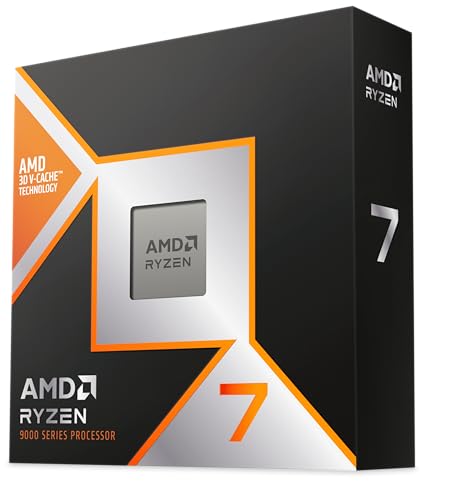
The Ryzen 7 9800X3D is an eight core, sixteen thread chip with 3D V-Cache, and its listing calls it the world's fastest gaming processor. The Ryzen 5 9600X is a six core, twelve thread Zen 5 chip with a high boost clock and a modest price. Both use Socket AM5, and both ship without a cooler.
| Feature | Ryzen 7 9800X3D | Ryzen 5 9600X |
|---|---|---|
| Cores and threads | 8 cores, 16 threads | 6 cores, 12 threads |
| Cache | 96 MB L3 with 3D V-Cache | 38 MB |
| Max clock | Up to 5.2 GHz | Up to 5.4 GHz boost |
| Typical price band | Around $450 | Around $175 |
| Cooler included | No | No |
Amd Ryzen 7 9800x3d vs Amd Ryzen 5 9600x for Gaming
The cache is the story. In games that depend on the processor, the 9800X3D delivers noticeably higher frame rates and smoother frame times, especially at 1080p and 1440p with a fast graphics card. The 9600X is quick, but it cannot match a big cache when a game keeps asking for data.
The gap closes as resolution rises or as the graphics card gets slower. With a mid-range card at 1440p, the two chips often land close together, and then the cheaper chip makes better financial sense.
Where the 9600X Holds Its Own
Outside games, the 9600X is a fine daily chip. It opens apps quickly, handles office work and browsing without effort and uses little power. Its higher boost clock even helps in tasks that depend on a single fast core.
Because it costs so much less, the 9600X leaves money for a better graphics card, a bigger SSD and a decent cooler. That balance usually gives a better gaming PC than a flagship chip paired with a weak card.
Where the 9800X3D Wins
The 9800X3D pulls ahead for competitive players on high refresh monitors, for simulation and strategy fans and for anyone who pairs it with a top graphics card. Its eight cores also give extra room for streaming and background tasks. If you want the best gaming chip and plan to keep it for years, it holds up well.
- High refresh esports at 1080p and 1440p.
- Processor-heavy games such as simulators and large strategy titles.
- Builds with an RX 9070 XT class card or better.
- Owners who want a long lived top tier chip.
Cooling and Power
Both chips need a separately bought cooler. The cache chip draws more power in heavy use, so a good tower cooler or a 240 mm liquid cooler is a sensible match, while a modest tower cooler is enough for the 9600X. Check your case for clearance before you choose.
Budget Strategy
If you have a fixed budget, compare two builds. One spends on the 9800X3D and a mid-range card, and the other spends on the 9600X and a stronger card. In many games the second build wins, because the graphics card sets the frame rate. The first build wins only in games that really tax the processor.
You can also start with the 9600X and move up later, since both fit the same boards. Selling the old chip recovers part of the cost.
Why Cache Matters in Games
A game constantly reads the same pieces of data: unit positions, physics states, world objects. When that data sits in a large cache next to the cores, the processor waits less for main memory. That is why a chip with a lower clock can still win, and why the benefit shows most in games with many moving parts.
Games that are simple on the processor side, such as many slower paced single player titles, ask for little from the cache. If your favorites fall in that group, the cheaper chip covers you.
Checking Your Own Bottleneck
Before you spend, look at your current system while a favorite game runs. If the graphics card sits near full use while the frame rate stays smooth, a faster processor will add little. If the graphics card idles while one or two cores sit near full use, the processor is the limit and the cache chip is the right fix.
Monitor software in the graphics driver or in Windows shows these figures. Spend ten minutes on that check, and you avoid a purchase that does not move your frame rate.
Which One to Choose
Choose the 9800X3D if gaming performance is the priority, you own a strong graphics card and you play processor-heavy titles. Choose the 9600X if you want a balanced PC, play mostly at 1440p or 4K, or work on a budget. Neither chip is a bad choice, and both run on a platform that AMD continues to support.
Seller and Version Notes
The 9800X3D appears from the maker and from third party sellers, sometimes at a premium. Compare the offer with the maker's standard listing and avoid prices far above it. For the 9600X, look at the plain boxed chip rather than bundles that attach an expensive board.
You may also want the AMD Ryzen 5 9600X Review and the AMD Ryzen 7 9800X3D Review.
FAQs
Is the 9800X3D worth the extra money over the 9600X?
For high refresh gaming with a strong graphics card, yes. For a mid-range build, the 9600X offers better value.
Do both chips need the same motherboard?
Yes. Both fit AM5 boards and use DDR5 memory.
Do they include a cooler?
No. Plan to buy one for either chip.
Can I upgrade from the 9600X to the 9800X3D later?
Yes, on the same board, usually with only a BIOS check.
Final Thoughts
When you weigh amd ryzen 7 9800x3d vs amd ryzen 5 9600x, match the chip to your graphics card and monitor. Buy the cache chip for top tier gaming, buy the six core for balance, and compare offers in the table.


