
Best 1000 Watt Speakers: Peak Versus Continuous Power (2026)
Disclosure: We may earn a commission when you buy through links on this page, at no extra cost to you. As an Amazon Associate I earn from qualifying purchases. Learn more

Mobile DJs, bands and party hosts: how to read peak and RMS ratings and choose the best 1000 watt speakers for your venue, inputs and lifting limit.
A 1000 watt label sounds like a promise of huge volume, but the number can mean peak power, program power or continuous output. When you compare the best 1000 watt speakers, the more useful questions are how the figure is measured, what the cabinet is built to do and what you have to add to make it work.
This guide covers the common forms these speakers take, how to read the rating without being misled and what to check before you order. Use the product table for a shortlist, then apply the checks below.




Peak, Program and Continuous Power
Peak power is the most the speaker can handle for a brief burst. Program power is a lower figure that describes music-like signals. Continuous (RMS) power is the lowest and the most honest number for everyday use. A "1000 watt" speaker might have a continuous rating that is a fraction of that, and that is normal, not a defect.
Compare cabinets by their continuous rating and their efficiency where listed. Two speakers advertised with the same big number can differ a lot in how loud and clean they play.
The Main Types
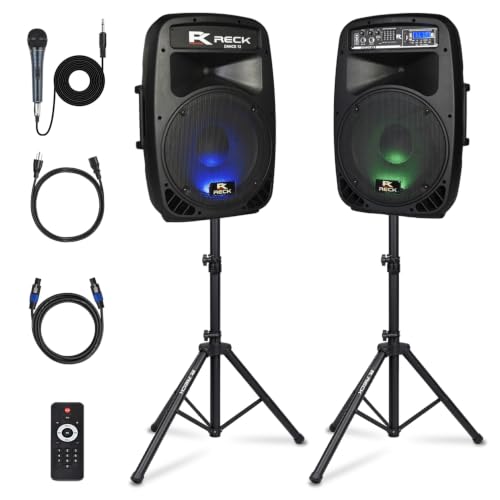
- Powered PA speakers with built-in amps, usually with a mixer and microphone input.
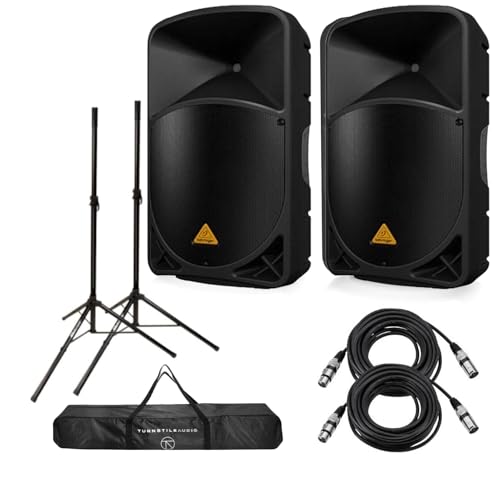
- Passive PA pairs, which need a separate power amplifier.
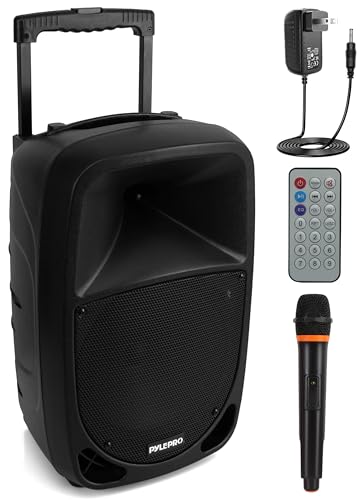
- Portable party systems with wheels or handles, often with Bluetooth and a wireless microphone.
- Stage monitors and wedge speakers for performers.
- Car and home audio drivers that carry a similar rating, which are components rather than complete speakers.
The product table sticks mostly to complete PA and party speakers, since a loose driver needs a box and an amplifier before it plays a note.
Size of the Woofer and the Room
Twelve and 15 inch woofers are common at this power level because bigger drivers move more air for low bass. A 12 inch cabinet is easier to carry and suits small venues and parties. A 15 inch cabinet gives deeper bass for dance floors, but it is heavier and takes more space in the car.
Room size matters more than people expect. A backyard or a hall will use the power, while a small living room will feel overwhelmed long before the speaker reaches its limit.
Connections and Features Worth Having
Look for XLR and 1/4 inch microphone inputs, a line input for a laptop or DJ controller and Bluetooth for quick music. A built-in mixer saves carrying a separate one. A wireless microphone is a convenience bonus on party systems, though a wired mic is steadier at a gig.
Check the pole socket and stand compatibility if you plan to mount speakers at head height. Handles and wheels matter on cabinets this size.
Choosing Among the Best 1000 Watt Speakers
Start with the job. A karaoke party wants microphone inputs and echo. A mobile DJ wants a line output and clean bass. A band wants a rugged cabinet and a monitor mode. A passive pair gives upgrade freedom and a lower entry price per cabinet, while a powered set is simpler. Many models in this class fall between about $200 and $500, and spending toward the top of the range usually buys sturdier cabinets and better amplifiers.
For related reading, compare sizes in best 100 watt speakers or see the price guide best speakers under 1000.
Power Handling in the Real World
Real events rarely use the full capacity of a speaker. Music has peaks and quiet passages, and a clean amplifier running at moderate level with plenty of headroom sounds better than a small amp pushed into distortion. That is why buyers often choose a bigger rating than they strictly need: the cabinet stays relaxed.
The trade-off is cost and weight. If you only play small rooms, a lower-powered cabinet will serve you well and save your back. Match the power to the biggest space you will actually cover, then add a small margin.
Cabling, Stands and Extras
High-power speakers deserve a proper stand with a weight rating that covers the cabinet, plus a wide-footed base for stability on uneven ground. Use balanced microphone cables for long runs, and a power strip with a surge protector for the amp section. A padded cover helps when the speakers ride in the back of a car, and it keeps scratches off the grille.
Wireless microphones and Bluetooth links are handy, but carry a wired backup. Radio interference at a busy venue can drop a signal at the worst moment, and a cable never has that problem.
Using Them Safely and Cleanly
- Keep the gain low and raise the master volume instead of pushing the input.
- Leave air around the amp section so it does not overheat.
- Use proper speaker cable on passive pairs, not thin lamp cord.
- Stay aware of hearing safety: very loud sound can damage hearing, so keep listeners at a comfortable distance.
- Transport cabinets in a cover to protect the grille and corners.
Warranty, Returns and Support
Large speakers can arrive damaged or with a dead amp, so inspect the cabinet and play it at low volume as soon as it arrives. Keep the box until you are sure it works. A clear return window and a warranty that covers the amplifier, not only the drivers, are worth more than a small price difference on an item this size.
Frequently Asked Questions
Is a 1000 watt speaker too loud for a house?
It can be, but loudness is controlled by the volume knob. The extra capacity gives clean headroom at moderate levels, though small rooms rarely need it.
Do I need an amplifier?
Not for powered cabinets or party systems. Passive speakers need an amplifier that matches their impedance and power handling.
What is the difference between peak and RMS?
Peak is a short burst limit, and RMS is what the speaker can take continuously. RMS is the better guide for how the speaker will behave at a real event.
Are these suitable for outdoor use?
Many are used outdoors, but most are not weatherproof. Keep them dry and shaded unless the listing states weather protection.
Final Thoughts
Read the power rating the way a professional would: continuous first, peak last. The best 1000 watt speakers match your venue, your inputs and your lifting limit, not only the headline number. Prices and availability can change, so check the product page before ordering.


