
Best Long Range Bluetooth Speakers for 2026: Everything to Know Before Your First Purchase
Disclosure: We may earn a commission when you buy through links on this page, at no extra cost to you. As an Amazon Associate I earn from qualifying purchases. Learn more

Choose the best long range Bluetooth speakers for the yard or campsite: Class 1 radios, wattage, battery life and weatherproofing explained before you buy.
Nothing kills the vibe at a backyard barbecue, campsite, or pickleball court faster than your music stuttering and cutting out the moment you walk twenty five feet away with your phone in your pocket. Standard budget wireless speakers use low power radio transmitters and tiny internal circuit board antennas that drop connections as soon as a human body, patio wall, or tree trunk steps between the phone and the speaker. Choosing the best long range bluetooth speakers means looking past flashy bass boost stickers to understand Bluetooth radio classes, antenna design, and multi speaker syncing.
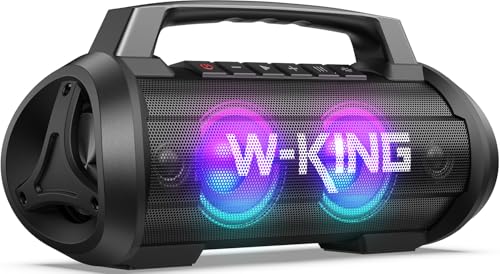
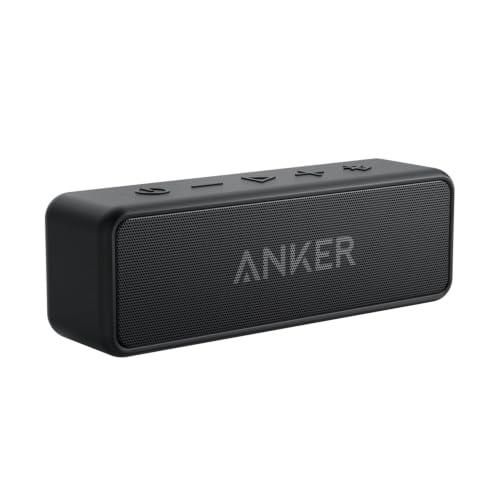
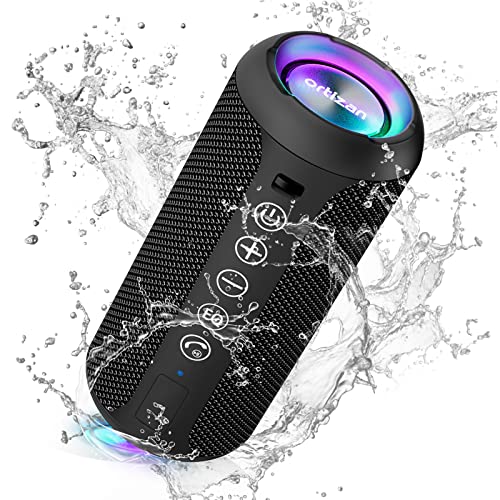
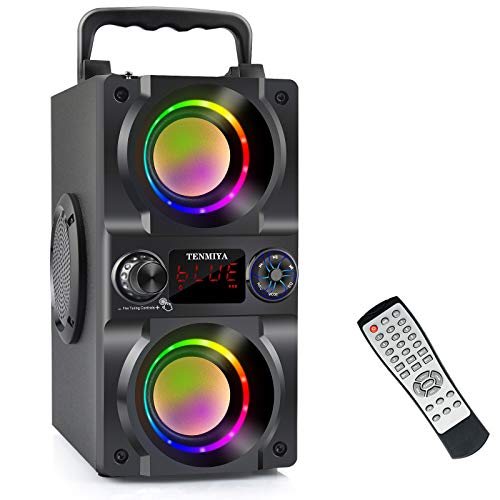
This guide suits anyone buying an extended range portable speaker for the first time, when terms like Bluetooth 5.3 Class 1, Auracast, TWS stereo pairing, and IP67 sound technical. It explains in plain English how to keep playback steady across a large yard, how wattage affects outdoor sound distance, and which beginner mistakes to avoid. The picks in the table below are chosen from specs, materials and buyer feedback.



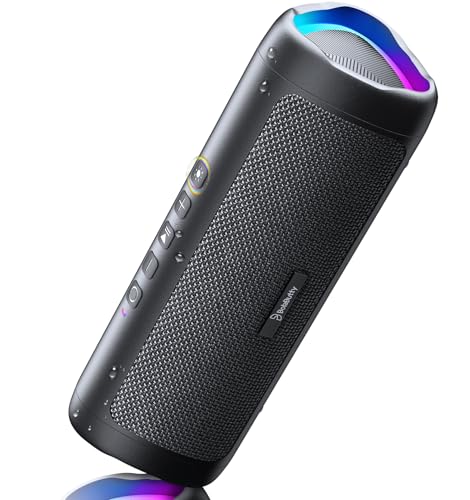

Long Range Bluetooth Speakers 101: The Basics
Every Bluetooth speaker communicates with your smartphone, tablet, or laptop over unlicensed 2.4 GHz ultra high frequency (UHF) radio waves, the exact same frequency band used by home WiFi routers. Using a process called frequency hopping spread spectrum, the speaker and phone jump across 79 different narrow radio channels up to 1,600 times per second to dodge wireless interference.
What determines how far your phone can wander before the music glitches is the speaker's Bluetooth Power Class and antenna gain. Cheap indoor speakers use Class 2 or Class 3 radios capped at 1 to 2.5 milliwatts of output power, limiting reliable range to just 30 feet (10 meters). True long range Bluetooth speakers step up to Class 1 Bluetooth transceivers capable of up to 100 milliwatts (+20 dBm) of transmit power paired with high sensitivity internal antennas and Bluetooth 5.3 or 5.4 chipsets, stretching open air line of sight connection range to 100, 150, or even 300+ feet.
Key Specs Explained in Plain English
When comparing wireless speakers online, both a $25 shower speaker and a $300 outdoor boombox might claim "Bluetooth 5.3" on the box. Here is how to read the six specifications that actually determine both wireless signal reach and acoustic projection distance.
Bluetooth Version (5.3 or 5.4), Power Class 1, and Antenna Design
While Bluetooth 5.0, 5.3, and 5.4 theoretically support long distance communication up to 800 feet using "LE Coded PHY" low bit rate error correction, standard high quality music streaming (using SBC, AAC, aptX, or LDAC audio codecs) requires enough bandwidth that radio hardware does the heavy lifting. Look for speakers explicitly rated for 100 feet (30 meters) to 150+ feet (45+ meters) of wireless range.
Inside the chassis, top engineering brands place an inverted F antenna (PIFA) or dipole ceramic antenna high up near the top handle or polymer grille away from the heavy metal speaker magnets and lithium battery pack (which absorb and block 2.4 GHz radio signals). When your phone and speaker both have strong antennas, the speaker can send clearer acknowledgment packets back to your phone, preventing dropouts when your phone is tucked inside a pocket.
Acoustic Output Wattage (RMS Watts) and Outdoor Sound Throw
Having a 150 foot Bluetooth radio signal does you no good if the speaker is too quiet to hear past 20 feet in an open backyard. Unlike indoor living rooms where four walls bounce sound waves back to your ears, outdoor air has zero wall reflections: sound pressure level drops by 6 decibels every time you double your distance from the speaker (the inverse square law).
Always judge loudness by continuous RMS (Root Mean Square) wattage and maximum decibel output (dB SPL at 1 meter) rather than inflated "Peak Wattage." Compact 15W to 20W speakers project clear background music across a 20 to 30 foot patio, midrange 30W to 50W speakers fill a 50 foot campsite or pool deck, and 60W to 100W+ party boomboxes project punchy bass 100 feet across a sports field or beach.
Multi Speaker Wireless Linking (Auracast, PartyBoost, and TWS)
The smartest way to cover a huge 150 foot yard or wrap music around the front and back of a house without deafening people sitting right next to a single speaker is wireless daisy chaining. Modern long range speakers feature proprietary or universal multi speaker broadcast protocols, such as Bluetooth Auracast, PartyBoost, Connect+, or PartyCast, that let one master speaker relay the audio stream to two, ten, or fifty secondary speakers placed 50 to 100 feet apart.
If you only buy two identical speakers, look for TWS (True Wireless Stereo) mode, which assigns one speaker as the dedicated Left channel and the second speaker 30 to 60 feet away as the dedicated Right channel for a wide, concert style outdoor soundstage.
Battery Capacity (Watt Hours) and High Volume Runtime
Pushing a Class 1 radio transceiver and high excursion woofers outdoors drains lithium ion cells much faster than quiet bedroom listening. Manufacturers advertise "20 hour battery life" measured at a whisper quiet 25 to 30 percent volume with bass boost turned off. Crank that same speaker to 80 percent volume at a sunny tailgate and runtime often drops to 5 or 6 hours.
Look past hours alone and check the battery's actual energy capacity in Watt hours (Wh) or milliamp hours at 7.4V/11.1V (not 3.7V cell sum). A long range speaker with a 30 Wh to 70 Wh battery pack will comfortably last a full 8 to 12 hour beach day at realistic outdoor volumes, and many double as a USB power bank to keep your phone charged.
Weatherproofing (IP67 Rating) and Chassis Durability
Long range speakers spend their lives outdoors on wet grass, sandy beaches, boat decks, and dusty work sites. Insist on an ingress protection rating of at least IPX7 (waterproof up to 1 meter submerged for 30 minutes) or ideally IP67, where the "6" certifies complete dust tight immunity against fine beach sand and trail dirt and the "7" certifies full immersion waterproofing. Many top outdoor models also seal their chassis with enough internal air volume to float upright if dropped off a kayak or dock.
Driver Configuration, Passive Radiators, and DSP Tuning
In open air, low bass notes between 50 Hz and 100 Hz dissipate first, leaving small speakers sounding thin and tinny at a distance. Quality long range speakers combat open air bass loss by pairing dedicated long throw midbass woofers and separate silk or titanium dome tweeters with dual opposing passive radiators (unpowered weighted diaphragms on the ends of the cylinder or box that resonate with internal air pressure) and an "Outdoor Boost" Digital Signal Processing (DSP) button that lifts upper bass and vocal presence for long distance clarity.
Choosing Long Range Bluetooth Speakers for Your Situation
Best 20w Long Range Bluetooth Speakers: Tips for First Time Buyers
When shopping for the best 20w long range bluetooth speakers, you are targeting the ultralight 1.2 to 2 pound "grab and go" sweet spot designed to slip into a backpack bottle pocket, golf cart basket, or bike cage. Because a 20W RMS amplifier cannot physically shake a half acre field on its own, prioritize models that combine a genuine Bluetooth 5.3 Class 1 radio (100+ foot phone tether range) with dual 10W full range drivers, dual passive bass radiators, and TWS two speaker stereo linking. That way, you can carry your phone 100 feet away across the garden or campsite without dropouts while enjoying crisp, distortion free vocals within a 30 foot listening circle.
Rookie Mistakes to Avoid
First time buyers can avoid frustrating connection drops and muffled audio by steering clear of these four common mistakes.
- Trusting a "100 foot range" claim through three indoor drywall walls or brick chimneys: Bluetooth's 2.4 GHz radio waves are easily absorbed by water, metal studs, concrete, brick, and tinted low E glass sliding doors. A speaker that reaches 130 feet in an open park will typically reach 35 to 50 feet when passing through two interior house walls.
- Setting the speaker flat on wet grass or soft sand: Ground surfaces absorb high frequency treble and block the internal antenna's Fresnel zone. Elevating your speaker just 3 to 5 feet off the ground on a picnic table, tailgate, or tripod stand nearly doubles both wireless Bluetooth range and vocal clarity.
- Covering your phone in a bottom pocket or metal cooler: The human body is roughly 60 percent saltwater, which blocks 2.4 GHz radio waves like a lead shield. If you walk 100 feet away from the speaker and turn your back with the phone in your front pocket, your own torso blocks the line of sight.
- Buying a mono single driver speaker for wide outdoor spaces: Speakers with a single tiny cone beam treble in one narrow direction; dual tweeter or 360 degree cylindrical speakers spread sound evenly around a campfire or patio.
Getting Started: Setup and First Use
Follow these four quick steps right out of the box to maximize both wireless range and battery lifespan.
- Top off the battery to 100 percent and update firmware via the companion app: Manufacturers frequently release over the air Bluetooth stability, EQ, and Auracast or party linking updates inside their smartphone app.
- Elevate the speaker to chest height with clear line of sight: Place the speaker on a deck railing, table, or hang it from a tree branch via its integrated carabiner loop so the antenna has an unobstructed view across your yard.
- Disable congested WiFi band interference if streaming locally: If your speaker sits right next to an old 2.4 GHz WiFi router on a patio, move it 6 feet away from the router so WiFi traffic does not crowd the Bluetooth radio channels.
- Seal the rubber USB charging flap tightly before going outdoors: An IP67 speaker is only waterproof when the thick silicone gasket covering the USB C and AUX ports is pressed completely flush.
Frequently Asked Questions
How far can a long range Bluetooth speaker actually reach?
A quality Class 1 Bluetooth 5.3 or 5.4 speaker reliably reaches 100 to 150 feet (30 to 45 meters) outdoors with a clear line of sight, and some specialized high gain models reach up to 250 to 300 feet. Indoors through standard wood stud and drywall walls, expect a reliable range of 40 to 65 feet.
How long does a long range Bluetooth speaker last?
The speaker drivers and weatherproof housing easily last 6 to 10 years, while the internal rechargeable lithium ion battery typically maintains strong capacity for 3 to 5 years (around 500 full charge cycles) before gradually losing runtime.
Does Bluetooth 5.3 automatically guarantee long range?
No, Bluetooth 5.3 is the communication protocol version, not a guarantee of transmit wattage. A cheap speaker can have a Bluetooth 5.3 chip wired to a weak Class 2 radio and tiny antenna that cuts out at 30 feet; always check that the manufacturer specifies a 100+ foot Class 1 wireless range.
What wattage Bluetooth speaker do I need for an outdoor backyard or patio?
For a small patio or picnic table (up to 10 people), a 20W to 30W RMS speaker is plenty; for a medium backyard or pool deck (15 to 30 people), choose a 40W to 60W RMS speaker; and for large open lawns or block parties, pick an 80W+ boombox or link two 40W speakers via TWS/Auracast.
Is WiFi/AirPlay better than Bluetooth for long range outdoor music?
WiFi speakers work well on a covered porch close to your home router, but Bluetooth wins hands down in large backyards, parks, beaches, and campsites where home WiFi coverage drops off completely.
Final Thoughts
Freedom to roam across your yard, campsite, or court without your playlist cutting out comes down to pairing a high power Class 1 Bluetooth 5.3 or 5.4 radio with enough acoustic wattage for open air listening. Choose a compact 20W to 30W IP67 model for backpack trails and small patios, or step up to a 50W to 80W multi driver speaker with Auracast/party linking to fill a large backyard. Use the picks in the table above as a starting point, and match the radio class, wattage and weatherproofing to where you will actually listen.


