
Best Outdoor TVs: Every Type Explained Side by Side
Disclosure: We may earn a commission when you buy through links on this page, at no extra cost to you. As an Amazon Associate I earn from qualifying purchases. Learn more

Outdoor TV types compared by sun rating, weatherproofing and size, with three picks and install tips.
An outdoor TV turns a patio, deck, pool area or covered porch into an entertainment space for game days, movie nights and summer parties. Regular indoor TVs are not built for this: humidity, rain, dust, insects, temperature swings and bright daylight can shorten their life and wash out the picture. Outdoor TVs use sealed, weather resistant housings and much brighter screens to stay watchable and reliable outside. This guide to the best outdoor tvs compares every type side by side, explains brightness and weather ratings and helps you choose the right TV for your space and budget.
The short answer: match the TV to the amount of sun it will see. Covered patios and porches suit partial sun outdoor TVs with around 700 to 1,000 nits of brightness, while TVs in direct sunlight need full sun models with 1,500 nits or more. If you only watch occasionally in a shaded spot, a weatherproof enclosure or cover for an indoor TV can be a budget alternative, though it offers less protection and brightness.


Our Top 3 Picks at a Glance
For a quick starting point, these three outdoor TVs cover the main budgets.
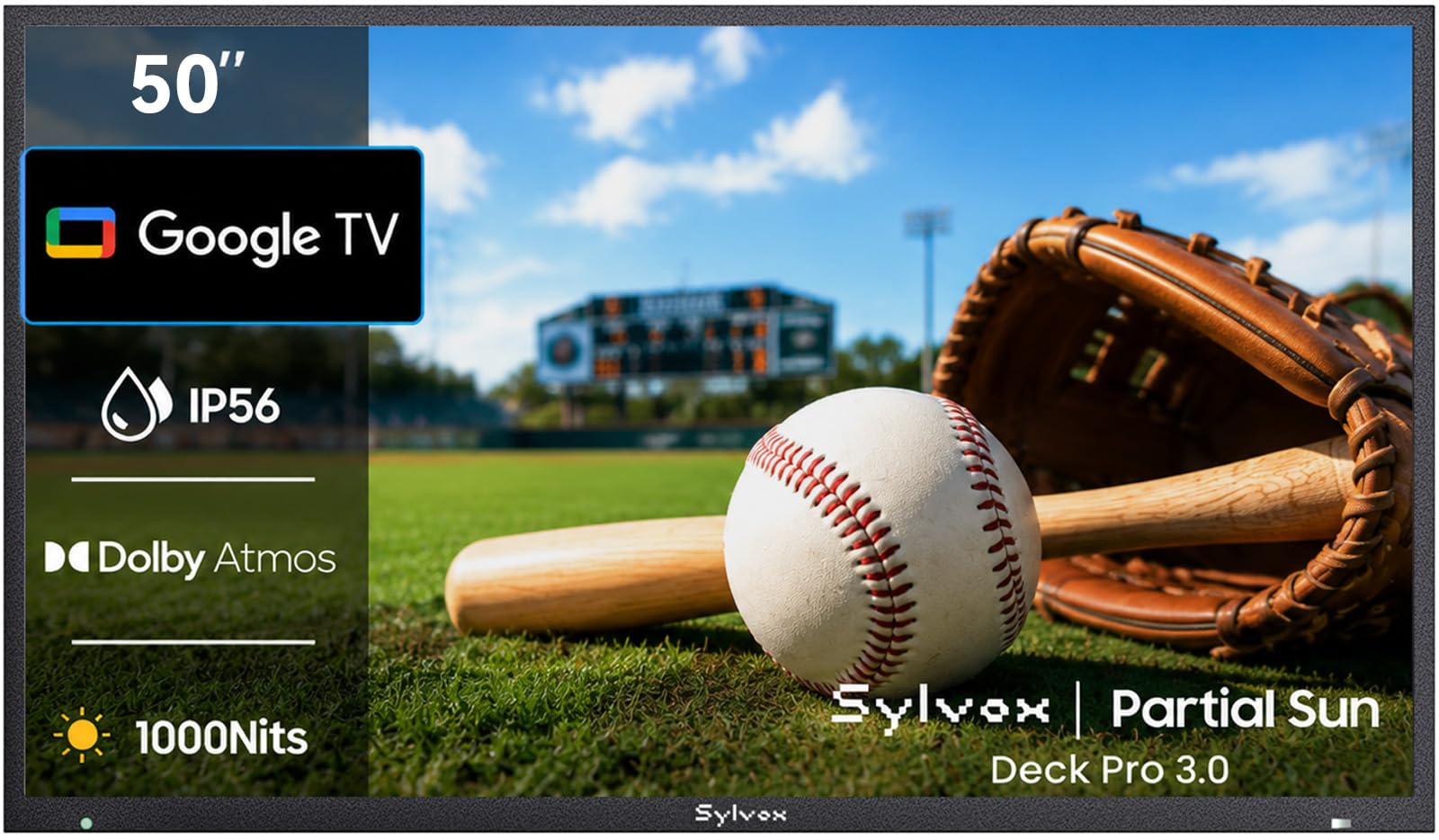
Best overall: the SYLVOX 50 inch Deck Pro, around $1,195, is a partial sun outdoor TV rated at 1,000 nits with an IP56 weatherproof full metal housing, 4K HDR10, Dolby Atmos and Google TV with Chromecast built in.
Best value: the SYLVOX 43 inch Outdoor TV, around $849, offers a 4K LED panel at 700 nits, IP56 weatherproofing with an IP66 waterproof remote, dual 10W waterproof speakers and Google TV, ideal for covered patios.

Best premium pick: the Samsung 65 inch The Terrace, around $2,838, is a partial sun QLED 4K outdoor TV with direct full array backlighting, an anti glare wide viewing angle screen, IP55 weather resistance and Alexa built in.

Types of Outdoor TVs Compared
Outdoor TV options fall into five main categories. Here is how they compare.
| Type | Best For | Pros | Cons | Typical Price |
|---|---|---|---|---|
| Full Sun Outdoor TV | Direct sunlight, open decks, pools | Very bright, glare resistant | Most expensive | around $1,600 to $4,500 |
| Partial Sun Outdoor TV | Covered patios, porches | Bright enough in shade, weatherproof | Washes out in direct sun | around $800 to $4,000 |
| Full Shade Outdoor TV | Fully covered, shaded areas | Lower cost weatherproof option | Not for bright areas | around $700 to $2,500 |
| Indoor TV in an Enclosure | Budget, existing TV | Uses a cheaper indoor TV | Bulky, limited brightness, heat risk | around $230 to $400 plus TV |
| Indoor TV With a Cover | Occasional use in shade | Cheapest | Minimal protection, not weatherproof while in use | around $25 to $40 plus TV |
Full Sun Outdoor TVs
Full sun TVs are designed for spots that get direct sunlight during viewing hours. They use extremely bright panels, often 1,500 to 2,000 nits or more, plus anti glare coatings and cooling systems that prevent the screen from overheating or darkening in the heat. They are the right choice for open decks, poolsides and rooftop terraces.
The trade off is price; full sun models cost considerably more than partial sun TVs of the same size.
Partial Sun Outdoor TVs
Partial sun TVs suit covered patios, pergolas and porches that get indirect light or brief direct sun. With around 700 to 1,000 nits, they stay bright in daylight shade while costing less than full sun models. This is the most popular category for typical backyard setups.
Full Shade Outdoor TVs
Full shade models are weatherproof but use brightness levels closer to indoor TVs. They work in fully covered areas such as screened porches and outdoor kitchens under a solid roof.
Indoor TVs in Weatherproof Enclosures
Enclosures are lockable, sealed cabinets that protect an indoor TV from rain, dust and theft. They let you use a cheaper indoor TV outside, but indoor TVs are not bright enough for sunny spots, and enclosures can trap heat if not ventilated properly.
Indoor TVs With Covers
Weatherproof covers protect a mounted indoor TV when it is not in use. They are inexpensive, but the TV is exposed to humidity and temperature swings, so this approach suits mild climates and occasional use only.
Outdoor TV vs Indoor TV Outside: Which Should You Choose?
Choose a purpose built outdoor TV if it will stay outside year round, faces any sunlight or will be used often. Outdoor TVs handle moisture, insects and temperature extremes and are bright enough to see in daylight. Choose an indoor TV with an enclosure or cover only if your area is fully shaded, your climate is mild and you watch mainly in the evening. Many buyers find that the cost of replacing failed indoor TVs makes an outdoor model the better value over time.
How to Choose the Right Outdoor TV
These factors decide how well an outdoor TV performs.
Brightness and Sun Rating
Brightness, measured in nits, is the most important spec outdoors. Indoor TVs often sit around 300 to 600 nits. Partial sun outdoor TVs typically offer 700 to 1,000 nits, and full sun models 1,500 nits or more. Match the rating to the light where the TV will hang, not where you sit.
Weather Resistance (IP Rating)
IP ratings describe protection from dust and water. IP55 and IP56 ratings protect against dust and water jets, suitable for rain and hosing. Also check operating temperature ranges if you live with hard winters or hot summers.
Resolution and Screen Size
Most outdoor TVs are 4K. Choose size based on viewing distance: 43 to 55 inches suits small patios, while 65 to 75 inches suits large decks and pool areas viewed from farther away.
Smart Platform and Sound
Many outdoor TVs include Google TV, Tizen or other smart platforms, so you can stream without extra boxes. Built in weatherproof speakers help, but outdoor spaces absorb sound, so consider outdoor soundbars or speakers.
Panel Technology and Viewing Angles
Wide viewing angles matter outdoors, where guests sit in many positions. Anti glare screens reduce reflections from the sky, water and lights.
Connectivity and Ports
Sealed port covers keep moisture out of HDMI and power connections. Strong WiFi or a wired Ethernet run ensures smooth streaming outdoors.
Streaming, Cable and Antenna Outdoors
Most outdoor TVs include smart platforms, so streaming apps work once the TV reaches your WiFi. A mesh WiFi node or outdoor access point near the patio prevents buffering. For live local channels, an outdoor rated antenna or your cable box can connect over HDMI, ideally with the box kept indoors and cables routed through the wall. Casting from phones is handy for sharing photos and videos at gatherings.
Outdoor Projector vs Outdoor TV
Outdoor projectors create huge screens for occasional movie nights after dark and pack away when not in use. Outdoor TVs are always ready, work in daylight and need no setup, which suits frequent sports watching and daytime use. Many families choose a TV for regular use and borrow or rent a projector for special events.
Installation and Mounting Tips
Mount the TV under cover where possible, even if it is weatherproof, to reduce sun load and glare. Use a mount rated for outdoor use and the TV's weight, anchored to solid framing or masonry. Plan a GFCI protected outdoor outlet nearby, and route cables through weatherproof conduit. Angle the screen away from the sun at your main viewing times, and consider a tilting mount to reduce reflections. Professional installation is worth it for large TVs and high mounts.
Best Outdoor TVs by Space
The best outdoor tvs for your home depend on the space you want to cover.
Covered Patio or Porch
A 43 to 55 inch partial sun TV is ideal, bright enough for daytime games and sized for close seating.
Open Deck or Pool Area
Full sun TVs of 55 inches or larger handle direct sunlight and longer viewing distances.
Outdoor Kitchen or Bar
A smaller partial sun or shade TV mounted at eye level near seating works well for watching sports while cooking.
Outdoor Sound Options
Sound behaves differently outside, where there are no walls to reflect it. Built in TV speakers that sound fine indoors can seem thin on a patio. Weatherproof outdoor soundbars mount under the TV and connect by HDMI eARC or optical cable, while rock speakers or mounted outdoor speakers powered by an amplifier spread sound across larger yards. Bluetooth speakers are an easy temporary option for parties, though they can introduce slight delay between picture and sound. Keep volume considerate for neighbors, especially at night.
Climate Considerations
Hot, sunny climates demand full sun TVs with strong cooling and anti glare screens, since heat can darken LCD panels. Humid and coastal areas need excellent sealing and corrosion resistant housings to handle salt air. Cold climates require TVs rated for low operating temperatures, and in very cold regions some owners bring smaller TVs indoors for winter or use a fitted cover. Check the manufacturer's temperature range against your local extremes before buying.
Security and Theft Prevention
Outdoor TVs are visible from yards and streets, so consider security. Lockable mounts, tamper resistant screws and enclosures with locks deter theft. Placing the TV where security cameras or motion lights cover it adds protection, and registering the serial number helps if the worst happens.
Common Mistakes to Avoid
- Buying a partial sun TV for a spot that gets direct afternoon sun.
- Using a regular indoor outlet extension instead of a GFCI protected outdoor outlet.
- Mounting the TV facing west where sunset glare washes out the picture.
- Ignoring WiFi coverage, leading to buffering during streams.
- Relying on thin built in speakers for large gatherings.
What Your Budget Buys
Around $800 to $1,200 buys a 43 to 50 inch partial sun outdoor TV with IP56 protection and a smart platform. Between about $1,500 and $3,000, you get larger partial sun TVs or smaller full sun models. Above about $3,000, expect 65 to 75 inch full sun TVs with the highest brightness. Enclosures and covers cost less but rely on an indoor TV.
Tips to Get the Most From Your Outdoor TV
- Use a cover during storms or long periods without use, even on weatherproof models.
- Clean the screen gently with a soft cloth to remove pollen and dust.
- Keep vents clear of leaves, cobwebs and insect nests.
- Add outdoor speakers for fuller sound in open spaces.
- Update software regularly for streaming apps and security.
Outdoor TVs: Your Questions Answered
These are the questions homeowners ask most.
Can I use a regular TV outside?
Only in fully covered, shaded spots in mild climates, ideally with an enclosure. Humidity, temperature swings and insects can damage indoor TVs, and they are not bright enough for daylight.
How bright should an outdoor TV be?
Around 700 to 1,000 nits for shaded, covered areas and 1,500 nits or more for direct sunlight.
Can outdoor TVs stay outside in winter?
Many can, within their rated operating temperature range. Check specifications, and use a cover during extreme weather.
Is 4K worth it outdoors?
Yes. Nearly all outdoor TVs are 4K, and the extra detail helps on larger screens, though brightness matters more outdoors.
Do outdoor TVs need a special mount?
Use a mount rated for outdoor use with corrosion resistant hardware, sized for the TV's weight and VESA pattern. Tilting and swivel mounts help reduce glare.
How long do outdoor TVs last?
Purpose built outdoor TVs are designed for many years of outdoor use, typically far longer than indoor TVs used outside.
Wrapping Up
The three things that matter most are a brightness rating that matches your sun exposure, real weatherproofing and a size suited to your space. Most covered patios are best served by a partial sun TV, budget shoppers can start with a smaller weatherproof model and sunny decks need full sun TVs. Use this guide to choose the best outdoor tvs, then check the product table above for current prices. For indoor viewing, see the best smart TVs.


